3 Days in Bangkok: A Realistic Itinerary of Temples, River Boats and Street Food
A realistic 3-day Bangkok plan: Grand Palace at opening, canal boats, Chinatown food, halal options and costs in AED and baht.
10 min read
Why Three Days in Bangkok Works
Bangkok is a direct flight of roughly six hours from Dubai, Abu Dhabi or Doha, and the flights are frequent. For a long weekend it gives you a lot for the money. In three days you can see the gilded spires of the Grand Palace, ride the Chao Phraya on boats that cost less than a coffee, eat through Yaowarat (Chinatown) at night and still have time for a Thai massage for around 300–500 baht an hour.
Three days is enough to see a good slice of the city if you plan around its two main problems: heat and traffic. Our plan works by neighbourhood. Each day stays in one area, uses the river and the BTS Skytrain or MRT instead of taxis, and puts the outdoor sights before about 11am. You'll spend the hot afternoons indoors or resting.
The city also suits Gulf and Levant travellers well. Halal food is easy to find, especially around Sukhumvit Soi 3 and the Muslim community along Charoen Krung. Big malls like Siam Paragon and ICONSIAM give you air-conditioned breaks, and many hotels have family rooms with pools at prices that would get you far less in Dubai.
The plan below assumes a Friday-to-Sunday trip so you can reach Chatuchak Weekend Market. If your dates differ, it's easy to swap days around.
When to Go and Where to Stay
The best months are November to February. That's Bangkok's "cool" season, with daytime highs around 30–32°C, lower humidity and very little rain. It's also peak season, so book hotels four to six weeks ahead for December and around New Year. March to May is very hot (often 35°C and above), and June to October brings afternoon downpours that usually pass within an hour or two. Mid-April is Songkran, the Thai New Year water festival. It's fun, but much of the city gets soaked.
For a three-day trip, where you stay matters more than which hotel you pick:
- Riverside (Charoen Krung / Sathorn): best for this itinerary. You're steps from the river boats and next to Saphan Taksin BTS. Mid-range rooms typically cost around 2,500–4,500 baht (AED 270–490) a night, and riverfront five-star hotels around 7,000–15,000 baht.
- Sukhumvit (Nana to Phrom Phong): well connected by BTS, with plenty of halal restaurants near Soi 3. Expect around 2,000–4,000 baht for a good mid-range room.
- Siam / Ratchaprasong: good for mall-focused families and central for both BTS lines.
We'd avoid staying on Khao San Road unless you want nightlife. It's loud until late and a long way from the BTS.
Day 1: Rattanakosin Island — Palace, Reclining Buddha and Wat Arun
8:00 Take the Chao Phraya Express Boat (orange flag, around 16 baht) from Sathorn Pier to Tha Chang. The ride is about 25 minutes and doubles as a sightseeing trip.
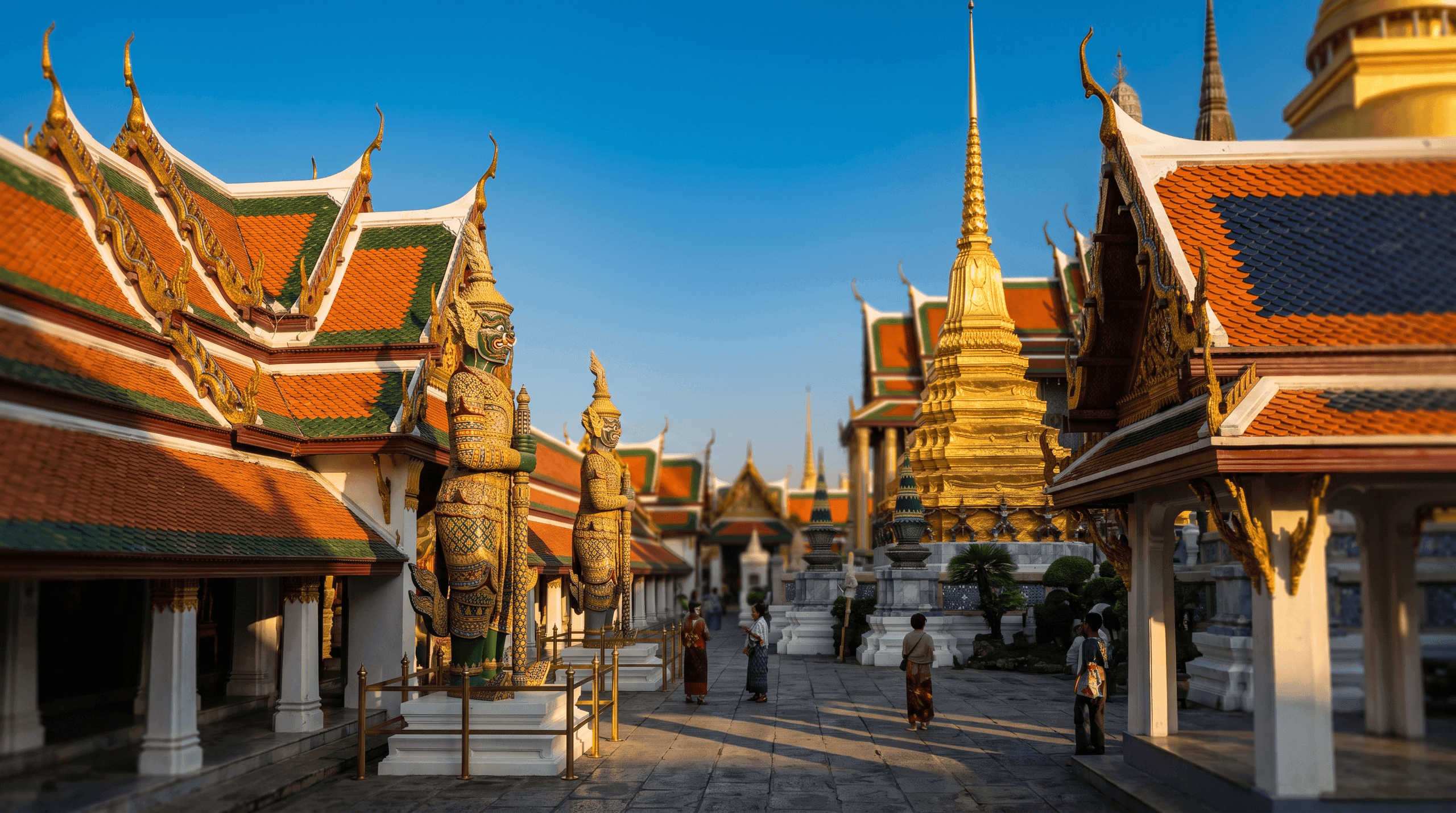
8:30 Arrive at the Grand Palace and Wat Phra Kaew (Temple of the Emerald Buddha) when they open. Entry is around 500 baht (about AED 55). The dress code is enforced: shoulders and knees must be covered, and no tight trousers or ripped jeans. Allow two hours. Ignore anyone outside who tells you the palace is "closed today". It's a well-known scam that leads to an overpriced gem shop.
10:45 Walk ten minutes south to Wat Pho (around 300 baht, including a bottle of water). The 46-metre gold reclining Buddha is the highlight. The temple's traditional massage school does 30-minute foot or Thai massages for roughly 300–450 baht.
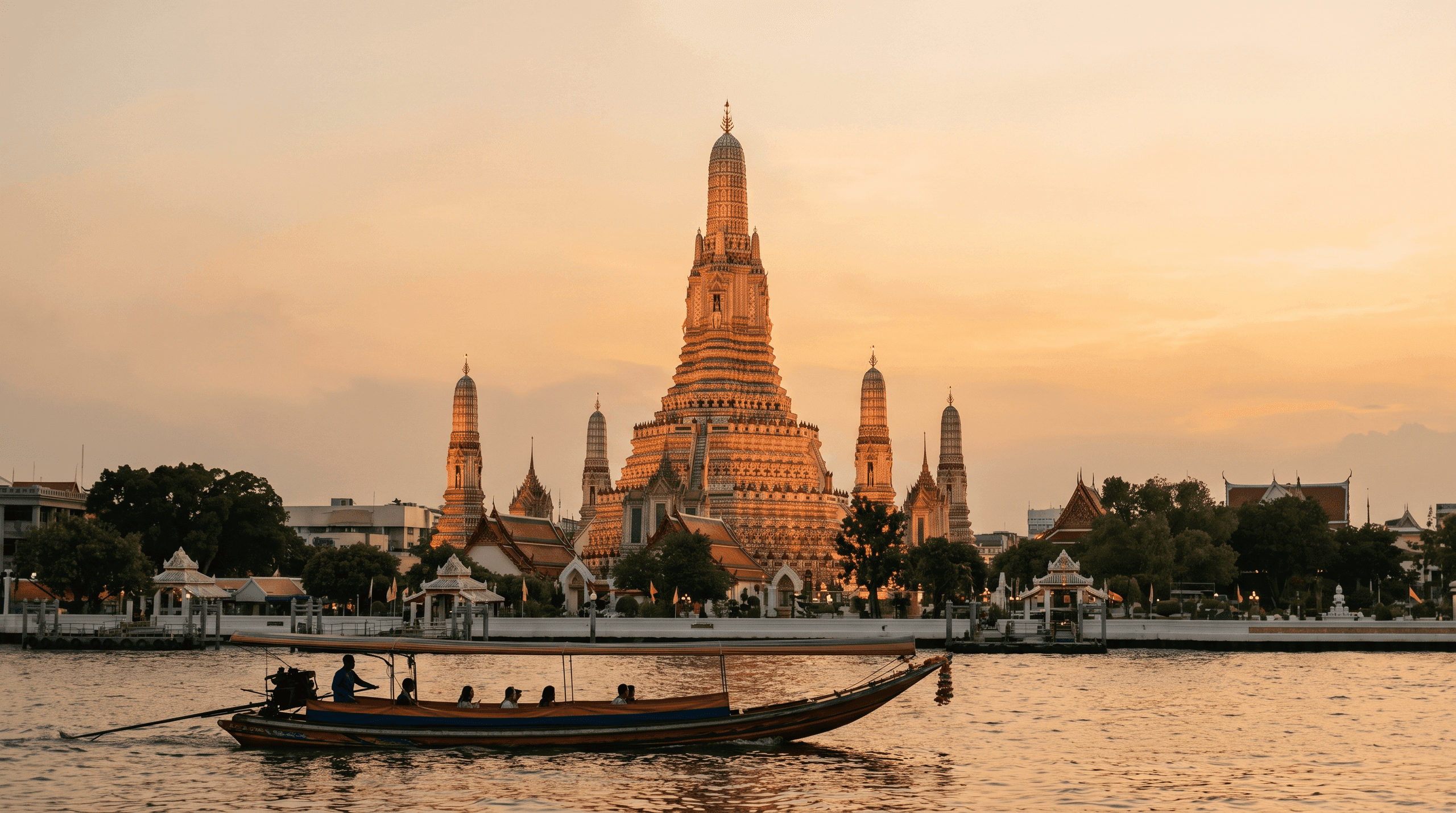
12:30 Cross the river on the shuttle ferry from Tha Tien (a few baht) to Wat Arun (around 200 baht). Climb the steep central prang, which is covered in porcelain tiles. Then take the ferry back and have lunch on the Tha Tien side.
14:00–17:00 Go back to the hotel to rest. You'll need it.
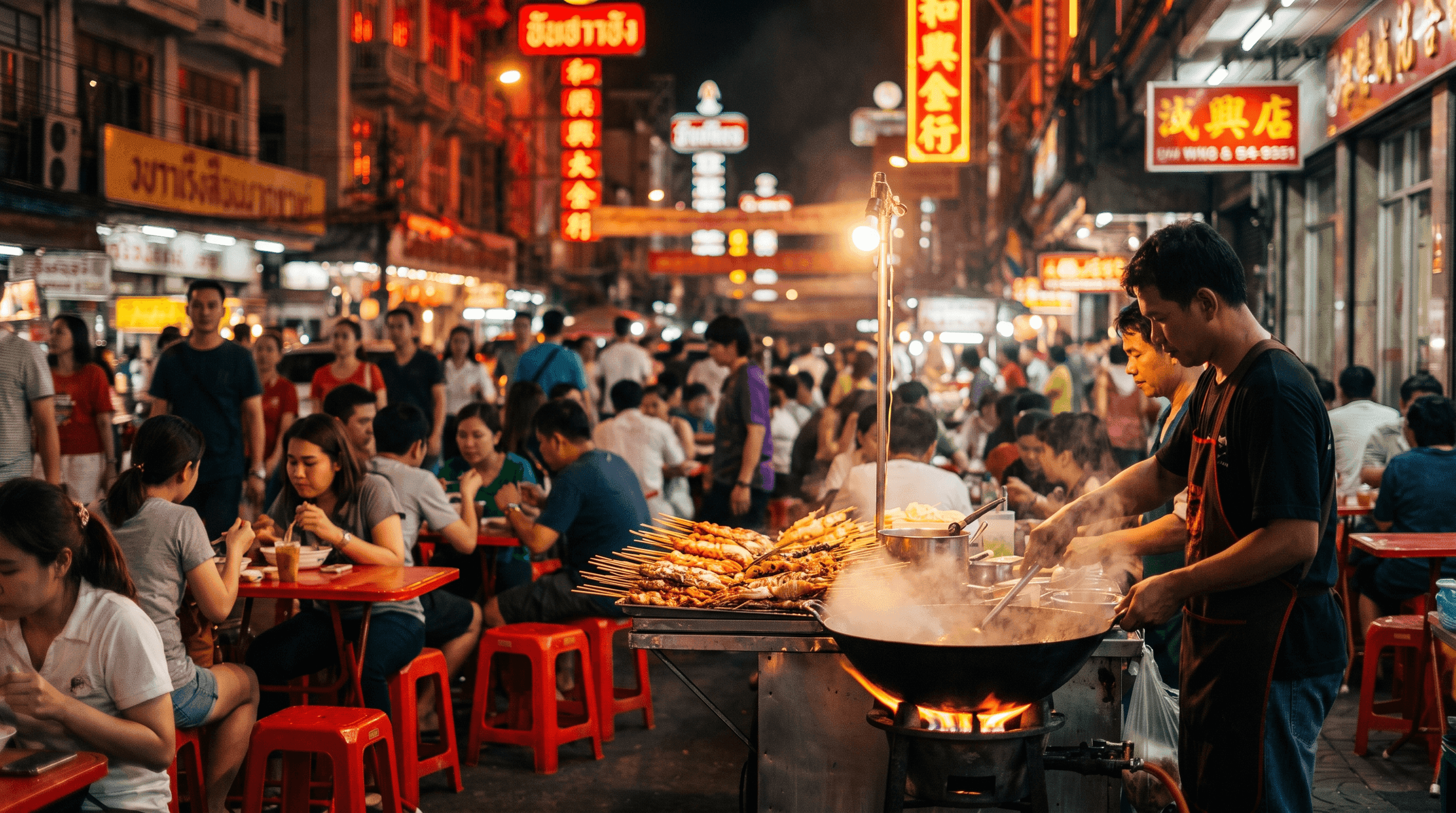
18:30 Take the MRT to Wat Mangkon station for Yaowarat Road. Once the neon signs are on, work your way through the stalls: crispy pork-free pad thai, grilled seafood, guay jub noodle soup and mango sticky rice. Budget around 400–700 baht per person for a full evening of eating.
Day 2: Markets, Malls and Modern Bangkok
8:00 If it's a weekend, take the BTS to Mo Chit or the MRT to Kamphaeng Phet for Chatuchak Weekend Market. It has more than 10,000 stalls selling clothes, ceramics, plants and home decor. Get there early, before the heat builds. Bargain politely on souvenirs; around 10–20% off is realistic. On a weekday, go to Or Tor Kor Market next door instead. It's one of the city's cleanest fresh markets, with excellent tropical fruit (mangosteen, durian in season) and prepared food.
11:30 Take the BTS to National Stadium for Jim Thompson House (around 200 baht, guided tour included). It's a teak-house museum in a jungly garden and a calm break from the city.
13:00 Walk the skywalk to the Siam district. Have lunch in the food halls at Siam Paragon or Central World, where many counters are certified halal. Stay in the air-conditioning through the hottest part of the day, and stop at the Erawan Shrine on the corner of Ratchaprasong.
16:30 Go to Lumpini Park (MRT Lumphini or Silom) for a late-afternoon walk. You'll see joggers, pedal boats and large monitor lizards by the lake.
19:00 Have dinner around Sukhumvit Soi 3–5 (Nana BTS). The area is known locally as Soi Arab and has Lebanese, Yemeni and Egyptian restaurants. Alternatively, catch a sunset view from a rooftop in Sathorn. Alcohol-free rooftops and hotel lounges are easy to find if you prefer.
Day 3: Canals, Talat Noi and the Golden Mount
7:30 Book a private long-tail boat from a central pier to explore the Thonburi canals (khlongs). Wooden stilt houses, small temples and monitor lizards line the water. Agree the price and route before you set off. A one-hour trip typically costs around 1,500–2,200 baht for the whole boat (AED 165–240), which works well for families. Book through your hotel or at the official pier counter, not with touts.
10:00 Walk around Talat Noi, next to River City. The old Sino-Portuguese shophouses are covered in street art, stacked with engine parts and dotted with small cafés. So Heng Tai, a 200-year-old Chinese mansion, is worth a look from outside.
12:00 Have lunch in the Muslim quarter on Charoen Krung (around Soi 36–44). Look for khao mok gai (Thai-Muslim chicken biryani), massaman curry and roti. Expect to pay around 80–200 baht a dish.
15:30 Take a taxi or Grab (around 100–150 baht) to Wat Saket and the Golden Mount (around 100 baht). It's 344 steps to a gold chedi with a 360° view over the old city. It's much less crowded than the palace.
17:30 Take the free shuttle boat from Sathorn Pier to ICONSIAM. Browse SookSiam, the indoor floating-market-style food hall on the ground floor, and watch the river light up. You can also book a dinner cruise, which typically costs around 1,500–3,000 baht per person.
What to Eat — and How to Eat Halal
Bangkok's food is the main reason many people come back. Here's what to look for:
- Pad kra pao: stir-fried holy basil with chicken or beef and a fried egg. It's the city's everyday lunch, around 60–100 baht.
- Som tam: green papaya salad. Ask for mai phet (not spicy) unless you're sure you can handle it.
- Tom yum goong: hot-and-sour prawn soup. The creamy version is called nam khon.
- Khao man gai: Hainanese chicken rice, usually around 50–80 baht at street stalls.
- Mango sticky rice: best between March and June, when mangoes are in season. Sold year-round.
- Boat noodles: small, rich bowls around Victory Monument. Many stalls serve pork, so ask first.
Halal eating: Thailand has a large Muslim minority and an official halal certification. Look for the green halal logo from the Central Islamic Council of Thailand. Sukhumvit Soi 3 has the most Middle Eastern restaurants. Charoen Krung and the area around Ban Krua in Ratchathewi have Thai-Muslim kitchens that have been cooking for generations. Mall food halls usually have several certified counters.
In Chinatown, many stalls use pork or lard, so stick to seafood, fruit and vendors with halal signs. Street hygiene is generally good. Choose busy stalls with fast turnover and drink bottled water.
Budget: What Three Days Really Cost
Rates move, but roughly 1 AED ≈ 9 baht is a workable guide. Check the current rate before you travel. These are typical per-person costs for three days, excluding flights:
- Accommodation (3 nights, mid-range, per room): around 7,500–13,500 baht (AED 830–1,500)
- Temple and sight entries on this itinerary: around 1,500 baht (AED 165)
- Transport (boats, BTS/MRT, a few Grab rides): around 600–1,000 baht (AED 65–110)
- Food: street food and casual meals run around 600–1,000 baht a day. Add 1,500+ baht for a nicer dinner.
- Long-tail boat (shared among a group): around 1,500–2,200 baht per boat
- Massage: around 300–600 baht per hour at local shops, much more in hotel spas
A comfortable mid-range trip usually comes to around AED 2,000–3,000 per person on the ground, plus flights. Return economy fares from the UAE typically run around AED 1,800–3,500. Emirates, Etihad, Qatar Airways, flydubai and Thai Airways all fly to Suvarnabhumi (BKK).
To save money, use the Rabbit card on the BTS, eat lunch at market stalls, and change cash at SuperRich exchange booths. They usually give much better rates than airports or hotels.
Practical Bangkok: Arrival, Transport, Money and Safety
Arriving at BKK: From Suvarnabhumi, the Airport Rail Link runs to Phaya Thai in about 26 minutes for around 45 baht. From there you can change to the BTS. Metered taxis leave from the official queue on Level 1. A typical ride to the centre is around 300–450 baht on the meter, plus a 50-baht airport surcharge and expressway tolls (around 25–75 baht). Allow 40–90 minutes depending on traffic.
Entry: GCC passport holders currently get visa-free entry. Check the latest allowed length of stay before you fly. Every traveller must complete the online Thailand Digital Arrival Card (TDAC) within three days before arrival.
Getting around: The BTS Skytrain and MRT cost around 17–65 baht a trip. Get a Rabbit card for the BTS; the MRT accepts contactless bank cards. Grab and Bolt have upfront fares. With street taxis, insist on the meter. Tuk-tuks are fun for short hops, but agree the price first.
Money: Thai ATMs charge foreign cards around 220 baht per withdrawal, so take out larger amounts less often. Cards work in malls and hotels, but you'll need cash for street food and markets.
Safety: Bangkok is generally safe. The main risks are traffic, heat and scams: the "palace closed" story, gem shops and unmetered taxis. Stay hydrated and use your hotel safe. Never criticise the monarchy; strict laws apply.
Is 3 days enough for Bangkok?
Yes, for a first visit. Three days covers the Grand Palace, Wat Pho, Wat Arun, Chinatown, a market day and a canal trip. With a fourth day you could add Ayutthaya (around 1.5 hours north) or a floating market such as Damnoen Saduak.
What is the dress code for Bangkok temples?
Cover your shoulders and knees at all major temples. The Grand Palace is the strictest: no sleeveless tops, shorts, short skirts or ripped trousers. Light long trousers or a maxi skirt with a T-shirt are fine, and sarongs are available to rent or buy nearby.
Is it easy to find halal food in Bangkok?
Yes. Sukhumvit Soi 3–5 has many Middle Eastern restaurants, Charoen Krung and Ban Krua have long-established Thai-Muslim kitchens, and major mall food halls have certified halal counters. Look for the green halal logo from the Central Islamic Council of Thailand.
How much cash should I bring to Bangkok for 3 days?
Excluding your hotel, around 6,000–9,000 baht (roughly AED 650–1,000) per person covers entries, transport, street food and a massage or two. Change money at SuperRich booths in the city for better rates, and use a card at malls and hotels.
What's the fastest way from Suvarnabhumi Airport to the city?
The Airport Rail Link to Phaya Thai takes about 26 minutes for around 45 baht and avoids traffic. With heavy luggage or a family, a metered taxi from the official queue typically costs around 400–600 baht including surcharge and tolls.