One Perfect Day in Dubai: Old Creek Mornings, Desert Afternoons and Marina Nights
A practical one-day Dubai plan: Al Fahidi and a AED 1 abra ride, a desert safari timed for the heat, and an evening Marina walk, with prices and transport tips.
9 min read
How This Day Works (and When to Do It)
This itinerary fits three very different sides of Dubai into one day: the old trading city on Dubai Creek, the desert beyond the Al Ain road, and the high-rise waterfront of Dubai Marina. It works well for a stopover, a first day after landing, or a last day before a late-night flight from DXB.
The main thing to plan around is the season:
- October to April: Daytime temperatures of roughly 24–32°C make this the best time for the plan exactly as written. You can walk the old town at any hour, and the classic afternoon-into-sunset desert safari is comfortable.
- May to September: Daytime highs are often 40–45°C, and the humidity near the coast can be punishing. Start the old town walk by 7:30–8:00am, move the desert to an early morning slot, and save the middle of the day for indoor time (malls, museums or your hotel).
We give both versions below. Prices are in UAE dirhams (AED). The dirham is pegged to the US dollar at about AED 3.67 = USD 1, so AED 100 is roughly USD 27, SAR 102, QAR 99, KWD 8.4 or JOD 19.
Before you start: Get a Nol card at any Dubai Metro station. The Red ticket is a paper card for a limited number of trips. The Silver card costs AED 25, including AED 19 of credit, and works on the metro, buses, the Dubai Tram and some water transport. Fares are zone-based: about AED 3 for one zone, AED 5 for two, and AED 7.50 for three or more. You can also tap in with a contactless bank card at many metro gates, but a Nol card still works everywhere and is the safer choice.

Morning: Al Fahidi Historical Neighbourhood
Start in Al Fahidi Historical Neighbourhood, which many people still call Al Bastakiya. It's in Bur Dubai, on the southern side of Dubai Creek. Take the Green Line to Al Fahidi metro station and walk about 10 minutes towards the water, or take a taxi. From Downtown a taxi costs about AED 25–40.
The district is a restored maze of coral-stone and gypsum houses. Look for the wind towers (barjeel), which were used to cool homes before air conditioning. The lanes are narrow and shaded, and they're best seen before 10am, when the light is soft and the tour groups haven't arrived.
What to look for:
- Sheikh Mohammed Centre for Cultural Understanding (SMCCU): Runs heritage tours and seated cultural breakfasts or lunches with Emirati hosts. It's one of the few places where you can ask frank questions about local customs. Book ahead. Meals usually cost about AED 100–200 per person.
- Galleries and courtyard cafés: Several restored houses are now small galleries, craft shops and cafés. They're good for a karak tea (AED 5–15) or Arabic coffee with dates.
- Al Fahidi Fort / Dubai Museum: This is Dubai's oldest standing building. The museum inside has been closed for renovation for several years, so check its status before you go rather than planning your morning around it.
- Coffee Museum and the Creek-side lanes: Short, cheap stops if you have extra time.
Insider tip: Walk north through the textile souk (Bur Dubai Souq) to the Bur Dubai Abra Station. It takes about 10 minutes. Shopkeepers will call out to you. A polite "no, thank you" is enough, and prices for pashminas and souvenirs are always negotiable. Starting offers are often two to three times what the seller will accept.
Crossing the Creek by Abra for AED 1
The traditional wooden abra is one of the best-value experiences in the Gulf. The crossing from Bur Dubai Abra Station to Deira Old Souq Abra Station costs AED 1, paid in cash to the driver once you're seated. It takes about 5–7 minutes, and boats leave as soon as they fill up (about 20 passengers), usually every few minutes from early morning until around midnight.
Practical points:
- Carry coins or small notes. The traditional abras are cash-only, and a crossing costs AED 1. Hand the fare along the bench and it will reach the driver.
- Sit on the outer edge for the best views of dhows loading cargo, the Deira skyline and the wind towers behind you.
- The boats are low and open. Step on carefully, because they rock. They aren't accessible for wheelchairs or large luggage.
- Don't confuse this with a private abra hire. Boatmen may offer a private tour of the Creek, usually priced by the boat for 30–60 minutes (roughly AED 120–300 after bargaining). It's pleasant, but it isn't the AED 1 ride.
On the Deira side you land right at the edge of the Spice Souq. Walk a few minutes further to reach the Gold Souq. Browsing is free. The gold price changes daily with the global market, and you pay a separate, negotiable making charge on top. For a snack, the small Iranian and Indian cafeterias in the lanes serve tea, samosas and sandwiches for AED 5–20.
To get back, take the abra across again, or walk to Al Ras or Baniyas Square station on the Green Line.
Midday: Beat the Heat
Between about 12pm and 3pm, especially from May to September, slow down. Here are good ways to spend the time before an afternoon safari pickup (usually around 2:30–3:30pm):
- Lunch in Deira or Bur Dubai. These are some of the best-value places to eat in the city. A full Pakistani, Indian, Iranian or Emirati lunch usually costs AED 25–60 per person at a casual restaurant.
- Back to your hotel to shower and change. Safari operators will pick you up from most central hotels, and you'll want loose clothing and closed shoes for the sand.
- Etihad Museum (Jumeirah, near Al Jafiliya): an air-conditioned stop about the founding of the UAE. It's a good option if you're staying on the Bur Dubai side.
If you're doing the summer version of this day, swap the order: take the desert in the morning, rest at midday, see the old town at about 4:30–6:30pm when it starts to cool, and finish at the Marina after dark.
Afternoon: Desert Safari and Dune Bashing
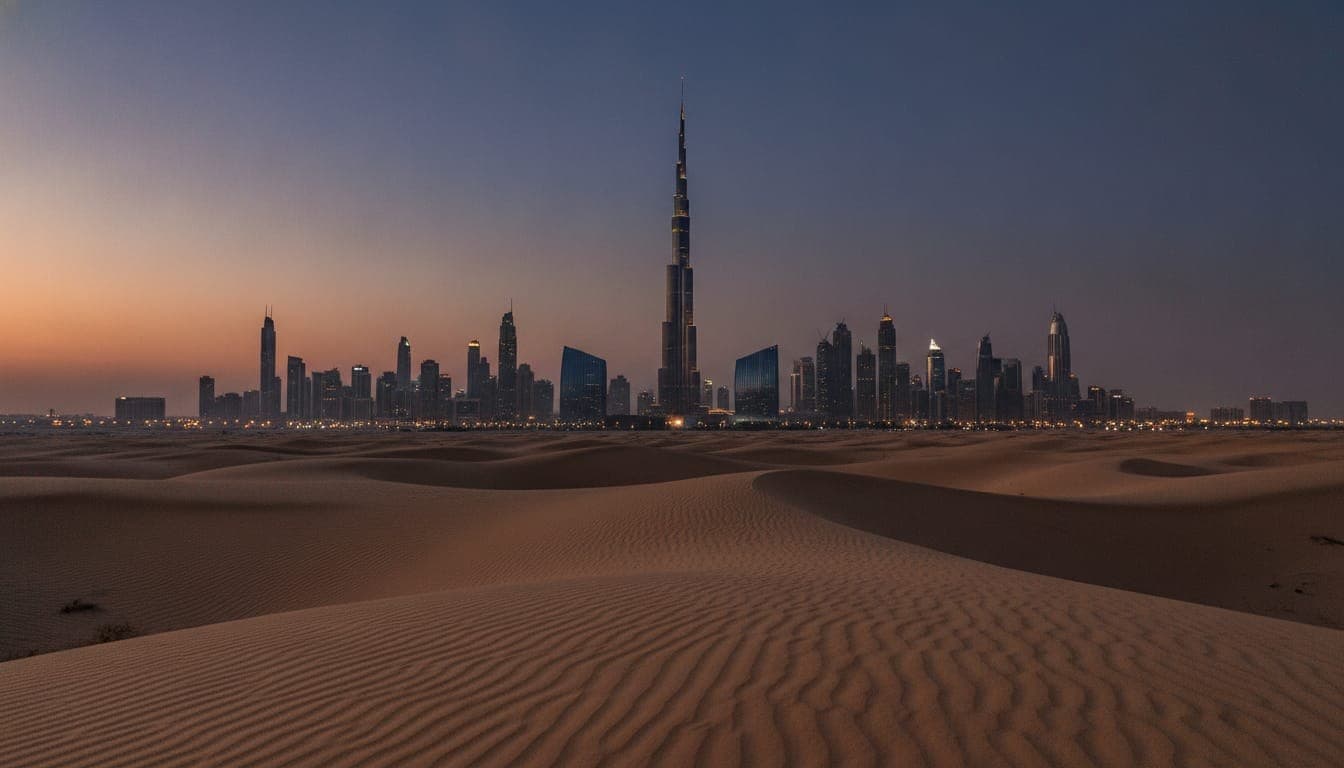
A desert safari is Dubai's classic day trip, and it's popular for good reason. Most trips head 45–60 minutes out of the city to the red dunes around Lahbab or Al Awir, or to the Dubai Desert Conservation Reserve area off the Al Ain road (E66). Trips inside the reserve are more tightly regulated and usually cost more.
A typical evening safari (pickup about 3pm, back about 9pm) includes:
- Dune bashing: 20–30 minutes in a 4x4 driven fast over the dunes by a trained driver. It's thrilling, but it isn't gentle.
- A stop for sunset photos on a high dune.
- Add-ons at the camp: short camel rides, sandboarding, henna, and sometimes quad bikes or dune buggies for an extra AED 150–400 or more.
- A barbecue buffet dinner and shows at a camp, usually tanoura and fire dancing, sometimes a belly dance. Soft drinks are included, and alcohol is limited and extra where it's available at all.
Typical prices in 2026:
- Shared evening safari with dinner: roughly AED 150–350 per adult
- Morning dune-bashing-only trip: roughly AED 150–250
- Private 4x4 for your group: from about AED 700–1,200 per car
- Premium or conservation-reserve trips with vintage Land Rovers or a gourmet dinner: roughly AED 500–1,000+ per person
Very cheap listings (under AED 100) often mean crowded camps, long waits for pickup and constant upselling. Book through a licensed operator, your hotel or a reputable platform, and check that pickup and drop-off are included.
Morning vs Evening Safari: Which Slot to Book
In summer, the advice in the original draft holds: book a morning slot. Dunes at 3pm in July can be well over 40°C, and camp dinners in the heat are less fun than they sound.
| Morning safari | Evening safari | |
|---|---|---|
| Typical timing | Pickup 6–8am, back 11am–12pm | Pickup 2:30–3:30pm, back 8:30–9:30pm |
| Best season | May–September; also good year-round | October–April |
| Typical price (shared) | AED 150–250 | AED 150–350 incl. dinner |
| Includes | Dune bashing, sandboarding, camel ride | Dune bashing, sunset, BBQ dinner, shows |
| Crowds | Lighter | Busy camps, especially weekends |
| Heat | Manageable early on | Very hot in summer until sunset |
| Leaves evening free? | Yes | No; you'd skip the Marina |
Our recommendation: If you want the full three-part day, the morning safari is the only way to fit in the Marina in the evening. In that case, move the old town to late afternoon. If the desert dinner and shows matter more to you, book the evening safari and do the Marina walk another night.
Honest caveats:
- Dune bashing isn't recommended for anyone who is pregnant, has back or neck problems or heart conditions, or gets motion sickness easily. Most operators set a minimum age for small children. Ask for a "soft" drive or skip the bashing altogether. Many operators will let you ride in a different car.
- Eat lightly before you go.
- Tip your driver if they were good. AED 20–50 per group is appreciated but not required.
Evening: Walk the Dubai Marina Promenade
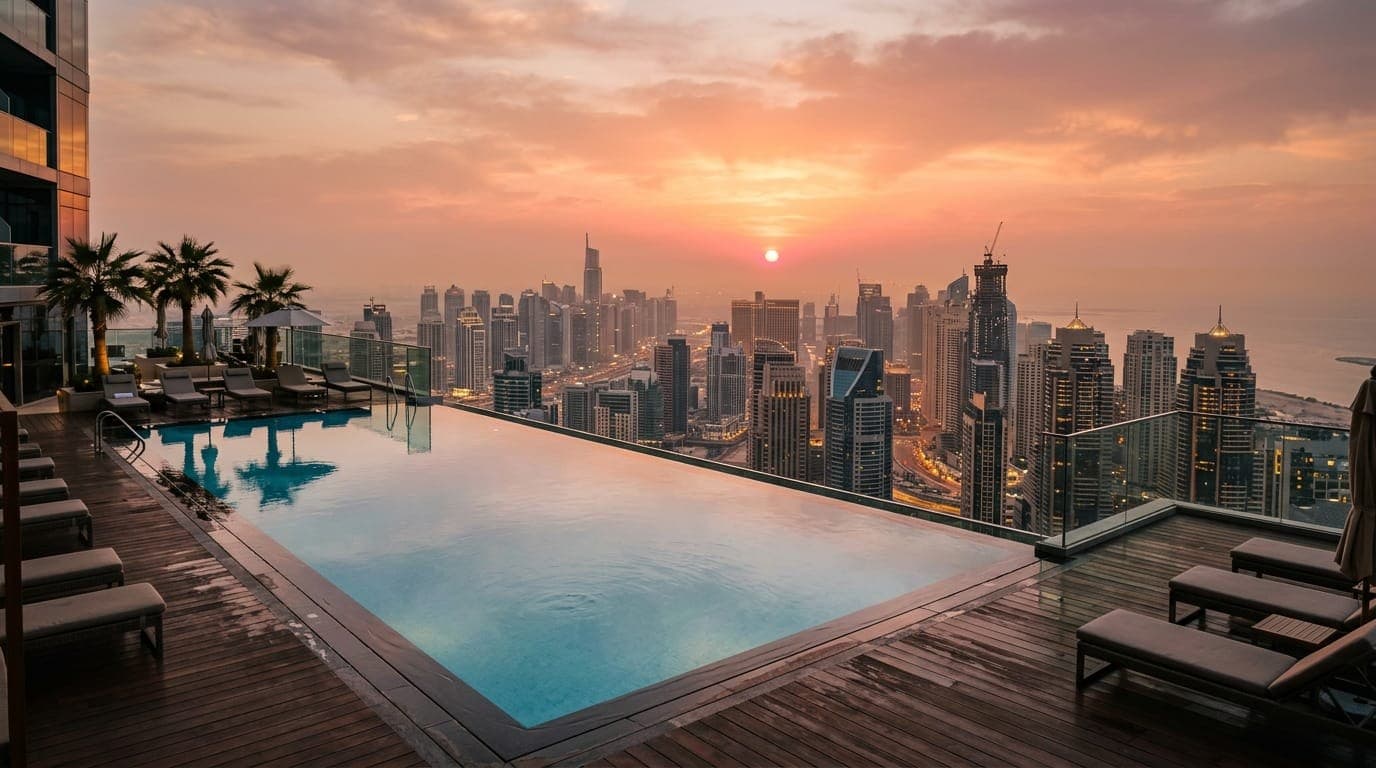
Finish at Dubai Marina, an artificial canal about 3 km long, lined with towers and circled by a walkway of roughly 7 km. It's at its best after dark, when the towers light up and the heat drops, with a breeze coming off the water.
Getting there: From the city centre, take the Red Line to DMCC or Sobha Realty station (formerly Jumeirah Lakes Towers and Dubai Marina stations). Covered walkways lead from both to the Dubai Tram. A taxi from Downtown usually costs about AED 50–80, depending on traffic.
A good 60–90 minute route:
- Start near Dubai Marina Mall and walk along the water on the promenade.
- Continue past the yacht berths and waterfront restaurants towards Marina Walk, then cross to the JBR (Jumeirah Beach Residence) side.
- Finish at The Walk at JBR and The Beach, where there are open-air shops, a sandy public beach and views across to Bluewaters Island. The Ain Dubai observation wheel has been closed for an extended period, so don't count on riding it.
Worth considering:
- Marina dhow dinner cruise: about 2 hours and roughly AED 100–250 per person with a buffet. It's touristy but relaxed.
- Dinner: Marina Walk and JBR have plenty of mid-range restaurants (AED 80–200 per person). For cheaper food, try the back streets of the Marina, where shawarma and cafeteria meals cost AED 10–30.
- Drinks: Alcohol is served only in licensed venues, mostly hotel bars. Public drunkenness is an offence.
Getting Back: The Dubai Tram and Beyond
When you're done, take the Dubai Tram back to the metro instead of queuing for a taxi at JBR, which is often slow on busy evenings.
- Stations along the route: Dubai Marina Mall, Dubai Marina, Marina Towers, Jumeirah Beach Residence 1 and 2, and others. The tram runs in a loop around the Marina and JBR towards Al Sufouh.
- Fare: about AED 3 for a one-zone trip with a Nol card. Tap in on the platform validators before you board and tap out when you get off, or you may be charged the maximum fare.
- Frequency and hours: trams come every 8–10 minutes or so. They run from about 6am to around 1am on most days, with a later start on Sundays. Check the RTA app on the day, because timings shift on public holidays and during Ramadan.
- Connecting to the metro: change at DMCC or Sobha Realty for the Red Line towards Downtown, Deira and the airport.
Gold Class carriages on the metro and tram cost double, and fines apply for using them with a standard fare. The front carriage of the metro is often reserved for women and children, and signs mark this clearly. Eating, drinking and chewing gum aren't allowed on board, and fines start around AED 100.
Heading to the airport? The Red Line serves DXB Terminals 1 and 3 directly. Terminal 2, used by flydubai and some regional carriers, needs a taxi. From the Marina, allow 50–70 minutes by metro or 35–50 minutes by taxi (roughly AED 80–120).
Budget Summary and Final Tips
Approximate cost of the day per person (mid-range):
- Nol Silver card with transport: AED 25–40
- Abra crossings: AED 2
- Breakfast and snacks in the old town: AED 20–40
- Lunch in Deira: AED 30–60
- Shared desert safari: AED 150–350
- Marina dinner: AED 80–200
- Total: roughly AED 310–700 (about USD 85–190), not counting shopping or premium add-ons
Final tips:
- Dress modestly in the old town and souqs. Cover your shoulders and knees. Beachwear belongs on the beach.
- Hydrate constantly. Carry water even in winter, and in summer carry more than you think you need.
- Friday and Saturday are the weekend in the UAE. The Marina and the desert camps are busiest on Friday and Saturday evenings. Weekday mornings are quietest in Al Fahidi.
- During Ramadan, hours change and eating in public during fasting hours is discouraged. Desert camps may run modified programmes, so confirm when you book.
- Taxis: RTA taxis are metered, and there's a higher minimum fare for trips from the airport. Careem and Uber also operate. Expect surge pricing after 10pm near the Marina.
How much does the abra across Dubai Creek cost?
The traditional wooden abra between Bur Dubai Abra Station and Deira Old Souq Abra Station costs AED 1 per person each way, paid in cash on board. It takes about 5–7 minutes and leaves when full, usually every few minutes from early morning until around midnight. A private abra hire costs much more and is priced by the boat.
Is a morning or evening desert safari better?
From May to September, choose a morning safari (pickup about 6–8am), because afternoon dunes can exceed 40°C. From October to April, the evening safari with sunset, barbecue dinner and shows is the classic choice. If you also want an evening at Dubai Marina on the same day, the morning slot is the only practical option.
Can I do this whole day using public transport?
Mostly, yes. The Green Line serves Al Fahidi and Deira, the abra crosses the Creek, and the Red Line and Dubai Tram cover the Marina and JBR. The desert is the exception: safari operators include hotel pickup and drop-off, because there's no public transport to the dunes. A Nol Silver card (AED 25) covers the rest.
Is dune bashing safe for everyone?
Licensed operators use trained drivers and roll-cage vehicles, but the ride is rough. Pregnant travellers, people with back, neck or heart problems, and anyone prone to motion sickness should skip it. Operators usually set age limits for small children. Most will let you ride in a gentler vehicle or go straight to the camp instead.