Eating in Tbilisi: How to Eat Khinkali, Order Vegetarian Georgian Dishes and Drink Qvevri Wine
How to eat khinkali like a local, build a full meal from Georgia's vegetarian dishes and order qvevri wine by the glass in Tbilisi, with 2026 prices in GEL and AED.
9 min read
Why Tbilisi Is a Food Trip
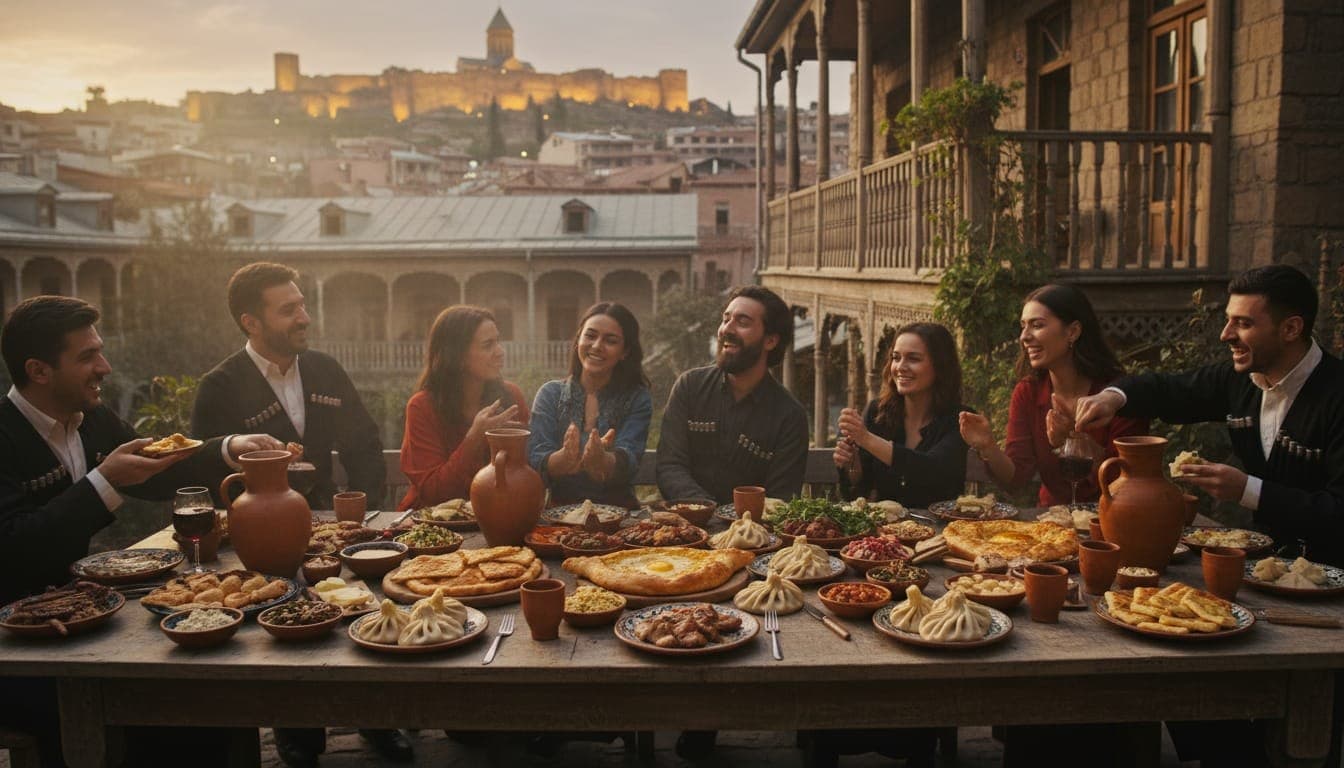
Tbilisi is about a three-hour flight from Dubai, Sharjah or Abu Dhabi. flydubai and Air Arabia run direct flights, and a meal there costs roughly what you'd pay for coffee and a snack in a Gulf mall. Georgian food draws on Persian, Turkish and Russian cooking and a strong local tradition. It uses a lot of walnuts, fresh herbs (coriander, tarragon, dill, purple basil), pomegranate and dried marigold. Almost every meal is meant for sharing.
This guide covers three things every visitor should get right: khinkali (soup dumplings), the vegetarian dishes that fill half of any Georgian menu, and qvevri wine, which UNESCO added to its intangible heritage list in 2013.
Currency note: prices are in Georgian lari (GEL). In 2026, 1 GEL is roughly 1.35 AED, so 10 GEL is about 13.5 AED. Rates move, so check before you travel.
A few basics before you sit down:
- Meal times run late. Lunch is 13:00–16:00, and dinner rarely starts before 20:00. Popular places fill up from 21:00, especially Thursday to Saturday.
- Portions are large. Two people ordering four dishes is usually plenty.
- Menus in the centre are almost always in English. Many are also in Russian, and a growing number in Arabic around Old Tbilisi.

Khinkali: Hold, Bite, Sip, Leave the Knob
Khinkali are pleated dumplings, twisted at the top into a thick knot of dough called the kudi. The filling is raw minced meat, onion, herbs and spices. As it steams, the juices turn into a hot broth inside the dough. Eating one properly takes about ten seconds:
- Pepper it. Add black pepper from the shaker on the table. Locals rarely use anything else.
- Hold it by the knob, upside down, with your fingers. A knife and fork will tear the dough and spill the broth.
- Bite a small hole in the side and sip the broth first. It's very hot, so go slowly.
- Eat the rest, working around the knob.
- Leave the knob on the plate. It's thick, chewy, undercooked dough. Georgian friends sometimes count the knobs at the end to see who ate the most.
What to order
- Kalakuri (city-style): meat with plenty of coriander and herbs. This is the standard in Tbilisi.
- Mtiuluri / Pasanauri-style (mountain): just meat, onion, pepper and cumin. Simpler, and many people think it's better.
- Sokos (mushroom), kartopili (potato) and kvelit (cheese): good meat-free options. The cheese ones are rich, so share them.
Ordering tips
- Khinkali are priced per piece, usually 1.20–2.50 GEL (about 1.60–3.40 AED). Many places ask for a minimum of five per type. Three to five per person is normal, and ten is a big appetite.
- They take 15–25 minutes to cook, so order them early along with your salads.
- For Gulf travellers: the standard meat filling is often a beef and pork mix. Ask for beef-only or lamb khinkali (sakonlis means beef). Several restaurants around Meidan and Abanotubani cater to Muslim diners, but always confirm with staff.
Vegetarian Heroes: Pkhali, Lobio and Badrijani
Georgian Orthodox fasting rules ban meat and dairy for more than 180 days a year, so the menu has a very strong vegan section. These dishes aren't sides. Order three or four with bread and you have a full meal, often cheaper than the meat options.
Pkhali
Finely chopped vegetables (spinach, beetroot, leek, cabbage or green beans) mixed with ground walnuts, garlic, vinegar and herbs. They're shaped into balls and topped with pomegranate seeds. An assorted plate of three colours costs 12–18 GEL (16–24 AED). It's cold and bright-tasting, so order it first.
Lobio
Kidney beans slow-cooked with onion, coriander, savory and chilli. They're often served bubbling in a clay pot called a kotani. A pot costs 8–14 GEL (11–19 AED). The traditional pairing:
- Mchadi: dense, slightly crumbly cornbread cakes
- Mzhave: Georgian pickles, especially the green tomatoes and jonjoli (pickled bladdernut flowers)
Some versions come topped with meat or cooked with pork fat. If you want it vegan, ask for markhvis (lent) lobio.
Badrijani nigvzit
Strips of fried aubergine rolled around a garlicky walnut paste and finished with pomegranate. It costs 12–18 GEL (16–24 AED) and is one of the most photographed plates in Tbilisi.
Also worth ordering
- Ajapsandali: a stew of aubergine, pepper, tomato and potato, a bit like ratatouille
- Georgian salad: tomato and cucumber dressed with walnut sauce or Kakhetian sunflower oil. It sounds basic, but the summer tomatoes are excellent.
- Nadughi: fresh whey cheese rolled with mint. It contains dairy, but it's meat-free.

The Rest of the Table: Khachapuri, Grills and Sweets
You'll be tempted to order everything, but these are the dishes worth leaving room for.
- Adjaruli khachapuri: a boat-shaped bread filled with molten cheese, butter and a raw egg yolk. Stir it all together at the table and tear off the crust to dip. 15–28 GEL (20–38 AED). A "small" one is enough for two people as a side.
- Imeruli / Megruli khachapuri: round cheese breads. Megruli has extra cheese on top. They're better for sharing than Adjaruli.
- Mtsvadi: skewers grilled over vine cuttings. Order beef or lamb, since pork is the default. 18–35 GEL (24–47 AED).
- Chkmeruli: chicken in a garlic and milk sauce, served in a clay dish. It's rich and very garlicky.
- Churchkhela: walnuts threaded on string and dipped in thickened grape juice. You'll see them hanging at stalls everywhere. 3–6 GEL each at markets, more in touristy spots.
- Pelamushi: a grape-must pudding, usually served in autumn.
Most restaurants bring out shoti or tonis puri, the canoe-shaped bread baked on the wall of a round clay oven. Bakeries (tone) sell it hot for about 1–1.50 GEL. Look for the basement openings in residential streets in Sololaki and Chugureti.
Qvevri Wine by the Glass
Georgia has made wine for about 8,000 years. The traditional method uses a qvevri, a large egg-shaped clay jar buried in the ground. The grapes ferment with their skins, and white grapes are often fermented with their stems and seeds too. White grapes made this way produce amber (orange) wine: deep in colour, a little tannic and savoury, and very good with walnut-heavy food.
How to order
In almost any wine bar or courtyard restaurant in Old Tbilisi, Sololaki or Vera, you can just ask, "Do you have qvevri wine by the glass?" Staff usually offer to let you taste two or three before you choose.
- Glass: 12–25 GEL (16–34 AED) at wine bars. House wine from a carafe in ordinary restaurants is 5–10 GEL per glass.
- Bottle in a restaurant: 45–120 GEL (60–160 AED) for natural qvevri wines.
- Bottle in a shop: 25–60 GEL for good qvevri wine from small producers.
Grapes to know
- Rkatsiteli: the most common white grape. Made in qvevri, it tastes of dried apricot and tea.
- Kisi and Mtsvane: aromatic whites that make some of the best amber wines.
- Saperavi: an inky red with dark fruit and plenty of structure.
Not drinking?
You won't feel left out. Order Lagidze water, a historic Tbilisi soda made with natural syrups; tarragon (green) and cream-soda flavours are the classics. Also try Borjomi mineral water, fresh pomegranate juice or tkemali-style fruit compotes. Toasts at a Georgian table are about the words, not the alcohol, so raise whatever is in your glass.

Where to Eat: Neighbourhoods Compared
Tbilisi is compact. The metro (two lines) and red municipal buses cost 1 GEL per ride. Pay by tapping a contactless bank card or a Metromoney card, and transfers within 90 minutes are discounted. Bolt rides across the centre usually cost 6–15 GEL.
| Area | Best for | Typical dinner for two (no wine) | Getting there |
|---|---|---|---|
| Old Tbilisi / Abanotubani / Meidan | First-night classics, halal-friendly options, views | 70–120 GEL (95–160 AED) | Walk from Freedom Square metro |
| Sololaki | Courtyard wine bars, qvevri by the glass | 80–140 GEL (110–190 AED) | Freedom Square metro |
| Vera / Vake | Modern Georgian cooking, cafés, quieter evenings | 90–160 GEL (120–215 AED) | Rustaveli metro, then walk or Bolt |
| Chugureti (Aghmashenebeli Ave, Fabrika) | Relaxed khinkali spots, young crowd, restored 19th-century street | 50–100 GEL (65–135 AED) | Marjanishvili metro |
| Dezerter Bazaar area | Market snacks, churchkhela, spices, cheap canteens | 25–50 GEL (35–65 AED) | Station Square metro |
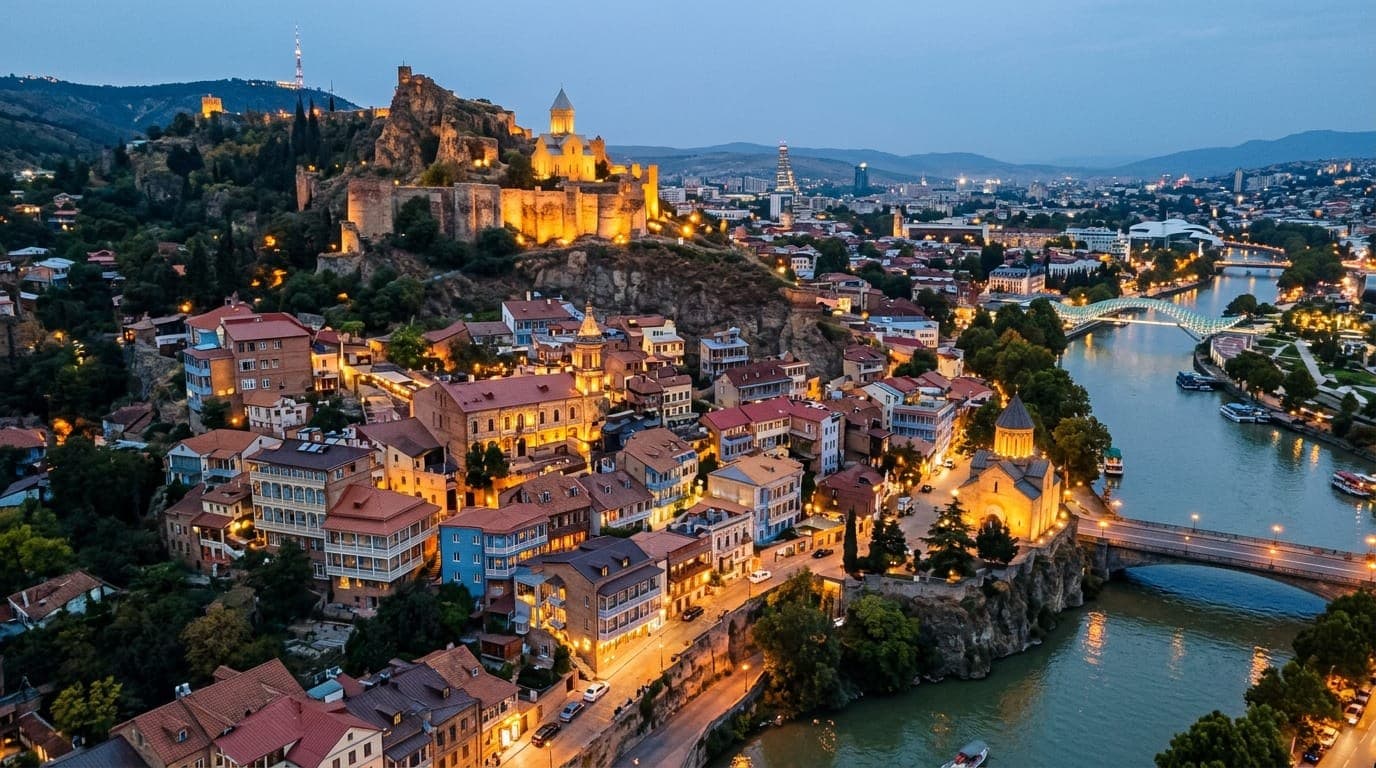
Insider tip: the restaurants with terrace views right beside the Narikala cable car and on Shardeni Street charge a premium and are more hit-and-miss. Walk five minutes uphill into Sololaki or across the river into Chugureti for better food at lower prices.
Budget, Timing and Seasons
A realistic daily food budget (per person)
- Budget: 50–70 GEL (70–95 AED). A bakery breakfast, a khinkali lunch and a vegetarian dinner with a Lagidze soda.
- Mid-range: 90–140 GEL (120–190 AED). Sit-down lunch and dinner, one or two glasses of qvevri wine.
- Treat yourself: 200+ GEL (270+ AED). A tasting menu or wine-bar evening in Vera or Sololaki.
When to go
- Rtveli (grape harvest), mid-September to October: the best time for wine and fresh churchkhela. It's also the easiest trip to add a day in Kakheti, the main wine region.
- Spring, April–May: herbs and greens at their best, and the most vegan choices during Great Lent.
- Summer: Tbilisi can reach 35°C, but evenings in shady courtyards are pleasant, and it's still cooler than the Gulf.
- Winter: lobio, khinkali and chkmeruli are at their best. Crowds are small, and flight deals from the UAE are common.
Getting in from the airport
Bus 337 runs from Tbilisi International Airport to the centre and the main railway station for 1 GEL. The journey takes about 40–50 minutes. A Bolt costs roughly 25–40 GEL, and late at night that's the easier choice.
Etiquette, Caveats and Insider Tips
- Service charge: many restaurants add 10–18% automatically. Check the bill before you tip. If nothing has been added, leave around 10%.
- Cards are widely accepted in the centre. Carry some cash for bakeries, markets and small canteens.
- Dishes arrive when they're ready, not in courses. That's normal, so don't send anything back for arriving early.
- Supra and the tamada: at a formal feast, a toastmaster leads a long series of toasts. If you're invited, don't drink between toasts. Wait until one is proposed.
- Pork is common, including in khinkali, mtsvadi and some lobio. Ask directly. If you need strictly halal meat, look around Meidan near the Jumah Mosque in Abanotubani.
- Walnut allergy: walnuts appear in pkhali, badrijani, sauces and sweets. Say so clearly when you order.
- Tap water in Tbilisi is generally considered safe, and many locals drink it. Bottled Borjomi or Nabeglavi is cheap if you prefer.
- Entry rules: UAE and most GCC citizens can enter visa-free. Georgia now requires foreign visitors to hold travel health insurance, and other nationalities' rules vary. Confirm current requirements with your airline or the Georgian e-visa portal before you book.
- Smoking: it's banned indoors, but outdoor terraces can be smoky. Ask for an inside table if that bothers you.
How many khinkali should one person order in Tbilisi?
Most adults eat three to five khinkali as part of a shared meal, and around eight to ten if khinkali is the whole meal. Many restaurants set a minimum of five per filling. Each piece costs about 1.20–2.50 GEL (1.60–3.40 AED), so trying two or three fillings stays cheap even if you over-order.
Is Tbilisi good for vegetarians and vegans?
Yes, it's one of the easiest cities in the region for them. Orthodox fasting has produced a large range of vegan dishes: pkhali, lobio, badrijani, ajapsandali, mushroom khinkali and fresh salads. Ask for the lent (markhvis) version of lobio to make sure it's cooked without meat or pork fat. Most menus mark meat-free dishes clearly.
Can Muslim travellers find halal food in Tbilisi?
Yes, though you need to check. Pork is common in Georgian cooking, including standard khinkali and grilled mtsvadi. Ask for beef or lamb khinkali and skewers. Restaurants around Meidan and Abanotubani, near the Jumah Mosque, are the most halal-friendly. The large vegetarian range and non-alcoholic drinks such as Lagidze water make it easy to eat well.
What is qvevri wine and how much does a glass cost?
Qvevri wine is fermented and aged in large clay jars buried underground, a Georgian method UNESCO recognised in 2013. White grapes made this way become amber wine with a gentle tannic grip. Expect 12–25 GEL (16–34 AED) a glass in Tbilisi wine bars and 5–10 GEL for house wine in ordinary restaurants.