Day Trips from Kuala Lumpur by Train and Bus: Caves, Royal Towns and Hill Stations
Seven day trips from Kuala Lumpur using only trains, buses and the odd Grab: Batu Caves, Ipoh, Melaka, Putrajaya, Klang and Genting, with times, fares and plans.
12 min read
Why Kuala Lumpur works as a day-trip base
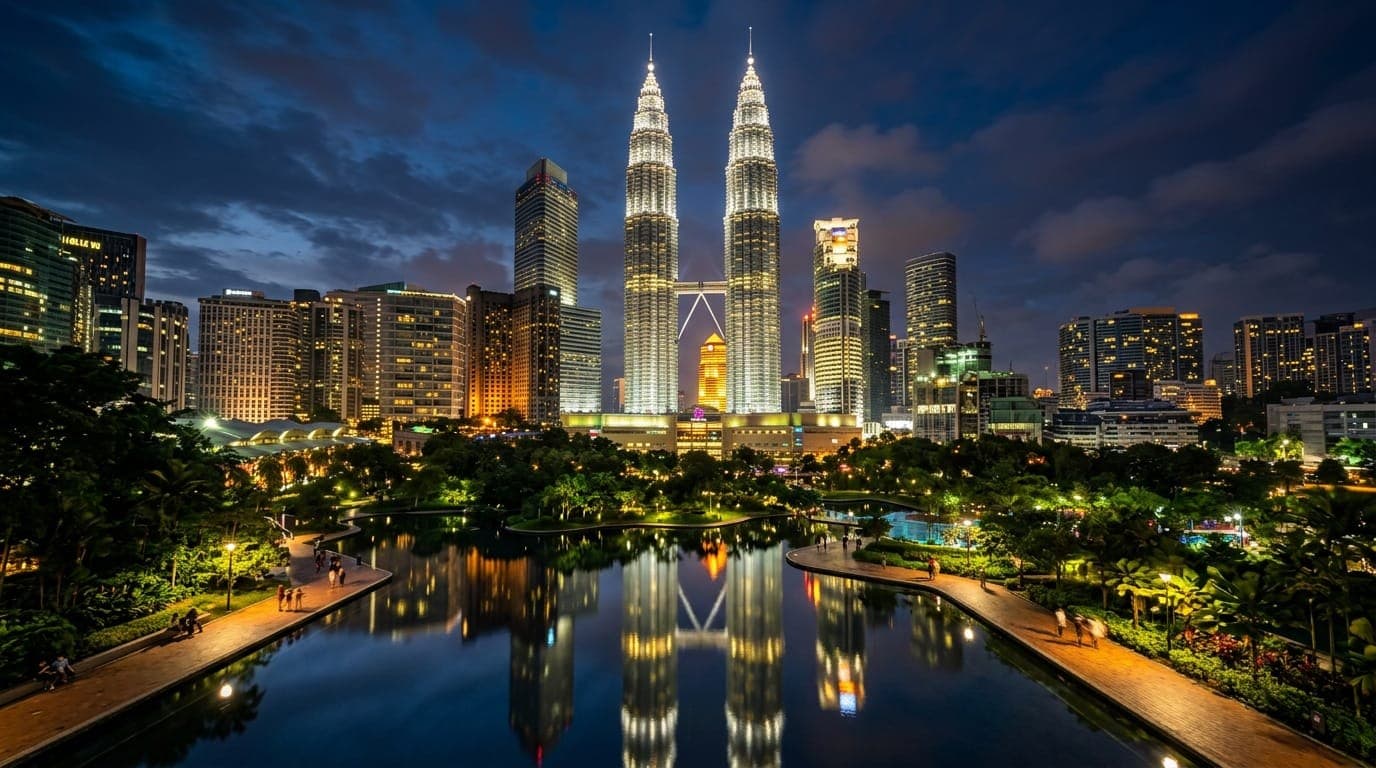
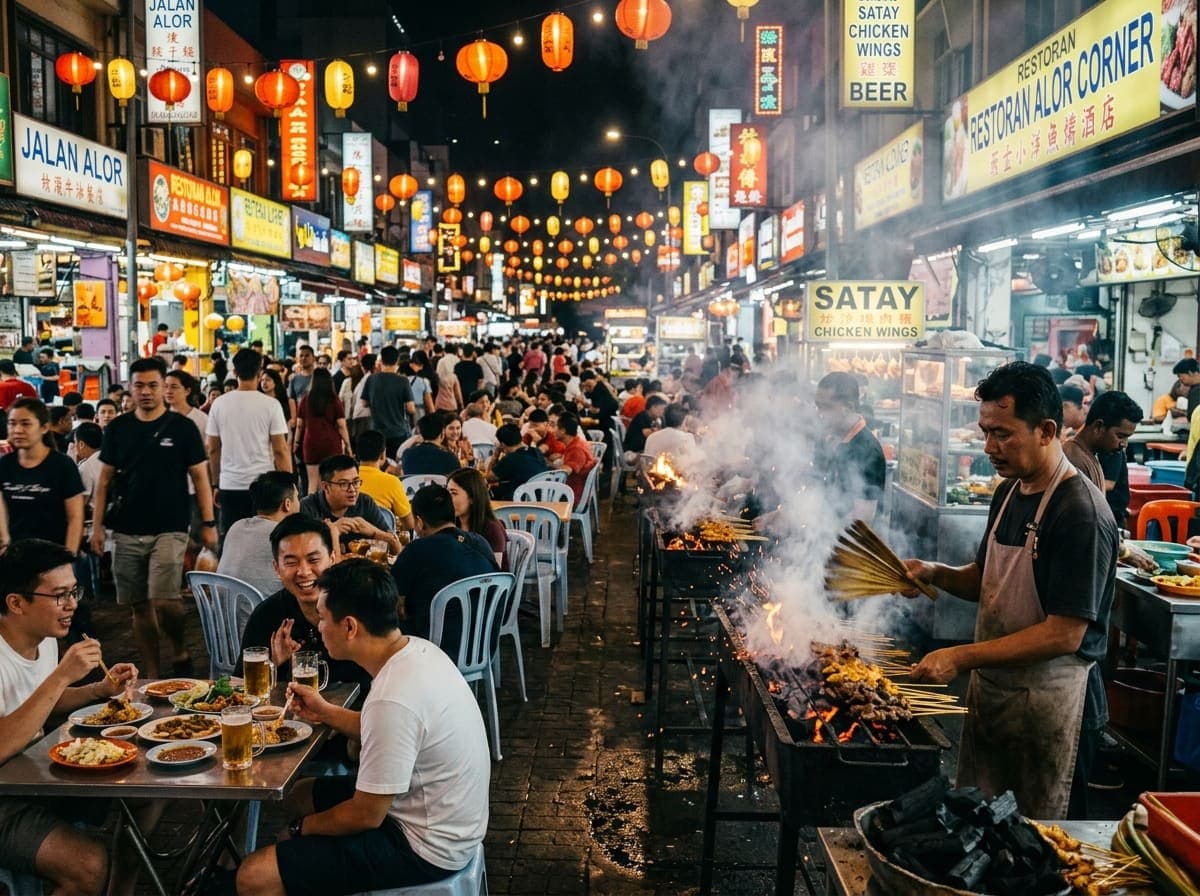
Most visitors give Kuala Lumpur three days of malls, the Petronas Towers and Jalan Alor. The city is more useful as a hub. Within 30 minutes to 2.5 hours of KL Sentral you can climb to a Hindu cave temple, eat white coffee and salted chicken in a colonial tin-mining town, walk Melaka's Dutch and Portuguese quarter, or ride a cable car into cool highland air. You can do all of it without hiring a driver.
The rail network does most of the work:
- KTM Komuter runs to Batu Caves and Klang.
- ETS intercity trains run to Ipoh.
- KLIA Transit and the MRT Putrajaya line reach the federal capital.
- Express buses from TBS (Terminal Bersepadu Selatan) cover Melaka.
Fares are low. Most trips cost around RM3–50 each way (roughly AED 3–45). For Gulf families, a day trip often costs less than a single taxi ride across Dubai.
Halal food is easy to find almost everywhere, Friday prayers shape the rhythm of Putrajaya and Klang, and Arabic-speaking travellers are a familiar sight.
The best months are February, March, June and July. Rain is less persistent then, and afternoon storms are shorter. Even in good months, start early. Mornings are cooler and drier, and they are when the caves, mosques and markets look their best.
This guide covers six trips you can do using only public transport, plus a five-day plan that strings them together.
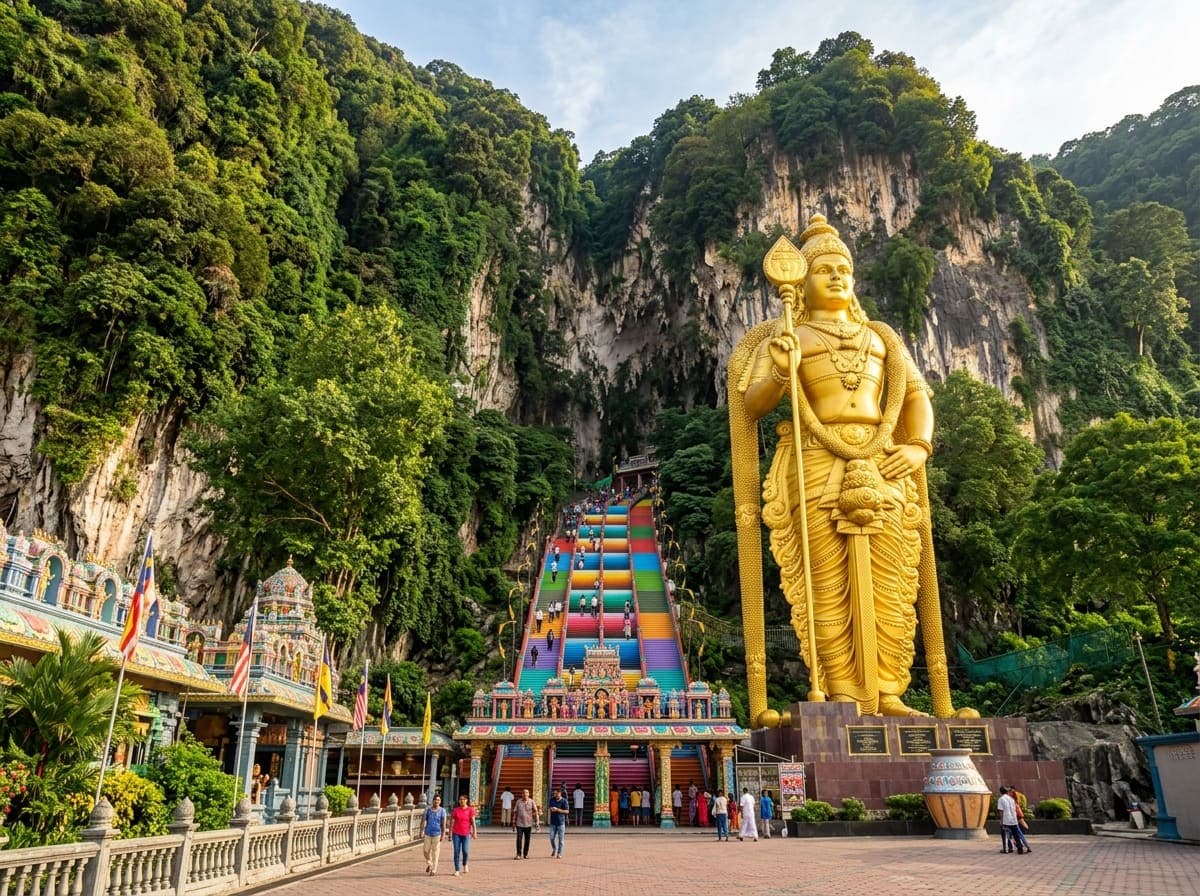
Batu Caves: the easiest half-day
Getting there: Take the KTM Komuter Batu Caves line from KL Sentral to its last stop, Batu Caves. The ride takes about 30–35 minutes and typically costs around RM2–3 (AED 2–3). Trains run roughly every 30 minutes but can bunch up, so check the KTMB app. The station sits right at the foot of the temple.
What you'll see: A 42.7-metre golden statue of Lord Murugan stands beside 272 rainbow-painted steps leading up to Temple Cave, a vast limestone chamber with shafts of daylight. Entry to the main cave is free. The smaller Ramayana Cave and Cave Villa at the base charge a few ringgit.
Insider tips:
- Arrive by 8am. By 10am tour buses arrive, the steps heat up and the light turns flat.
- Dress code applies. Shoulders and knees must be covered. Sarongs can be rented at the bottom for around RM5 (refundable deposit systems vary).
- Watch the macaques. Keep plastic bags, drinks and sunglasses out of sight; they snatch confidently.
- Eat at the base. The vegetarian Indian stalls do thosai, vadai and teh tarik for around RM8–15 per person.
During Thaipusam (usually late January or early February), hundreds of thousands of devotees walk here. It is an extraordinary spectacle but extremely crowded, and the trains are packed.
Back in KL by noon, you still have the afternoon for the city.
Klang and Port Klang: royal town, Little India and the sea
Getting there: Ride the KTM Komuter Port Klang line from KL Sentral to Klang station. It takes around 50–60 minutes and costs around RM4–5 (AED 3.5–4.5). The line continues to Port Klang if you want the waterfront.
Klang is Selangor's royal town and feels nothing like KL's glass towers.
Mosque and palace: Visit the Masjid Diraja Sultan Sulaiman, a 1930s royal mosque that blends Art Deco and Moorish styles; avoid Friday midday prayers. Nearby, you can view the Istana Alam Shah from outside.
Little India: Jalan Tengku Kelana is one of the busiest Indian quarters in the country. Expect gold shops, sari stores, flower garlands and halal banana-leaf rice for around RM12–20. Around Deepavali it is lit up and packed.
A note on bak kut teh: Klang is famous for this herbal soup. It is a pork dish and not halal, so Muslim travellers should know what it is before following the queues near the station.
Port Klang and Pulau Ketam: Continue to Port Klang to catch a ferry to Pulau Ketam, a Chinese fishing village on stilts. The crossing takes around 30–45 minutes, with return fares typically around RM15–20. Confirm the last return boat before you go.
This is an easy, cheap day that shows working-class Malaysia far from the tourist circuit.
Putrajaya: mosques, bridges and a lake at golden hour
Getting there: There are two options to Putrajaya Sentral.
- KLIA Transit from KL Sentral is the fast option: about 20 minutes for around RM14 (AED 12).
- The MRT Putrajaya line from central KL is cheaper at around RM5–6, but takes closer to an hour.
From Putrajaya Sentral, local Nadi Putra buses or a Grab (around RM8–15) take you to Dataran Putra, the main square.
What you'll see: The planned administrative capital is spread out and quiet.
- Putra Mosque: The pink-domed mosque on the lake is the centrepiece. Non-Muslim visitors are welcome outside prayer times, and robes are provided.
- Masjid Tuanku Mizan Zainal Abidin: The modern "Iron Mosque" is about 10 minutes away by Grab and is often quieter.
- Around the square: Perdana Putra, the prime minister's office with its green dome, overlooks the square. The Seri Wawasan bridge is best photographed at dusk.
Insider tips:
- Come in the afternoon. Arrive around 3–4pm, see the mosques, then take a lake cruise around sunset. Boat cruises typically cost around RM50–60 for adults, with traditional gondola-style perahu cheaper.
- Avoid Friday 12:30–2:30pm, when tourist access to mosques is restricted.
- Eat by the lake. The food court at Alamanda mall and the stalls near Dataran Putra serve nasi lemak, satay and ikan bakar, all halal, for around RM10–25.
Shade is scarce, so bring water and a hat even in February.
Melaka: a long but rewarding heritage day
Getting there: Take the LRT Sri Petaling line, KTM or KLIA Transit to Bandar Tasik Selatan, then walk to TBS bus terminal. Buses to Melaka Sentral take around 2–2.5 hours and cost around RM12–20 (AED 10–17). They run frequently from early morning.
From Melaka Sentral, a Grab to Dutch Square costs around RM8–12. The Panorama Melaka bus also does the run.
Book your return seat in the morning. Evening and Sunday buses sell out, and Melaka traffic can add an hour to the journey back.
What you'll see: The UNESCO-listed core is compact and walkable.
- Dutch Square: the red Stadthuys and Christ Church.
- St Paul's Hill: a short climb to the ruined Portuguese church.
- A Famosa: the surviving gate of the old fortress.
- Along the river: a river cruise of around 45 minutes, typically around RM30.
- Chinatown: Jonker Street and the Peranakan houses of Heeren Street.
What to eat:
- Chicken rice balls: queues form at lunch.
- Nyonya laksa and cendol: the coconut-and-palm-sugar shaved ice is the real reason many locals visit.
- Kampung Morten: halal Malay food is easy to find around this traditional village on the river.
The Jonker Street night market runs Friday to Sunday evenings. If you want it, consider staying overnight rather than racing a late bus. As a day trip, leave KL by 8am and aim for a bus home around 5–6pm.
Ipoh: white coffee, cave temples and limestone hills
Getting there: The ETS train from KL Sentral to Ipoh takes around 2–2.5 hours depending on the service. Economy fares typically cost around RM30–50 (AED 26–45) each way.
Book on the KTMB app several days ahead, especially on Fridays, Sundays and school holidays, when trains sell out completely. Ipoh's Edwardian railway station is itself worth a photo.
What you'll see:
- Old Town: Ipoh's tin-mining wealth built it, and it is walkable from the station. Explore Concubine Lane, the street murals, and the colonial blocks around the Birch Memorial Clock Tower.
- Cave temples: Kek Lok Tong and Sam Poh Tong are Buddhist temples built into limestone cliffs, with gardens and koi ponds. Both are free and roughly 10–15 minutes by Grab (around RM10–15) from the centre.
What to eat:
- Ipoh white coffee and egg tarts for breakfast.
- Bean sprout chicken (taugeh ayam), the city's signature lunch.
- Salted baked chicken wrapped in paper to take home.
- Halal options: Many Chinese kopitiams here are not halal, but halal versions of most dishes exist. Look for certification signs, and you'll find nasi kandar and Malay stalls easily.
Take the earliest train you can, around 7–8am. The midday heat in the Kinta Valley is heavy, and you want the cave temples done before afternoon showers. Book a return around 6–7pm.
Genting Highlands: cool air above the clouds
Getting there: Express buses run from KL Sentral and Terminal Bersepadu Gombak (at the end of the LRT Kelana Jaya line) to Awana SkyWay. The ride takes around 1–1.5 hours for around RM10–15 (AED 9–13).
From Awana, the Awana SkyWay cable car climbs over rainforest to the hilltop resort in about 10–15 minutes. Fares typically run around RM10–20 each way, with bus-and-cable-car combo tickets sold at the terminals.
What you'll find: At around 1,800 metres, temperatures sit at around 15–22°C. That is the main draw for Gulf travellers escaping summer heat in June and July.
- Chin Swee Caves Temple: a mid-station stop on the cable car, with a nine-storey pagoda and mist rolling through the trees. It is the most rewarding stop on the mountain.
- The resort: the summit is a casino-and-malls complex with Genting SkyWorlds theme park. Tickets typically cost around RM150–200 for adults; check online for discounts.
- Food: abundant and largely halal, mostly in food courts and chain restaurants.
Insider tips:
- Pack a light jacket. The temperature drop is real, and fog can close the cable car briefly.
- Go on a weekday. Weekend and holiday queues for buses and cable cars can stretch past an hour.
- Take an afternoon bus back. This dodges the evening traffic on the Karak Highway.
A five-day plan and how to combine trips
Rotate long trips with short ones so you are not on a bus every morning.
- Day 1 – Batu Caves and the city. Take the 7:30am Komuter to Batu Caves and climb before the heat. Be back at KL Sentral by noon. Spend the afternoon at Merdeka Square and Masjid Jamek, then have dinner at Jalan Alor or the Kampung Baru Malay stalls.
- Day 2 – Ipoh. Take an early ETS. Do the Old Town and white coffee in the morning, and the cave temples after lunch. Ride the evening train back and grab a late supper near your hotel.
- Day 3 – Slow morning, Putrajaya afternoon. Rest or shop in the morning. Take KLIA Transit around 3pm, visit the mosques, cruise the lake at sunset, then return.
- Day 4 – Melaka. Take a bus from TBS at 8am, walk the heritage core and eat chicken rice balls and cendol. Catch a late-afternoon bus back, or stay over on Friday or Saturday for the night market.
- Day 5 – Klang or Genting. Pick Klang for food and culture, or Genting for cool air and family rides.
Budget: Transport for all five days typically comes to around RM150–220 per adult (AED 130–190), excluding Grab hops. Hawker meals run around RM10–25, so a comfortable food budget is RM60–100 per day.
Families: Swap Ipoh for Genting, and keep Putrajaya, where strollers manage the wide paths easily.
Practical: arriving at KUL, getting around, money and safety
Getting into the city
- Flights: Direct flights from Dubai, Abu Dhabi, Doha, Muscat and Riyadh take around 6.5–8 hours to KLIA (KUL).
- KLIA Ekspres: reaches KL Sentral in around 30 minutes for around RM55 (AED 48). It is the base for nearly every trip in this guide.
- Airport buses: cost around RM15 but take about an hour.
- KL Sentral hotels: staying near KL Sentral or along the LRT Kelana Jaya line makes early departures painless.
- Onward flights: KUL and KLIA2 are a cheap springboard to Bangkok, Bali, Hanoi and beyond.
Getting around
- Trains: Most Rapid KL rail lines accept contactless bank cards. A Touch 'n Go card (around RM10 plus top-up) covers trains, some buses and tolls.
- Tickets and timetables: The KTMB app handles Komuter timetables and ETS tickets.
- Bus tickets: buy at TBS counters or via bus-booking apps.
- Grab: fills the last-mile gaps cheaply. Most hops cost around RM8–20.
Money
- Exchange rate: roughly RM1.15 to AED 1, but check current rates.
- Cash: carry small notes for hawkers, temple sarongs and ferries. Card acceptance is good in malls, while DuitNow QR payments dominate at stalls.
- Changing money: licensed money changers in KL malls usually beat airport rates.
Safety and etiquette
- Theft: KL is generally safe. Watch for bag snatching from motorbikes on busy roads and keep phones away from the kerb.
- Weather: afternoon thunderstorms are common even in dry months, so plan outdoor sights for mornings.
- Dress: cover shoulders and knees at mosques and temples.
- Fridays: remember midday prayers when timing mosque visits.
Read more: Kuala Lumpur · Kuala Lumpur Layover Guide: Leave the Airport, Eat Well and Get Back on Time · Kuala Lumpur Month by Month: When to Go for Dry Skies, Festivals and Fair Prices
Which Kuala Lumpur day trip is easiest without a car?
Batu Caves. The KTM Komuter from KL Sentral ends right at the temple steps after about 30–35 minutes, typically for around RM2–3. You can be back in the city by lunchtime.
Is Melaka or Ipoh better as a day trip from KL?
Ipoh is the smoother day trip because the ETS train is comfortable and predictable, at around 2–2.5 hours each way. Melaka has more heritage sights, but the bus can be slowed by traffic. Many travellers prefer an overnight stay in Melaka, especially for the Friday–Sunday night market.
Is halal food easy to find on these day trips?
Yes. Putrajaya, Genting and Kampung Morten in Melaka are overwhelmingly halal, and Klang's Little India has halal banana-leaf rice. In Ipoh and Klang's Chinese quarters, check for halal certification signs. Bak kut teh in Klang is a pork dish.
Do I need to book trains and buses in advance?
Book ETS trains to Ipoh several days ahead, especially for weekends and school holidays. Komuter and MRT trains need no booking. For Melaka and Genting buses, buy outbound tickets a day ahead in busy periods and secure your return seat on arrival.
When is the best time of year for day trips from Kuala Lumpur?
February, March, June and July usually bring shorter, less frequent rain, which makes outdoor sites like Putrajaya and Melaka more pleasant. Genting is especially popular with Gulf visitors in June and July for its cooler highland temperatures.
Tags:Southeast AsiaKuala LumpurDay TripsMalaysia by TrainPublic Transport