What a Day in Salalah Really Costs: Budget, Mid-Range and Splurge Breakdown
How far your rials and dirhams go in Salalah: costed days for beds, food, car hire and sights, plus how khareef and winter change the bill.
10 min read
Why Salalah works on almost any budget
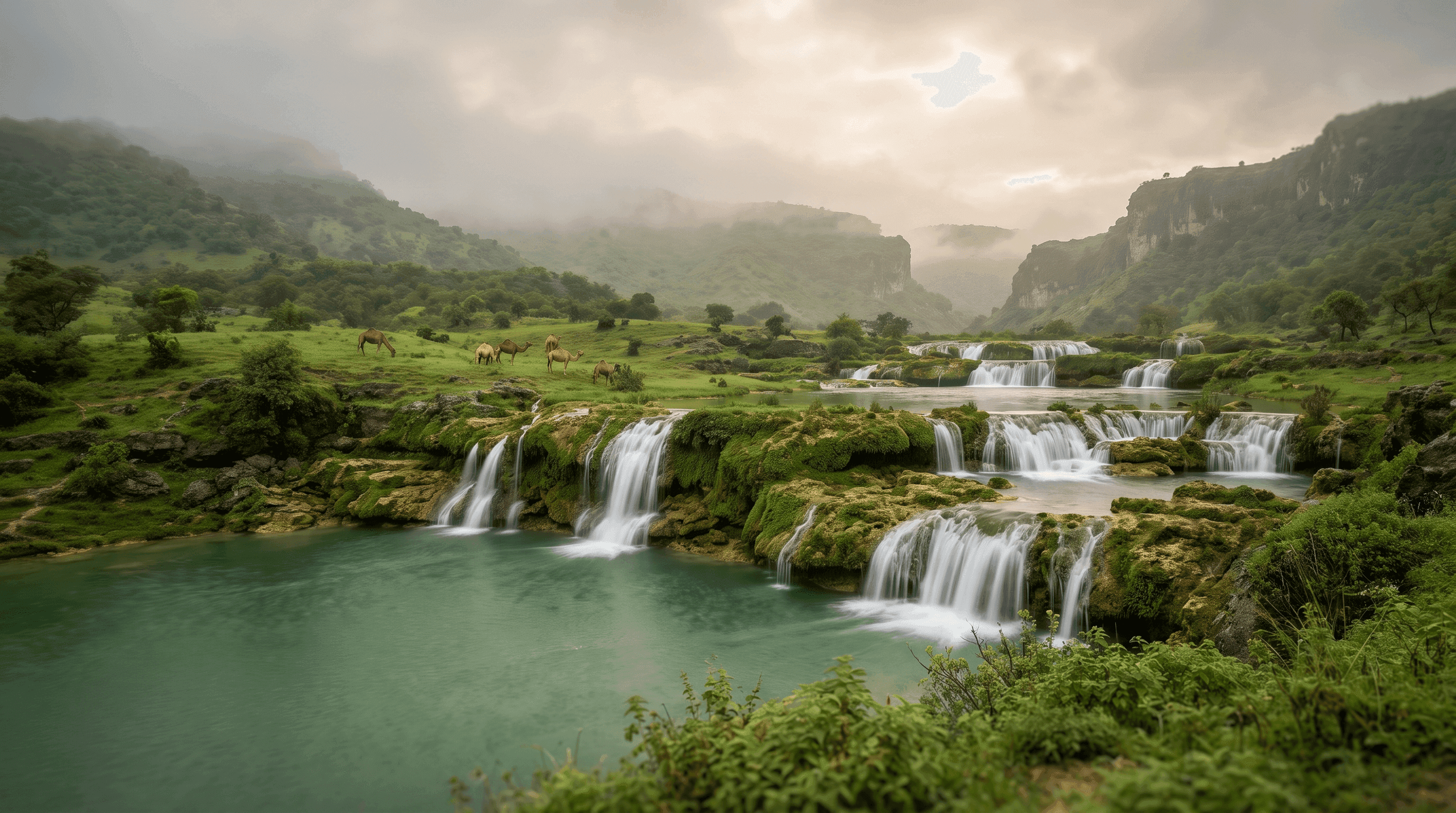
Salalah is a rare Gulf destination where a shoestring trip and a five-star trip can cover the same sights. The biggest draws cost little or nothing. The wadis, beaches, blowholes and monsoon-green hills of the Dhofar mountains are all free. The paid sights, like the frankincense ruins at Al Baleed and Sumhuram, charge only a couple of rials.
What drives your bill is something else: where you sleep, whether you rent a car, and when you come. Salalah has two high seasons that pull in different directions. The khareef (roughly mid-June to mid-September) brings Gulf families escaping 45°C heat. November to February brings European winter-sun travellers. Both push up prices, but in different parts of the market.
Currency basics: the Omani rial (OMR) splits into 1,000 baisa. One rial is pegged at around AED 9.5, so a 500-baisa coconut costs about AED 5. Many travellers from the UAE are surprised that a casual meal costs about the same as at home. Rental cars and fuel are clearly cheaper, and hotels outside peak weeks can be a bargain.
This guide sets out what each part of a day really costs. It then puts the figures together into three sample days: lean, comfortable and indulgent. You can budget honestly before you book.
Sleeping: the line item that swings the most
Accommodation can be anywhere from a third to two-thirds of your daily spend. It is also where timing matters most.
Budget (furnished apartments and simple hotels): Salalah has lots of serviced apartments in Al Saada, Al Dahariz and around Al Haffa. Outside khareef, a one-bedroom apartment typically costs OMR 15–25 a night (around AED 145–240). These suit families well because they come with a kitchen. In July and August, the same units often jump to OMR 35–60, and they book out early, especially around Eid.
Mid-range (3–4 star city and beach hotels): expect around OMR 30–55 (AED 285–525) in shoulder months. In peak weeks of either season, the range is closer to OMR 60–100. Breakfast is usually included at this level.
Splurge (beach resorts): the resort strip includes Al Baleed Resort Salalah by Anantara on the beach near the archaeological park. There are also the Hawana Salalah and Salalah Beach developments east of the city, and Alila Hinu Bay near Mirbat. Rooms typically start around OMR 120–250 (AED 1,150–2,400), and villas and holiday weeks go well beyond that. These resorts fill up most in winter, when European charter flights arrive.
Insider tip: in khareef, a Sunday-to-Wednesday stay is often noticeably cheaper than a weekend. Gulf visitors cluster Thursday to Saturday.
Eating: from 300-baisa coconuts to resort dinners
Salalah's everyday food scene is shaped by its large South Asian community. That keeps cheap eating very cheap.
Street and roadside (under OMR 1, about AED 10):
- Karak tea from roadside cafeterias: around 100–200 baisa.
- Paratha with egg or chapati with daal for breakfast: typically 300–600 baisa.
- Fresh coconut, bananas and papaya: sold at the fruit stalls lining the plantation belt between the city centre and Al Haffa. A drinking coconut usually costs around 300–500 baisa.
- Shawarma: around 500 baisa to OMR 1.
Casual sit-down (OMR 1.5–5, AED 15–48): Kerala and Pakistani restaurants serve biryani, fish curry and grilled chicken for OMR 1.5–3. Turkish and Lebanese grills cost a little more. Look for mishkak, the charcoal-grilled meat skewers sold from evening stands around Al Haffa and at the khareef festival grounds. A plate typically runs OMR 1–3.
Seafood: in Salalah and Mirbat, grilled kingfish or hamour with rice usually costs OMR 4–8 at local seafood restaurants.
Splurge (OMR 25–50+ per person, AED 240–480+): resort restaurants charge international prices. Alcohol is served only in licensed hotel bars and restaurants. A beer there typically costs OMR 3–5, which adds up quickly.
Tip: if you rent an apartment, shop at Lulu Hypermarket for breakfast supplies and picnic food. It saves a few rials every day.
Getting around: why the car decision shapes your budget
Salalah's sights are spread along roughly 150 km of coast and mountain. Mughsail lies west of the city, and Taqah, Wadi Darbat and Mirbat lie east. Public transport hardly reaches any of them, so a rental car is usually the cheapest way to see the region.
Car rental:
- Small sedan: typically OMR 12–20 a day (AED 115–190) outside khareef, and around OMR 25–40 in July–August.
- 4x4: starts around OMR 35–60, and more in peak season. You only need one for sand tracks, such as the beaches at Fazayah, or for desert trips.
Major international and local firms have desks at the airport. Book weeks ahead for khareef.
Fuel is one of Oman's real bargains. Regular petrol costs around OMR 0.24 a litre (about AED 2.3). A full day covering 150–200 km usually costs only OMR 3–5 in fuel.
Taxis are white with orange trim and usually unmetered, so agree the fare before you get in.
- Short hops within the city: typically OMR 2–4.
- One way to Mughsail: around OMR 10–15.
- Full-day hire with a driver: often OMR 35–50.
For two or more people, renting a car beats taxis by the second day.
Organised tours: half-day city and coast tours typically cost OMR 20–40 per person. Full-day 4x4 trips to the Empty Quarter dunes and the Ubar ruins at Shisr often cost OMR 100–150 per vehicle.
Sights and activities: what's free and what you'll pay for
The good news for budget travellers is that most of Salalah's best experiences cost nothing beyond fuel.
Free:
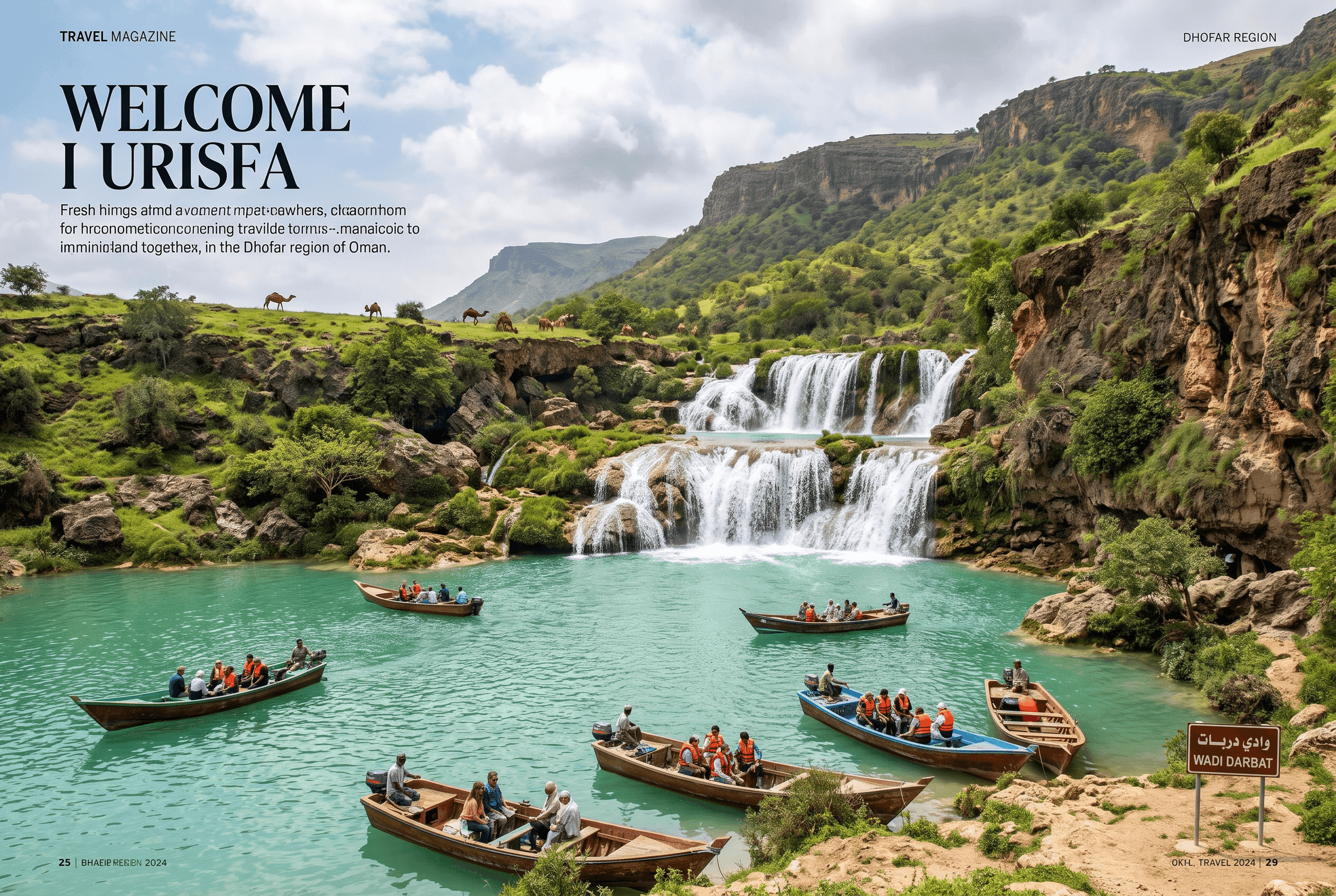
- Wadi Darbat: its lake, and in good khareef years its waterfall.
- Ain Razat and Ain Athum: springs in the foothills.
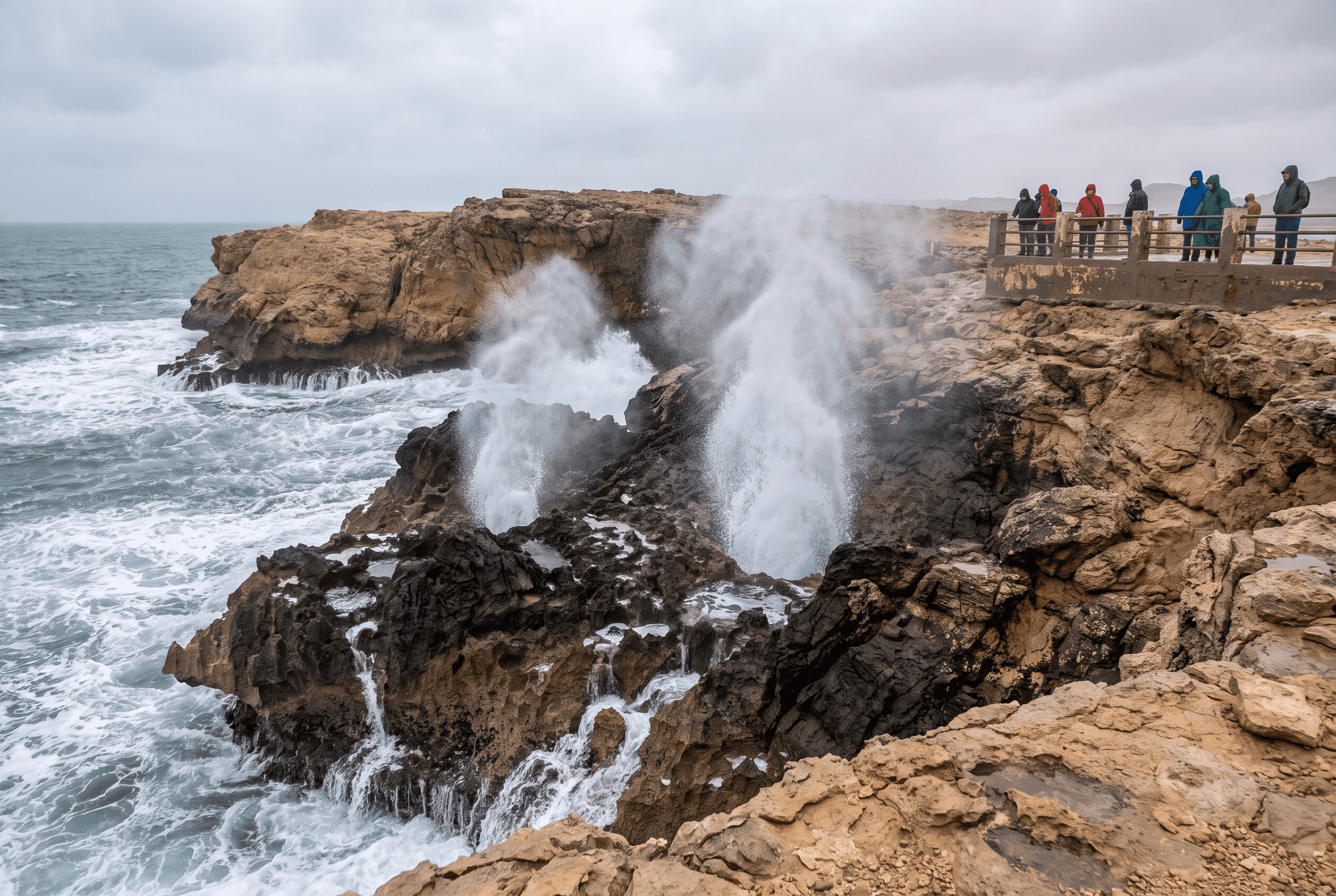
- Mughsail Beach and its blowholes.
- Job's Tomb in the hills above the city.
- The anti-gravity spot: the roadside 'magnetic' point on the Jebel Qara roads, a local curiosity.
- Al Haffa: the corniche and the old souq lanes.
Low-cost:
- Al Baleed Archaeological Park and the Museum of the Frankincense Land: around OMR 2 (AED 19). It is one of the best-value afternoons in Oman.
- Sumhuram at Khor Rori: the ancient frankincense port, entry around OMR 2.
- Taqah Castle and the smaller forts: usually a few hundred baisa.
- Pedal boats at Wadi Darbat in khareef: typically a few rials.
Paid experiences:
- Dolphin- and whale-watching boats from Mirbat: typically OMR 15–30 per person. They run mainly from October to May, when the sea is calm.
- Snorkelling or diving trips: around OMR 25–60.
- Spa treatments at the resorts: typically start around OMR 40–60.
Souvenirs:
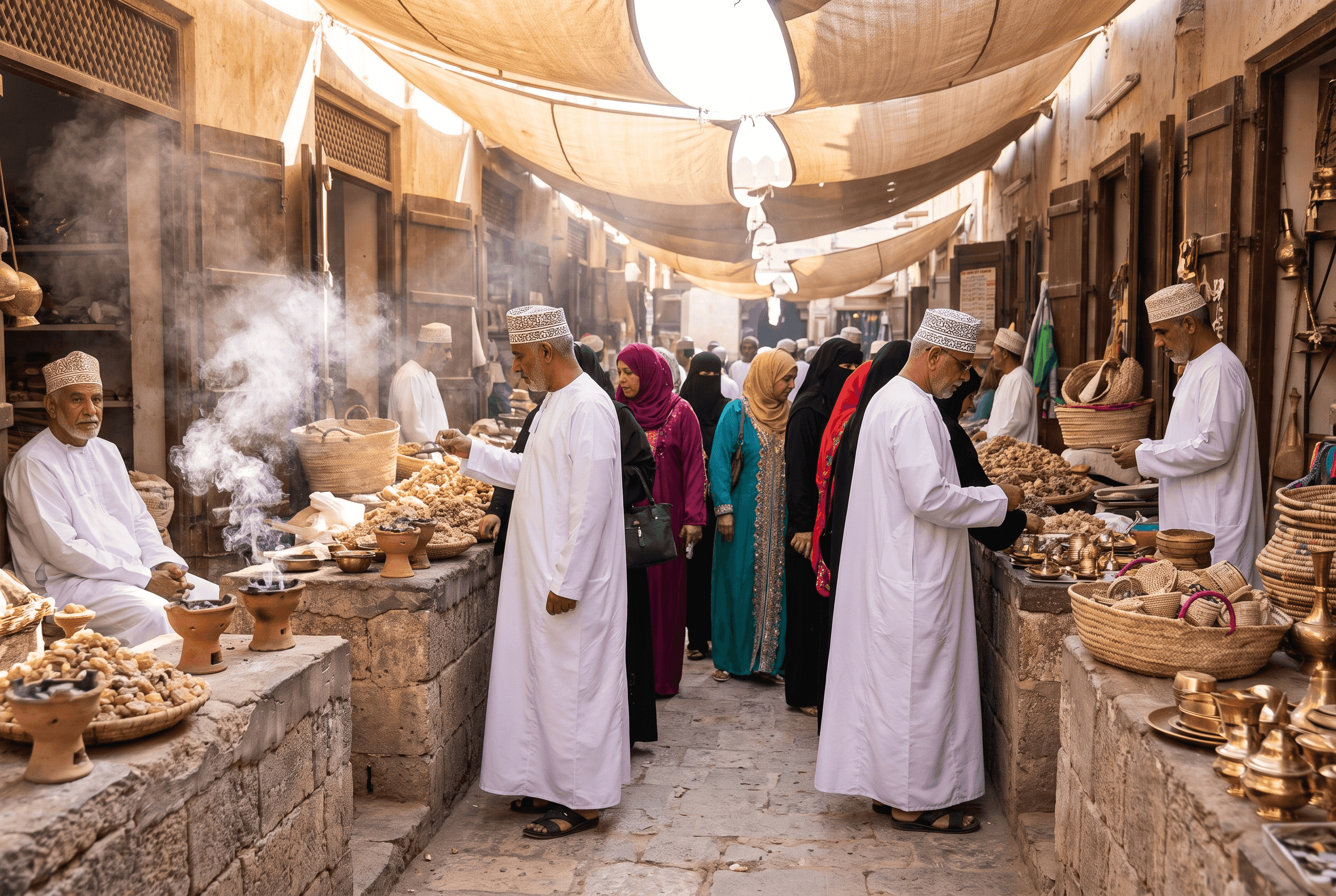
- Hojari frankincense at Al Haffa Souq ranges from about OMR 1 for a small bag of mixed grades to OMR 10 or more for top-quality resin.
- A clay burner costs around OMR 1–3.
Bargaining is polite and expected.
Three sample days, fully costed
The figures below are per person for two travellers sharing. They assume a November–February visit.
Day 1: Lean (around OMR 25–30 / AED 240–285)
- Apartment in Al Saada at OMR 20, shared: OMR 10.
- Small rental car at OMR 15 plus fuel, shared: OMR 9.
- Karak and paratha breakfast, biryani lunch, roadside coconut, mishkak dinner: around OMR 4.5.
- Al Baleed museum and park: OMR 2.
- The route: west to Mughsail and the blowholes in the morning. Al Baleed in the afternoon. Sunset on Al Haffa corniche.
Day 2: Comfortable (around OMR 50–60 / AED 475–570)
- Mid-range hotel with breakfast at OMR 45, shared: OMR 22.5.
- Car plus fuel, shared: OMR 11.
- Grilled fish lunch in Mirbat, café stop, Lebanese dinner: around OMR 15.
- Sumhuram entry plus frankincense shopping: around OMR 5.
- The route: east via Taqah Castle, Khor Rori and Wadi Darbat, then lunch in Mirbat.
Day 3: Splurge (around OMR 190–230 / AED 1,800–2,200)
- Beachfront resort at OMR 180, shared: OMR 90.
- Private 4x4 Empty Quarter tour with driver at OMR 130, shared: OMR 65.
- Resort dinner with a drink: OMR 35–50.
- Morning spa or dolphin cruise: optional extra.
- The route: a dawn departure over Jebel Qara to the dunes and the Shisr (Ubar) ruins, then back for dinner by the sea.
In khareef, add roughly 40–80% to the bed and car lines.
Khareef vs winter: how the season rewrites your bill
Salalah's two best windows suit different budgets. Knowing which one you are in saves real money.
Khareef (July–August):
- Apartments and city hotels are at their priciest. Sometimes they are double the winter rate.
- Rental cars become scarce.
- Flights from the Gulf spike, especially around Eid and UAE school holidays.
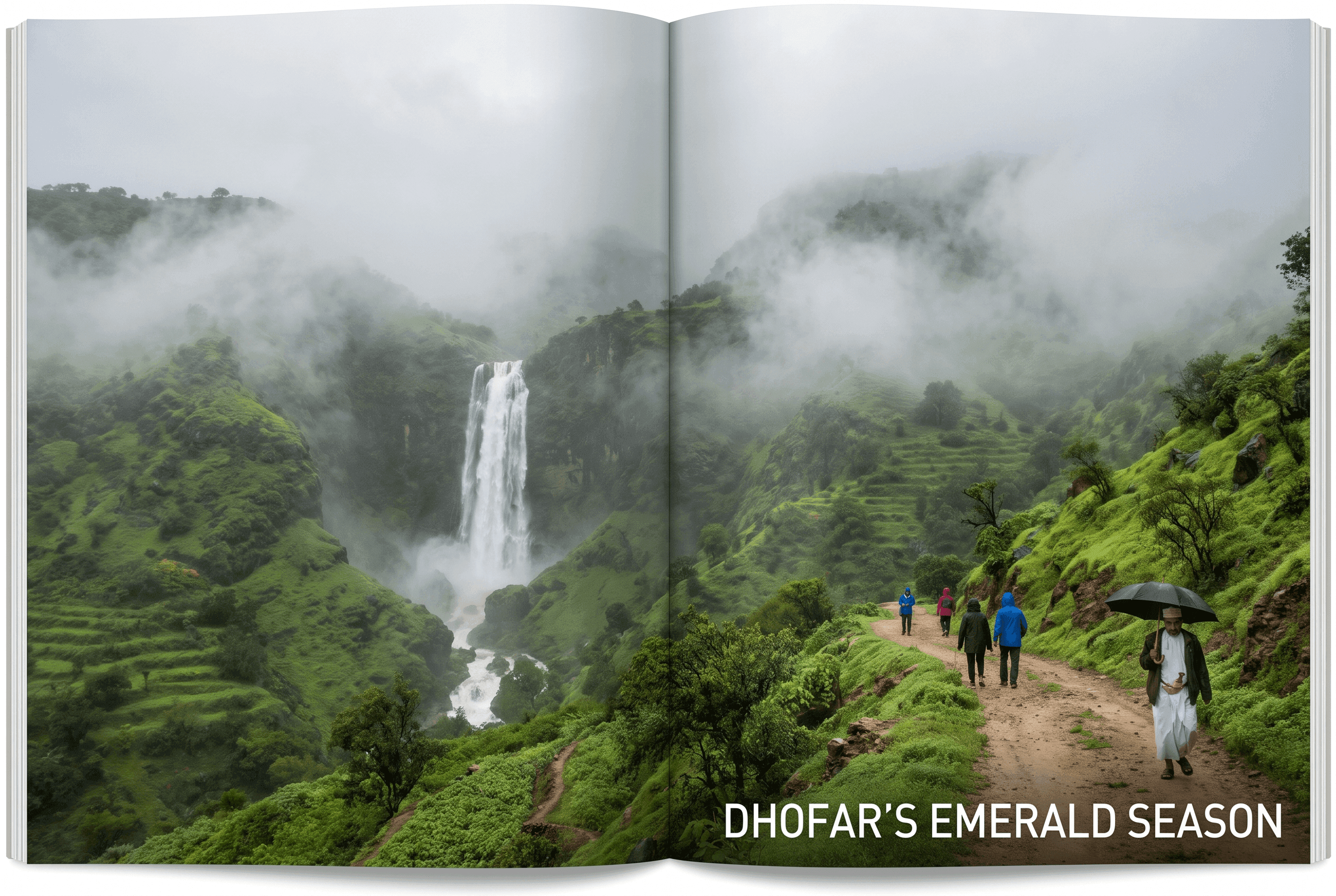
- Food and sights stay cheap, and the hills are at their greenest.
- Beach resorts are often quieter and discounted. Swimming is off-limits in the rough monsoon sea, and the khareef market is mostly families who prefer apartments.
- Haggle on length of stay. Apartment owners often cut a few rials a night for five nights or more.
Winter (November–February):
- Apartments are cheap and easy to find.
- Resorts reach their peak rates, especially over Christmas and New Year.
- Sea trips and beaches are at their best.
- The scenery is golden rather than green, but the coconut groves and turquoise water make up for it.
Money-saving tips:
- Eat your main meal at lunch. Kerala 'meals' thalis usually cost OMR 1–2.
- Fill up water bottles at supermarkets. A 1.5-litre bottle costs around 200 baisa at Lulu, against much more at tourist kiosks.
- Book cars directly with local agencies for weekly rates. They often work out at OMR 2–5 less per day.
- Visit Al Baleed in the late afternoon. The museum and the beachfront ruins fill one ticket, and the light is better.
- Skip guided city tours. Signage at the main sites is good.
Practical: flights into SLL, getting around, money and safety
Getting there:
- Salalah Airport (SLL) is around 15–20 minutes from the centre. A taxi into town typically costs OMR 5–8.
- From Muscat: Oman Air and SalamAir fly in roughly 1 hour 40 minutes. Return fares are typically OMR 40–90 outside peak weeks.
- From the Gulf: flydubai, Air Arabia, SalamAir and Qatar Airways connect Salalah with Gulf hubs. From Dubai or Sharjah, a return outside khareef usually runs around AED 700–1,500. Expect much higher fares in July and August, so book two to three months ahead.
- Overland: the Mwasalat bus from Muscat takes roughly 12 hours and typically costs OMR 7–8. It is a true budget option.
Getting around: rent a car (see above). Mwasalat runs a handful of city bus routes for a few hundred baisa, but they won't reach the wadis or beaches. Ride-hailing coverage changes over time, so check which apps are active before you rely on them.
Money:
- Cards are accepted in hotels, malls such as Salalah Gardens Mall, and supermarkets.
- Carry cash for fruit stalls, souq shopping and small cafeterias. ATMs are plentiful in the city.
- Tipping is modest: rounding up or 5–10% in restaurants is appreciated.
Safety:
- Salalah is very safe.
- Fog on the Jebel Qara roads during khareef can cut visibility sharply, and camels wander onto roads, especially at night.
- Obey red flags on the beaches. Monsoon seas from June to September are dangerous.
- Dress modestly away from resort pools.
How much should I budget per day in Salalah?
Outside khareef, a careful traveller sharing a car and apartment can manage on around OMR 25–35 (AED 240–335) a day. Mid-range travel typically costs OMR 50–90 (AED 475–860), and resort-based trips with private tours start around OMR 190 (AED 1,800) per person.
Is Salalah more expensive during khareef?
Yes, for beds, rental cars and flights. Apartments and city hotels can cost close to double their winter rates in July and August, and cars sell out. Food and sightseeing costs barely change.
Do I need to rent a car in Salalah?
For most visitors, yes. The main sights are spread along the coast and mountains, and buses don't reach them. A small car at around OMR 12–20 a day, with fuel at roughly OMR 0.24 a litre, usually works out far cheaper than taxis for two or more people.
Can I pay by card everywhere?
Hotels, malls, supermarkets and most restaurants accept cards. Keep cash in rials for roadside coconut and fruit stalls, souq purchases, small cafeterias and taxis.
What is the cheapest worthwhile souvenir?
Frankincense from Al Haffa Souq. A small bag of mixed resin costs around OMR 1, and a clay burner costs a few rials. Pay more for pale Hojari grades if you want the best quality.