Salalah
Where Arabia turns green: monsoon-misted mountains, frankincense ruins, coconut groves and empty turquoise beaches on Oman's southern coast.
- Country
- Oman
- Main airport
- SLL
- Best time to visit
- Jul · Aug · Nov · Dec · Jan · Feb
Where Arabia turns green: monsoon-misted mountains, frankincense ruins, coconut groves and empty turquoise beaches on Oman's southern coast.
Salalah International Airport (SLL) is about 5 km from the centre, with frequent flights from Muscat and Gulf hubs, and a rental car is the best way to reach the spread-out sights.
Why go
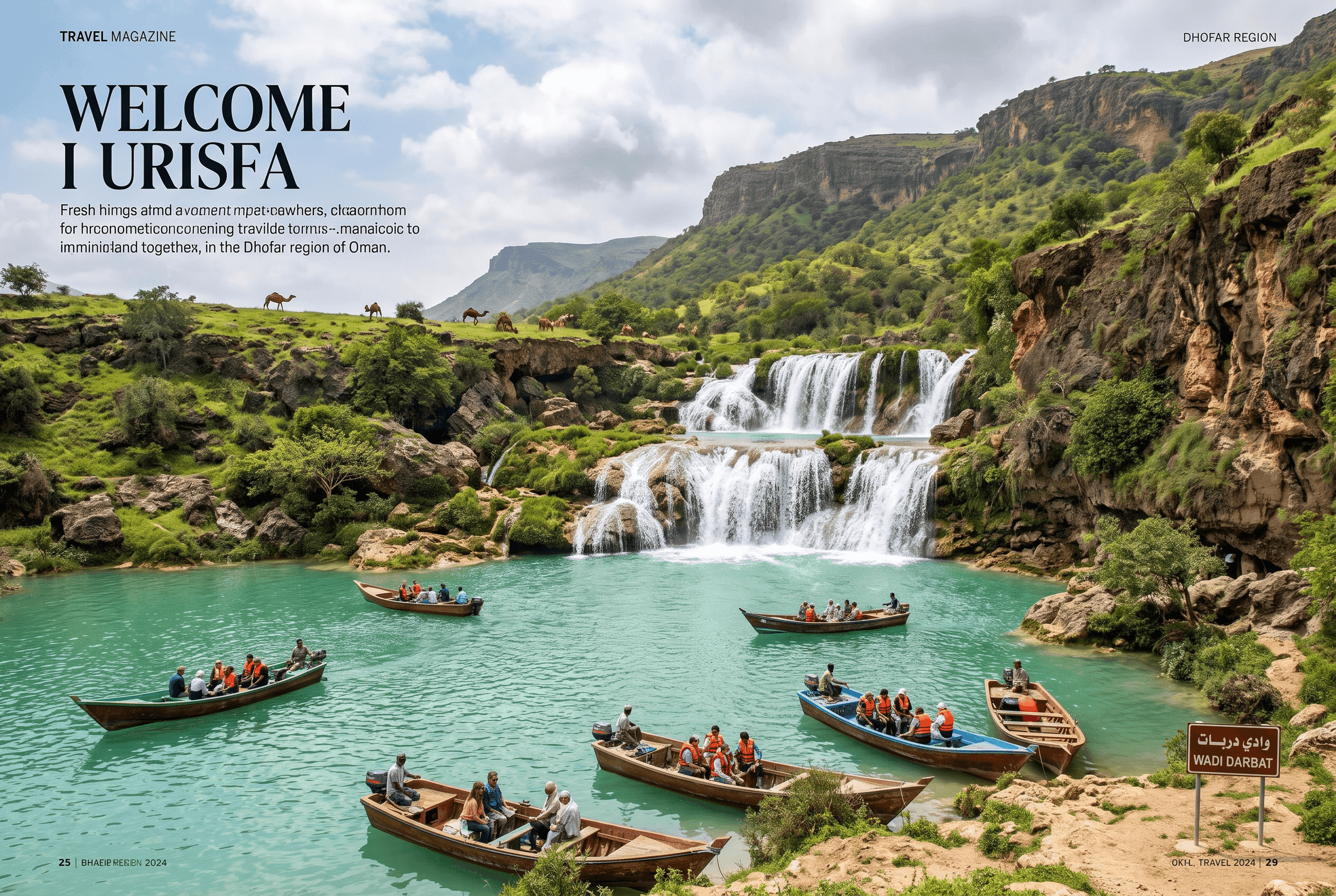
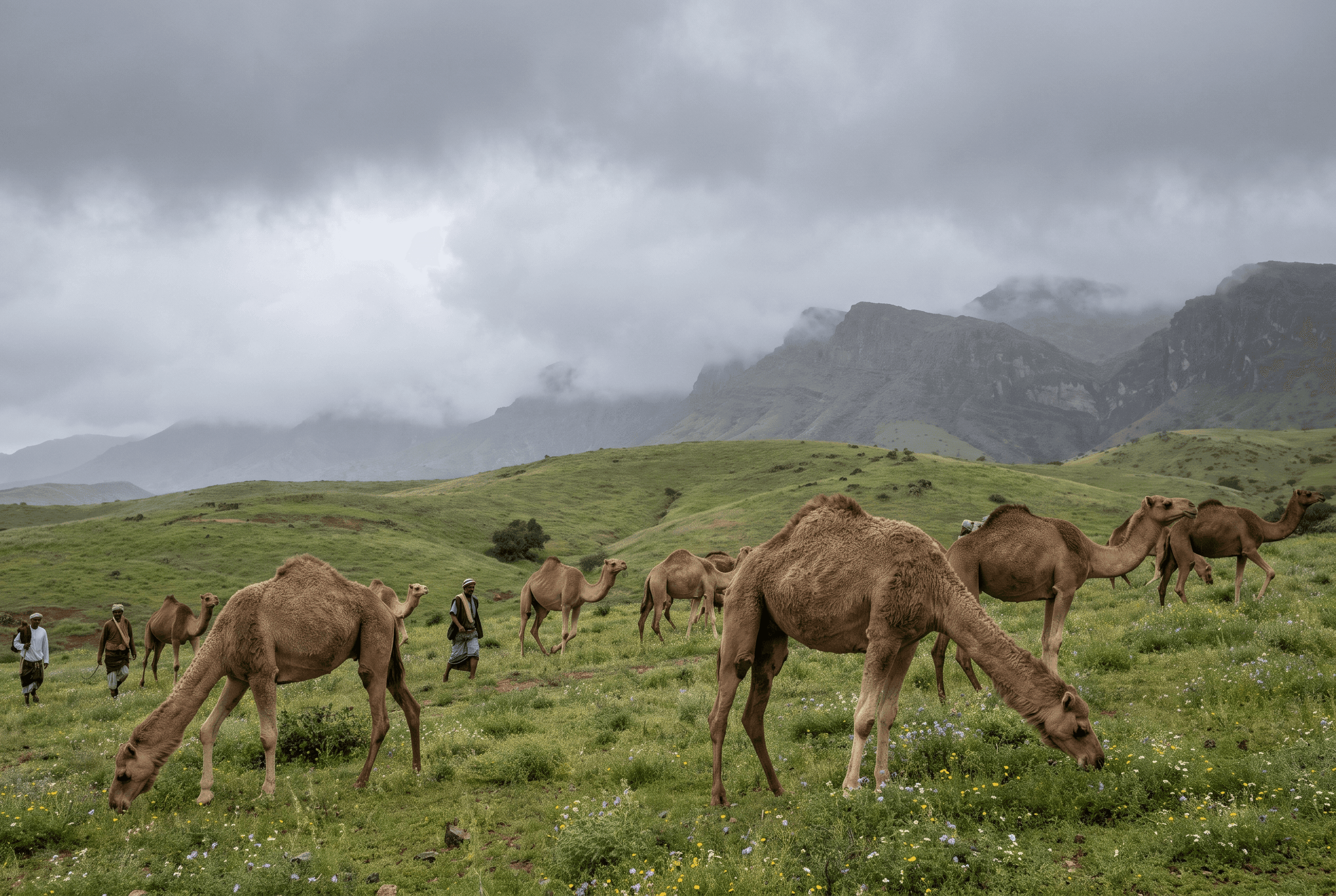
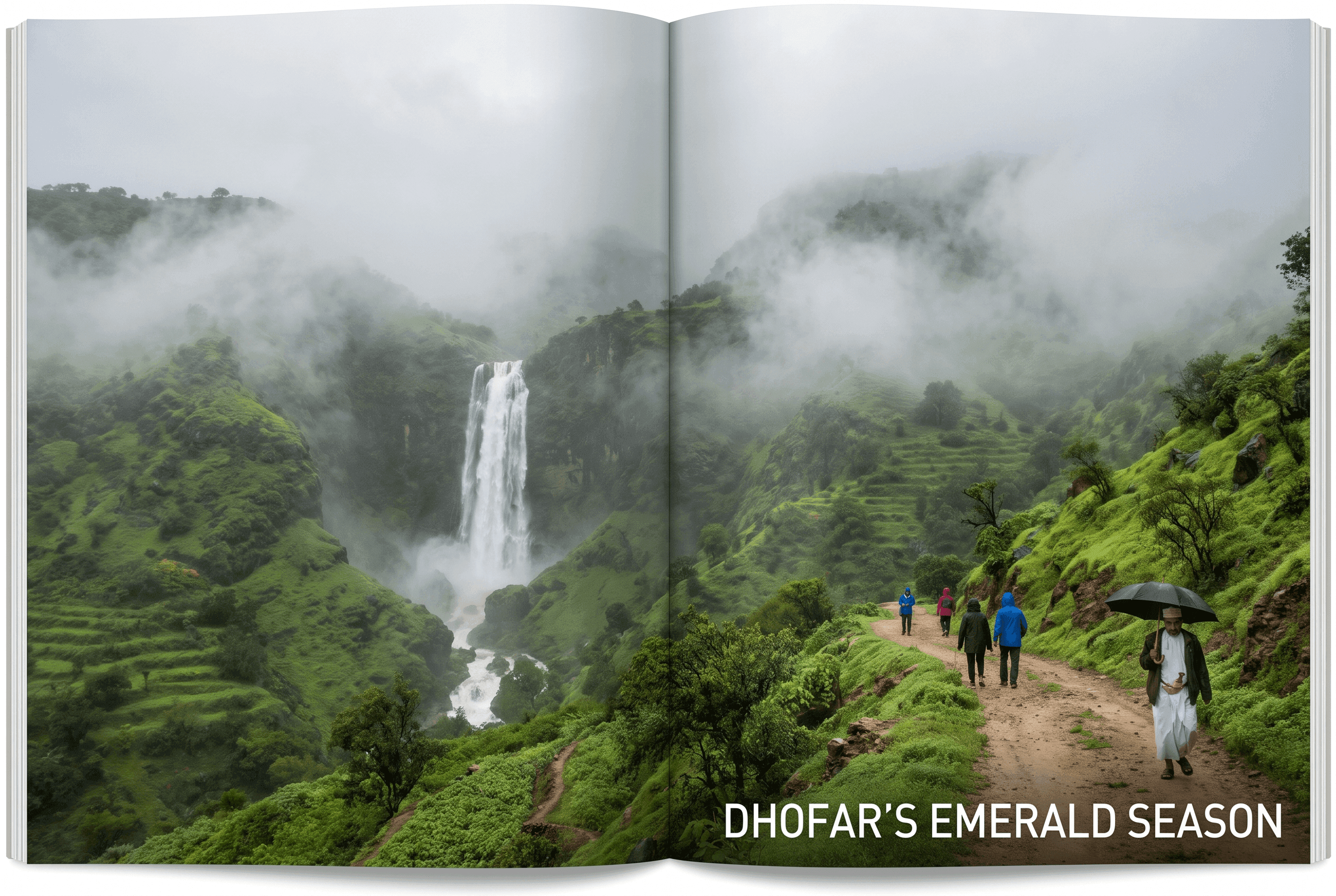
Salalah is the great exception on the Arabian Peninsula. In this southern Omani city, the summer monsoon, known as the khareef, turns the Dhofar mountains green, cool and misty while the rest of the Gulf bakes at over 45°C. From about late June to mid-September, temperatures stay around 22–28°C. Waterfalls run in Wadi Darbat, and camels graze on grassy slopes wrapped in fog. It is the Gulf's favourite summer escape, and families from Oman, Saudi Arabia, the UAE and Kuwait fill the city. The season peaks in July and August with the Khareef Dhofar festival.
In winter (October to March) Salalah is a completely different place. Skies are clear, the sea is calm and turquoise, the beaches are long and empty, and days reach about 26–30°C. This is when most European and Russian visitors come.
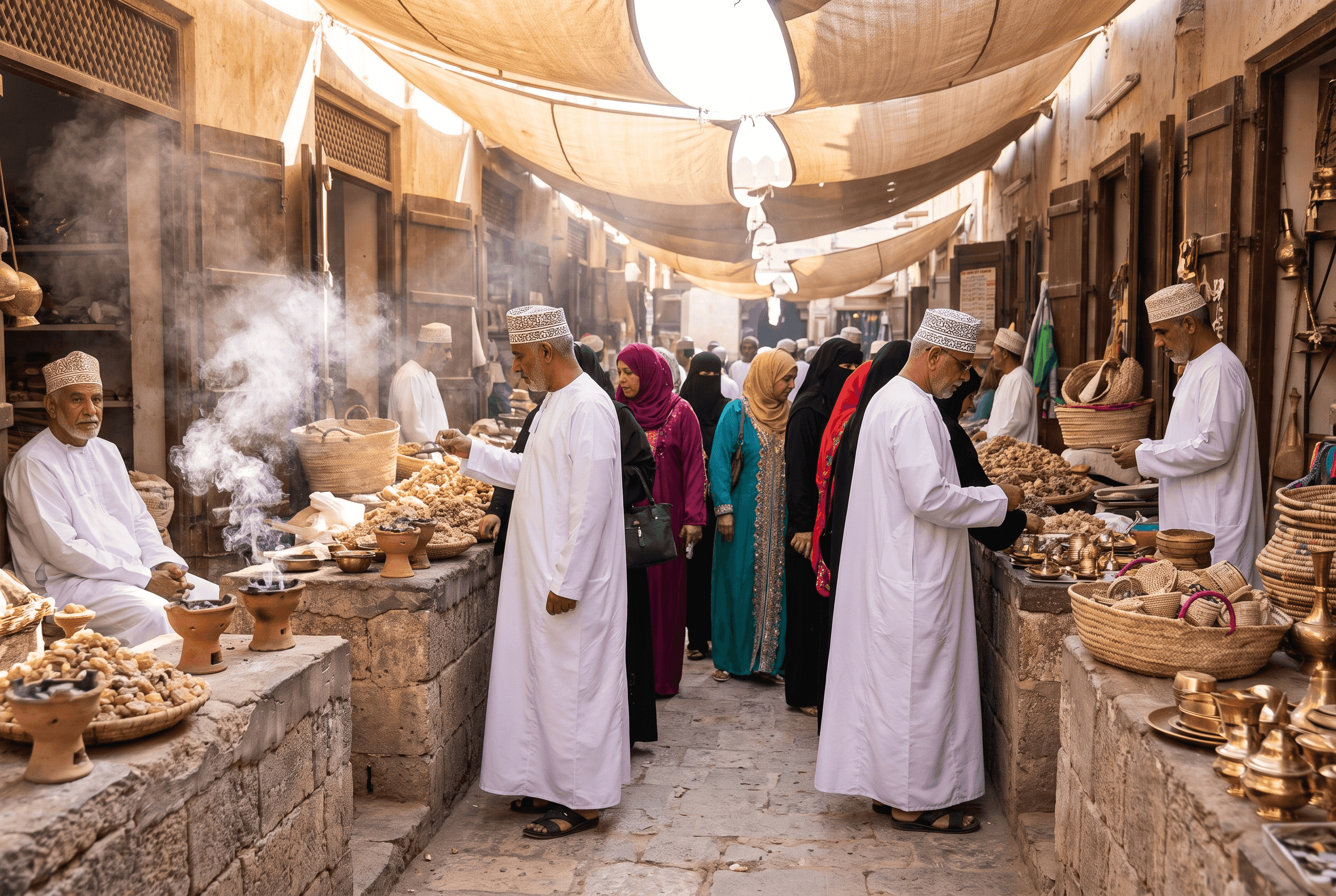
Salalah is also the heart of the ancient frankincense trade. The UNESCO-listed Land of Frankincense includes:
- Al Baleed Archaeological Park: ruins of a medieval port with an excellent museum
- Sumhuram (Khor Rori): a pre-Islamic trading city above a lagoon
- Wadi Dawkah: a protected grove of wild frankincense trees
- Shisr (Ubar): a caravan site on the edge of the Empty Quarter
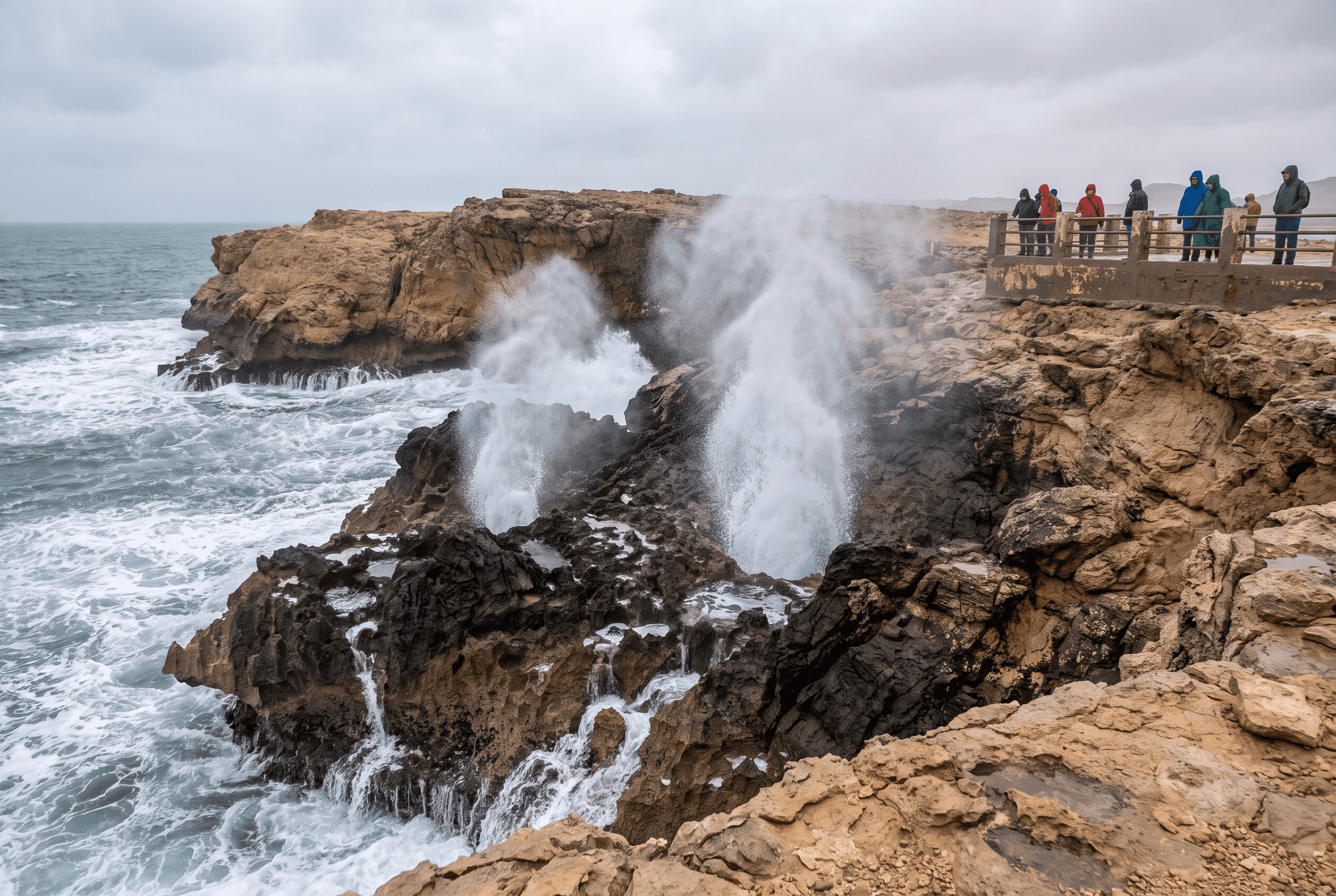
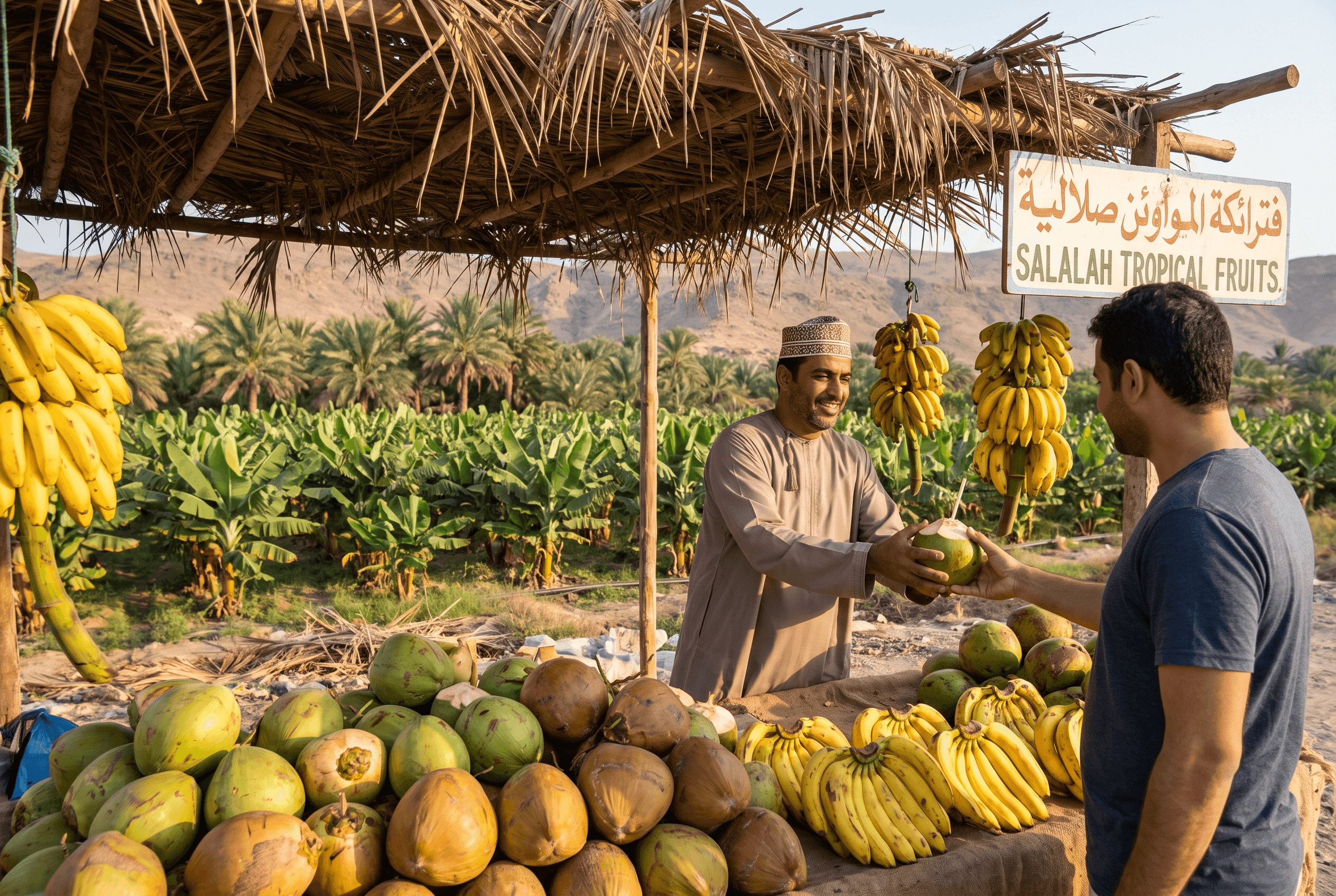
There are also coconut and banana plantations, sea blowholes at Mughsail, the old fishing town of Mirbat and a slow, easy pace of life. Nowhere else in the Gulf feels quite like Salalah.
Where to stay
Salalah is spread out. Choose your base by what matters most: the beach, being close to shops and restaurants, or a self-contained resort. With a rental car, any area works.
- Al Haffa and Al Dahariz beachfront: the classic strip east of the centre. The frankincense souq, Al Baleed and the airport are all 10–15 minutes away. Long-running hotels here include Crowne Plaza Salalah and Hilton Salalah Resort, and Anantara Al Baleed Resort sits right next to the archaeological park.
- City centre (Al Saada, Al Wadi, around 23 July Street): the best value, with hotel apartments, supermarkets and cheap restaurants. It is not on the sea, but everything else is close.
- Hawana Salalah (Taqah): a large resort complex about 35–40 km east, with a lagoon, a marina and several family hotels. It is ideal for all-inclusive beach holidays but less convenient for exploring.
- Mirbat: quiet and scenic, and home to the luxury Alila Hinu Bay.
Typical prices per night for a double room:
- Budget hotel apartments: 15–30 OMR in winter
- Mid-range hotels: 35–70 OMR
- Upscale beach resorts: 90–250+ OMR
During khareef, especially at the July–August peak and over Eid holidays, prices can double. Family apartments sell out weeks ahead, so book early. In winter, European package tourists fill Hawana and the beach resorts around Christmas and New Year, but the city itself stays calm and uncrowded.
A realistic 3-day plan
This plan assumes a rental car and works all year. Differences during khareef are noted.
Day 1: Frankincense and the city
- Morning: Al Baleed Archaeological Park and the Museum of the Frankincense Land. Go early to beat the heat or the drizzle.
- Late morning: Al Haffa Souq for frankincense, clay burners, Dhofari perfumes and textiles.
- Afternoon: fresh coconut water at a plantation stall in Al Dahariz, then the Sultan Qaboos Mosque.
- Evening: a sunset walk on Al Haffa beach and dinner in town.
Day 2: East for springs, history and Mirbat
- Morning: the Ayn Razat and Ayn Hamran springs, then Wadi Darbat. In khareef it has waterfalls and boat rides; in winter it is a calm lake.
- Midday: Sumhuram and the Khor Rori lagoon, then Taqah Castle.
- Afternoon: Mirbat's old merchant houses, its fort and the domed Bin Ali tomb. Return via the Jebel Samhan viewpoint if visibility allows; fog often covers it in khareef.
Day 3: West for coast and mountains
- Morning: Mughsail Beach and the blowholes at Marneef Cave. They are most dramatic when seas are high.
- Midday: the hairpin road towards Fazayah beach for its dramatic cliffs. Go in winter only, because the road is very steep.
- Afternoon: the tomb of Prophet Ayoub (Job) on Jebel Ittin, with wide views over the plain.
- Evening: stone-grilled madhbi or mixed grills in the city.
If you have a fourth day, add Wadi Dawkah and a desert trip to Shisr or the edge of the Empty Quarter.
What to eat
Dhofari food mixes Omani, Yemeni, East African and South Indian influences. Thanks to the tropical climate, fruit is a highlight.
- Coconut water and bananas: sold at plantation stalls along the roads of Al Dahariz and Awqad. A fresh coconut costs about 0.3–0.5 OMR.
- Laham madhbi: meat grilled on hot stones, a Salalah speciality. Also try mandi, slow-cooked meat served over spiced rice.
- Mishkak: marinated beef or chicken skewers grilled at street stalls in the evening, especially during khareef.
- Camel milk and meat: in khareef, herders in the mountains often sell fresh camel milk by the roadside.
- Fresh fish: kingfish, tuna and sardines. The fish markets in Salalah and Mirbat are worth an early-morning visit.
- Omani halwa and qahwa: a sticky sweet flavoured with saffron and rosewater, served with cardamom coffee and dates.
- Kerala-style food: Salalah has a large South Indian community, so cheap, excellent parottas, biryanis and fish curries are everywhere.
Where to eat:
- Local grill restaurants and mandi houses in the city centre: 2–5 OMR per person
- Seafood restaurants near the beach: 6–15 OMR
- International buffets at hotels: 15–30 OMR
During khareef, pop-up stalls at the festival grounds add plenty of street food. Alcohol is served only in licensed hotels. During Ramadan, avoid eating or drinking in public during daylight hours.
Getting there and around
By air: Salalah International Airport (SLL) has a modern terminal about 5 km from the city centre. Oman Air and SalamAir fly from Muscat several times a day, and the flight takes about 1 hour 40 minutes. There are direct flights from Dubai, Doha, Riyadh, Jeddah, Kuwait and several Indian cities. Extra Gulf routes are added in khareef. In winter there are usually seasonal and charter flights from Europe and Russia. Routes change by season, so check current schedules before booking.
By road: Muscat to Salalah is about 1,000 km, or 10–12 hours via Adam, Haima and Thumrait. The desert highway is in good condition but monotonous. Mwasalat runs daily coaches, and the trip takes around 12 hours. Many families drive down from the UAE, and Saudi visitors can use the Empty Quarter border crossing.
Getting around:
- Rental car: strongly recommended, because the sights are spread along the coast and in the mountains. Expect 12–25 OMR a day in winter and more in khareef. International and local companies have desks at the airport.
- Taxis: orange-and-white cabs and ride-hailing apps both operate. If there is no meter, agree the fare before you get in. A hotel-to-town ride costs about 3–5 OMR.
- Tours: a full day on the east or west coast with a car and driver costs roughly 30–60 OMR.
Driving tips: in khareef, mountain roads are foggy and slippery. Drive slowly, use your headlights and watch for camels and cattle on the road. Speed cameras are everywhere.
Costs and practical tips
Visas: GCC citizens enter Oman with their national ID card and need no visa. Most other Arab nationals apply online before travelling through the Royal Oman Police (ROP) eVisa portal. GCC residents in some eligible professions have simpler options. Many Western nationals, and Russian citizens, have been able to stay up to 14 days without a visa. Rules change, so check the ROP website before you fly.
Money: the Omani rial (OMR) is pegged to the US dollar at about 2.6 USD, and one rial is 1,000 baisa. Cards are accepted in hotels, malls and most restaurants. Carry cash for souqs, fruit stalls and small cafés. ATMs are easy to find.
Typical daily budget per person:
- Budget: 25–40 OMR
- Mid-range: 50–90 OMR
- Luxury: 150+ OMR
Petrol is cheap, at around 0.23–0.24 OMR per litre.
SIM cards: Omantel, Ooredoo and Vodafone Oman sell tourist SIMs and eSIMs at the airport and in malls. Bring your passport. There may be no signal in remote wadis and the desert.
Safety: Oman is one of the safest countries in the region. The real risks come from nature. During khareef the sea is rough and swimming is dangerous, and a red flag means no swimming. At the Mughsail blowholes, stay behind the railings.
Dress and etiquette: in town, dress modestly, with shoulders and knees covered for both men and women. Swimwear is fine at hotel beaches and pools. Ask before photographing people, especially women, and take off your shoes before entering a mosque.
When is the best time to visit Salalah?
It depends on what you want. For green, misty monsoon landscapes and waterfalls, come during khareef, roughly late June to mid-September; it is busiest in July and August. For sunshine, calm seas and beach time, visit between October and March, when days are dry and warm at around 26–30°C.
Can you swim in the sea during khareef?
Generally, no. During the monsoon the Arabian Sea off Dhofar is rough, with high waves and dangerous currents. Authorities often close beaches or put up red flags, and visitors who ignore the warnings drown every year. Swim in hotel pools instead, and save sea swimming and snorkelling for the calmer months from October to April.
Do I need to rent a car in Salalah?
It is highly recommended. Public transport is limited, and the main sights, including Wadi Darbat, Mirbat, Mughsail and Jebel Samhan, are 30–80 km from the city. A small sedan is fine on paved roads; you only need a 4x4 for desert trips or rough tracks. If you would rather not drive, hire a car with a driver or join day tours.
What should I buy in Salalah?
Frankincense is the classic souvenir. Buy the resin at Al Haffa Souq, where grades range from cheap dark pieces to pale, greenish-white hojari, the finest. A bag costs from about 1 OMR to over 10 OMR depending on the grade. You can also pick up a clay incense burner, Dhofari perfume oils and local honey.