Batumi in 3 Days: Boulevard, Botanical Garden, Waterfalls and Khachapuri
A realistic 3-day Batumi plan: the seafront and Old Town, the Botanical Garden and Gonio fortress, then waterfalls and mountain villages, with costs in GEL and AED.
9 min read
Why Batumi Works for a Long Weekend
Batumi is Georgia's Black Sea resort and the capital of the Adjara region. It is small enough to see in three days and varied enough that you won't get bored. In one day you can walk a 7 km palm-lined seafront, eat Adjarian khachapuri in an Old Town backstreet and ride a cable car up a green hillside. The next day you can stand under a waterfall in the mountains less than an hour inland.
For Gulf readers the draw is simple: summer temperatures typically in the high 20s °C while home is over 45 °C, plus sea, forest and rain-washed air. Adjara also has a sizeable Muslim community. You'll find the Orta Jame mosque in the Old Town and halal restaurants easily, and Arabic is heard on the Boulevard all summer.
Be honest with yourself about two things. First, Batumi is the wettest city in Georgia, so even in July a grey, drizzly morning is normal. Second, the beach is pebbles, not sand. The best months are May to September. June and September are the sweet spots: warm sea, fewer crowds and lower hotel rates than the late-July to August peak.
This plan puts the city first, then the coast and gardens, then the mountains. It's paced for families and first-timers. You don't need a rental car, and most evenings are free for the Boulevard and dinner.
Day 1 Morning: Old Town, Europe Square and the Piazza
Start around 9:00 with breakfast in the Old Town. The grid of streets between Europe Square and the port is lined with restored 19th-century facades, bakeries and cafés. A coffee and a pastry typically costs around 10–15 GEL (roughly 14–20 AED).
Walk to Europe Square to see the golden Medea statue holding the Golden Fleece, a reminder that ancient Colchis (the land of the Argonaut myth) lay along this coast. The square's astronomical clock building and the fountains are pleasant before the tour groups arrive. From there it's a five-minute stroll to Piazza, an Italian-style square with a mosaic floor, a clock tower and terrace cafés. Prices here are higher, so admire it and drink elsewhere.
On the way, pass Orta Jame, the Ottoman-era mosque on Kutaisi Street. It is active and often full for Friday prayers, and modest dress is expected. Nearby are the Catholic Church of the Holy Mother and the Batumi Synagogue, all within a few blocks, which says a lot about the city's mixed history.
Finish the morning at the Central (Boni) Market area if you want to see churchkhela (walnuts dipped in grape must), local cheeses, Adjarian honey and piles of seasonal fruit. Expect around 3–5 GEL for a churchkhela. Buy spices and tea here rather than on the seafront.
Day 1 Afternoon and Evening: Argo Cable Car, Boulevard and Khachapuri
After lunch, head to the lower station of the Argo cable car near the port. The ride climbs about 2.5 km to Anuria hill in roughly 10 minutes. A return ticket typically costs around 30 GEL (about 40 AED). At the top, a viewing terrace and restaurant look over the port, the towers and the curve of the bay. Go on a clear afternoon, because on misty days you'll see cloud.
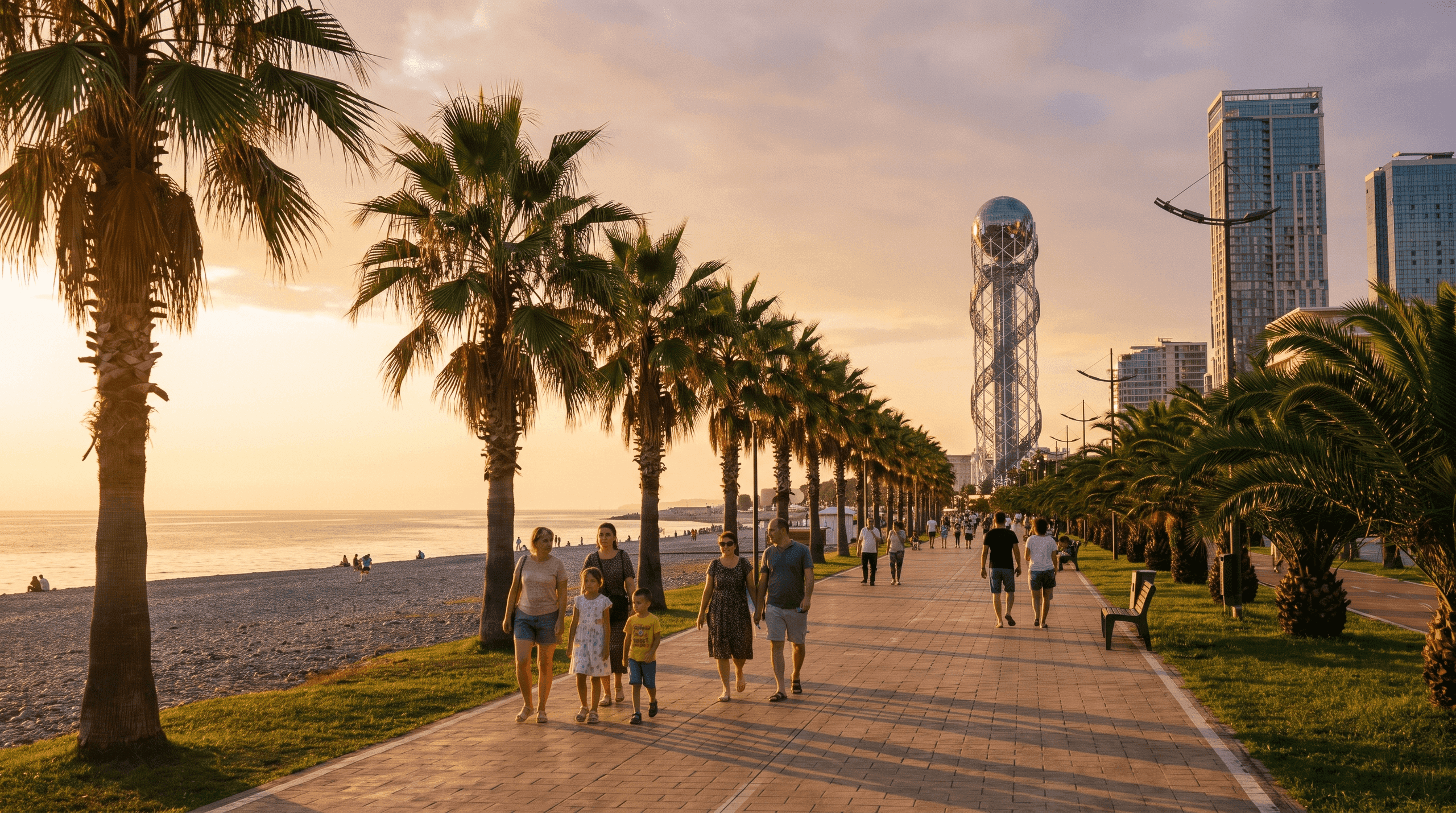
Back down, walk the Batumi Boulevard (Primorsky Park). It runs for kilometres past gardens, cycle lanes and pebble beaches. Rent a bike or e-scooter for around 10–20 GEL an hour. Aim to reach the Alphabet Tower and the moving Ali and Nino sculpture around sunset, about 19:30–20:30 in summer. The two steel figures slowly merge and separate, and they're best seen as the lights come on.
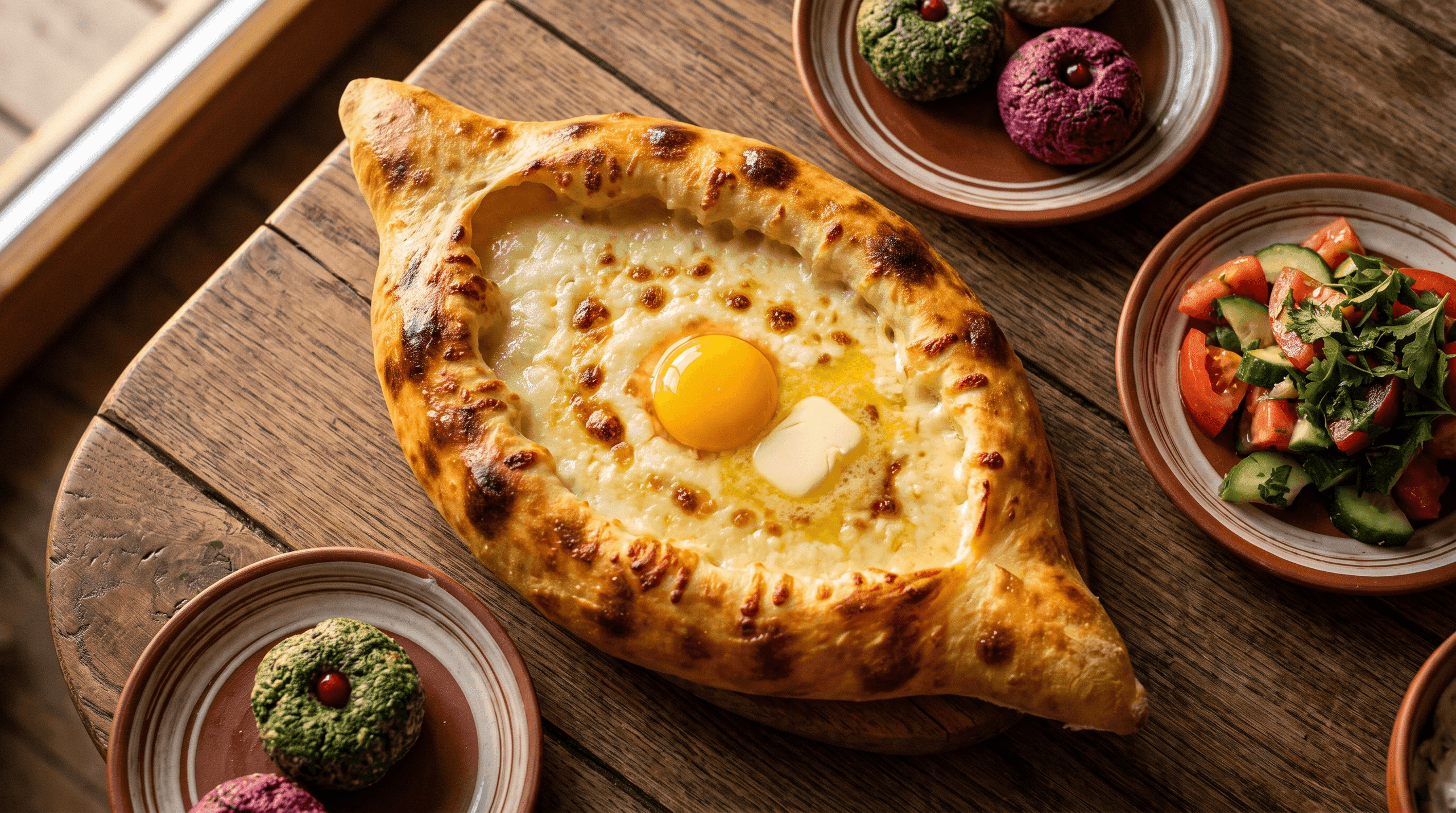
For dinner, eat Adjarian khachapuri: a boat-shaped bread filled with molten sulguni cheese, a raw egg and a knob of butter that you stir in at the table. It's heavy, so order a small or medium size. Retro in the city centre is the best-known spot. A medium typically costs around 15–25 GEL (20–35 AED). Add pkhali (walnut-and-vegetable pastes) and a tomato-cucumber salad with walnut dressing.
End with the Dancing Fountains show at 6 May Park (Nurigeli lake), which usually runs on summer evenings and is free.
Day 2: Batumi Botanical Garden and the Green Cape
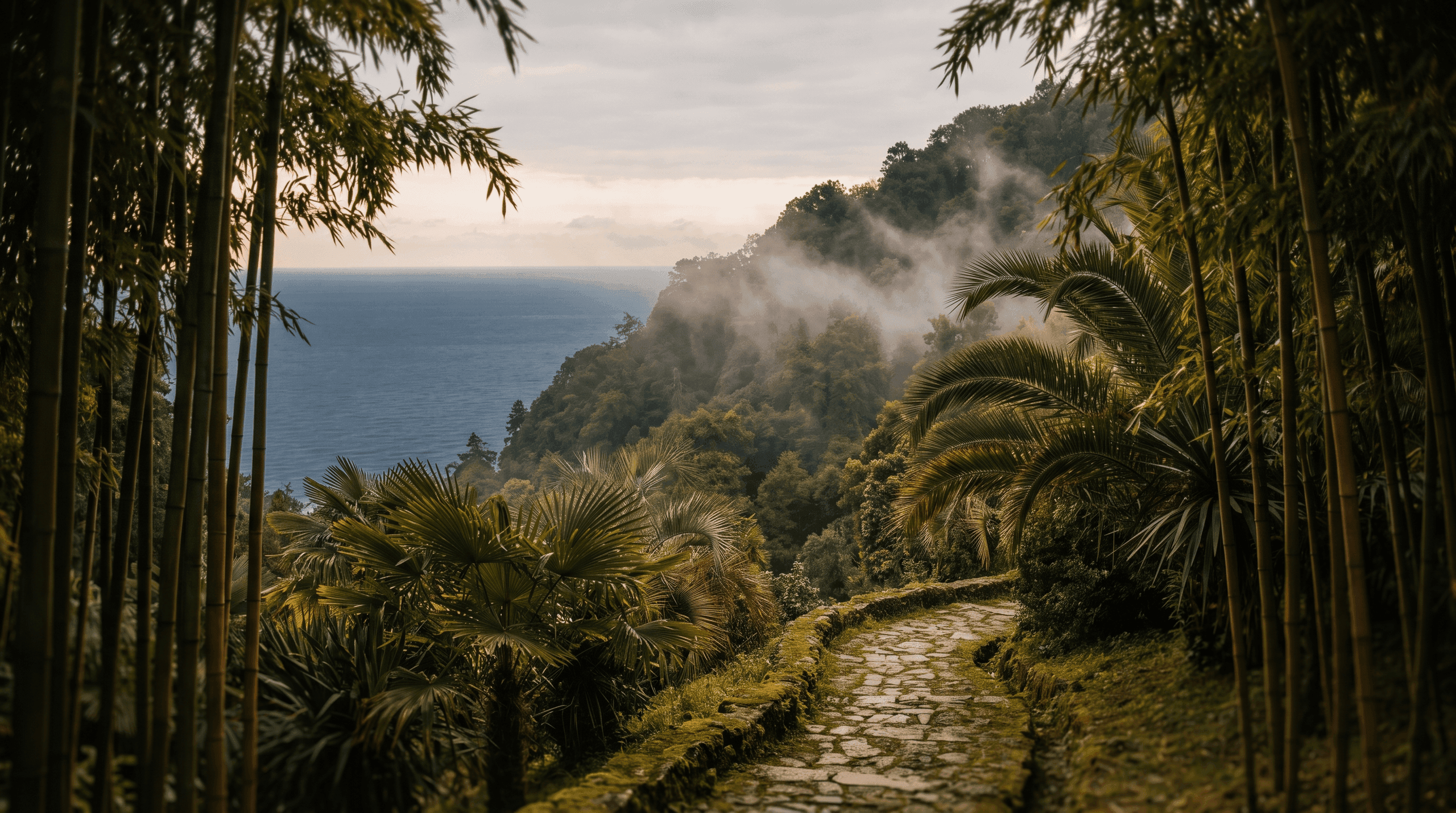
Day 2 is the one to save for the best weather. The Batumi Botanical Garden at Mtsvane Kontskhi (Green Cape), about 9 km north of the centre, is one of the largest in the former Soviet Union. It covers more than 100 hectares of subtropical hillside above the sea, with Himalayan, East Asian, Australian and Mediterranean zones.
Leave by 9:00 to beat the heat and the tour buses. A Bolt or Yandex taxi typically costs around 10–15 GEL and takes 15–25 minutes. Local minibuses and buses marked for the Botanical Garden also run along the coast road for a couple of lari. Entry for foreign visitors is typically around 25–30 GEL (35–40 AED). An optional electric car around the main loop costs extra, and it's worth it with young children or older parents because the paths are steep.
Allow 3–4 hours and wear proper shoes. Highlights are the bamboo groves, the Japanese section, and the lookouts over the sea and the railway line hugging the cliff. Bring water, as cafés inside are limited.
In the afternoon, go down to the Green Cape beach below or return to town for a swim. Water shoes are useful on the pebbles. For a late lunch, try Adjarian borano (cheese melted in butter) or sinori, a local dish of thin pastry rolls baked with cottage cheese and butter. You'll find both at family-run places in the northern suburbs.
Day 2 Evening: Fish Market Dinner and the Modern Skyline
Rest at your hotel through the late afternoon, then head to the fish market near the port for an early dinner around 19:00. It's the most Batumi thing you can eat. You choose fish at the stalls, where Black Sea barabulka (red mullet), kalkan (turbot) in season, sea bass and trout are typical. Then carry it upstairs or next door to a restaurant that fries or grills it for a small cooking fee. A generous meal for two usually comes to around 60–100 GEL (80–135 AED), depending on the fish. Agree the price per kilo and the cooking charge before anything goes on the scale.
Afterwards, take a taxi to the southern end of the Boulevard. This is new Batumi, where towers like the Alphabet Tower, the curved Radisson and the glass casino-hotels light up after dark. You might love it or find it garish, but it's worth seeing once. The seafront here is busy until midnight in July and August, with families, street performers and ice-cream kiosks.
If you'd like something calmer, the Old Town's side streets around Gorgiladze Street have wine bars and cafés with tables outside. Georgian wine is inexpensive, typically around 12–20 GEL a glass. Non-drinkers can try Lagidze waters (flavoured sodas like tarragon and cream-soda) and Borjomi mineral water, sold almost everywhere.
Day 3: Gonio Fortress, Makhuntseti Waterfall and the Adjaran Hills
On the last day, trade the sea for the mountains. Hire a driver for a half-day loop. Arrange it through your hotel or agree it with a taxi driver, and expect around 100–150 GEL (135–200 AED) per car for 5–6 hours including waiting. That's better value than a group tour for a family of four.
Start at Gonio Fortress, about 12 km south, at 9:30. It's a Roman-era fort with long, intact walls, a small museum and a tomb said by local tradition to belong to the Apostle Matthias. Entry is typically around 15 GEL. Allow an hour. If you're continuing to Turkey, Sarpi and its border are only another 10 minutes south.
Then drive inland up the Adjaristsqali river valley to Makhuntseti, about 30 km from Batumi (40–50 minutes). The waterfall drops roughly 20 m into a pool beside the road. Nearby is the arched stone Queen Tamar Bridge, a medieval bridge over the river. Roadside stalls sell churchkhela, honey and homemade wine.
With energy left, continue to Mtirala National Park. It's one of the rainiest spots in Georgia, with forest trails, a lake and small waterfalls. Easy walks take 1–3 hours.
For lunch, stop at a riverside restaurant for trout, Adjarian khachapuri or khinkali. Ask whether the khinkali filling is beef or pork, because both are common. Be back in Batumi by late afternoon for a final swim.
Insider Tips: Timing, Costs and What Catches People Out
Budget. A comfortable mid-range trip typically costs around 250–400 GEL (340–540 AED) per person per day. That covers a 4-star sea-view room shared by two, taxis, entries and two restaurant meals. Peak August hotel prices can be double June's, so book early.
Where to stay. The Old Town is best for walking to restaurants and the mosque. The New Boulevard has sea views and newer towers but needs taxis to reach the old centre. Green Cape is quieter and greener, and suits families who want the garden and beach.
Weather. Pack a light rain jacket even in August. If a morning is wet, swap Day 2 and Day 3, since waterfalls look better after rain anyway.
Food for Muslim travellers. Pork is common in Georgian cooking, especially in khinkali and mtsvadi (grilled meat skewers). Several places near Orta Jame and on the Boulevard advertise halal, and khachapuri, pkhali, lobio (bean stew), trout and grilled fish are pork-free by nature. Ask anyway.
Tourist traps. Seafront restaurants with laminated picture menus in five languages often add a 10–18% service charge and inflate the fish prices. Check the bill.
Casinos and nightlife. These are part of the city, but mostly confined to the big hotels and a few streets. Family areas stay relaxed.
SIM cards. Magti and Silknet sell tourist SIMs at the airport and in town, typically around 20–30 GEL for generous data.
Practical Info: Getting There by Bus, Getting Around, Money and Safety
By bus from Tbilisi. Coaches and marshrutkas (shared minibuses) run from Tbilisi Central Station (Station Square) and Didube throughout the day. Metro Georgia is a common coach operator. The trip typically takes 5.5–7 hours and costs around 30–45 GEL (40–60 AED). Coaches are more comfortable than marshrutkas. The fast Stadler train from Tbilisi takes about 5 hours and is usually the more comfortable option. Book ahead in summer.
By bus from Turkey. Buses from Trabzon or Hopa cross at the Sarpi border and take around 3–5 hours from Trabzon, depending on queues. Metro Turizm and local operators run this route.
By air. Batumi International Airport is about 15 minutes from the centre. Seasonal direct flights from Gulf hubs usually operate in summer. Many GCC passport holders enter visa-free, and Levant nationals should check the official Georgian e-visa rules.
Getting around. Batumi is walkable. City buses accept contactless bank cards and typically cost around 1 GEL. Bolt and Yandex taxis are cheap, around 5–10 GEL within town. Always use an app or agree the fare first.
Money. The currency is the lari (GEL). As a rough guide, 1 GEL is about 1.35 AED, but check the live rate. Cards work widely, while markets and marshrutkas are cash only. Exchange offices in the centre usually beat airport rates.
Safety. Batumi is generally safe, including at night on the Boulevard. Watch for strong currents on red-flag days, pickpockets in crowds, and speeding cars on the main avenues.
Is 3 days enough for Batumi?
Yes. Three days covers the Boulevard, Old Town, Botanical Garden, Gonio and a half-day in the mountains at Makhuntseti. Add a fourth day if you want real beach time or a longer hike in Mtirala National Park.
When is the best time to visit Batumi?
May to September. June and September offer warm sea, fewer crowds and lower hotel rates, while late July and August are busiest and priciest. Expect occasional rain in any month.
Is Batumi suitable for Muslim and family travellers?
Yes. Adjara has a large Muslim community, the Orta Jame mosque is in the Old Town, and halal restaurants are easy to find. Pork is common in Georgian food, so check what's in khinkali and grilled meat.
How long is the bus from Tbilisi to Batumi?
Typically 5.5 to 7 hours by coach or marshrutka, for around 30–45 GEL. The Stadler train takes about 5 hours and is more comfortable, but sells out in summer.
Are Batumi beaches sandy?
No, they're pebble beaches. Pack water shoes. The water is clean and warm from late June to September, typically in the mid-20s °C.