Doha in 3 Days: Museums, Souq Waqif and Inland Sea Dunes on a Realistic Plan
A three-day Doha plan that works: I.M. Pei's museum, Souq Waqif, Katara, Msheireb and a sunset run to Khor Al Adaid, with honest timings and prices in QAR and AED.
10 min read
Why Doha deserves three full days
Most Gulf travellers know Doha as a transit stop at Hamad International. Stay three days, though, and the city makes sense. Almost everything worth your time sits inside a small area: the Corniche, Souq Waqif and Msheireb are within walking distance of each other, and the Doha Metro connects them to Katara, Lusail and Education City in 10 to 25 minutes. The desert at the Inland Sea (Khor Al Adaid) is about an hour's drive south.
Three days lets you cover the Museum of Islamic Art and the National Museum of Qatar, two of the best museums in the region, plus an evening in the souq, a sunset over the dunes and a slow dinner in Lusail. You won't need to rush.
When to go: November to March. Daytime temperatures typically run from the low 20s to around 28°C, and evenings on the Corniche are pleasant. From May to September, midday heat regularly passes 40°C with high humidity, and this plan won't work outdoors.
Costs for Gulf visitors: the Qatari riyal is pegged to the dollar, and 1 QAR is roughly 1 AED. Budget comparisons are easy: a mid-range day in Doha costs about the same as in Dubai. Hotels are often slightly cheaper, and alcohol and nightlife are much more limited.
The plan below assumes you arrive the evening before Day 1 and use the metro plus a few taxis.
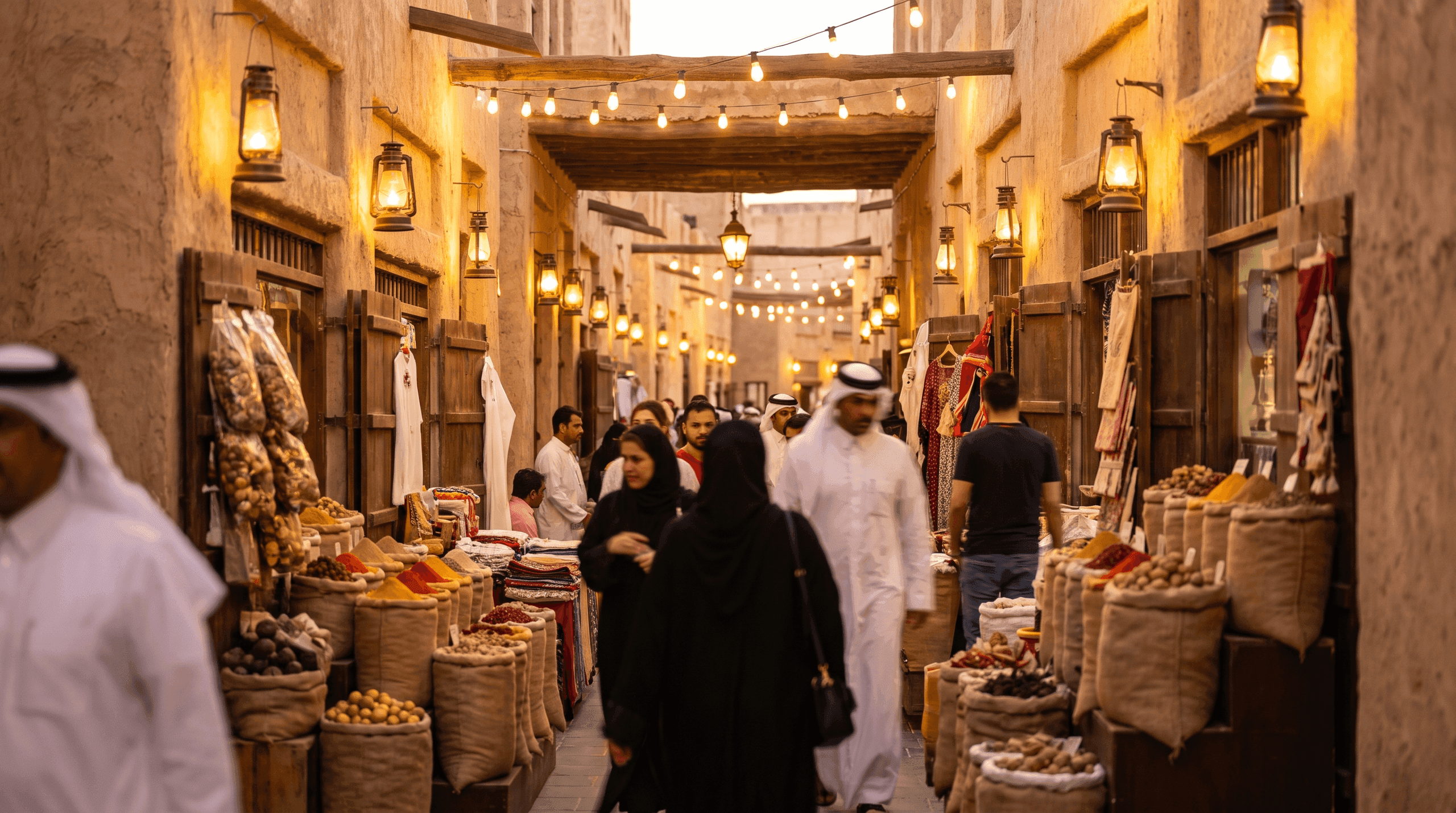
Day 1: Corniche, Museum of Islamic Art and Souq Waqif
9:00 – Corniche walk. Start near the Sheraton end of the Corniche for the West Bay skyline, then walk or take a short taxi south towards the museum. It's a 7 km crescent, so don't try to walk all of it.
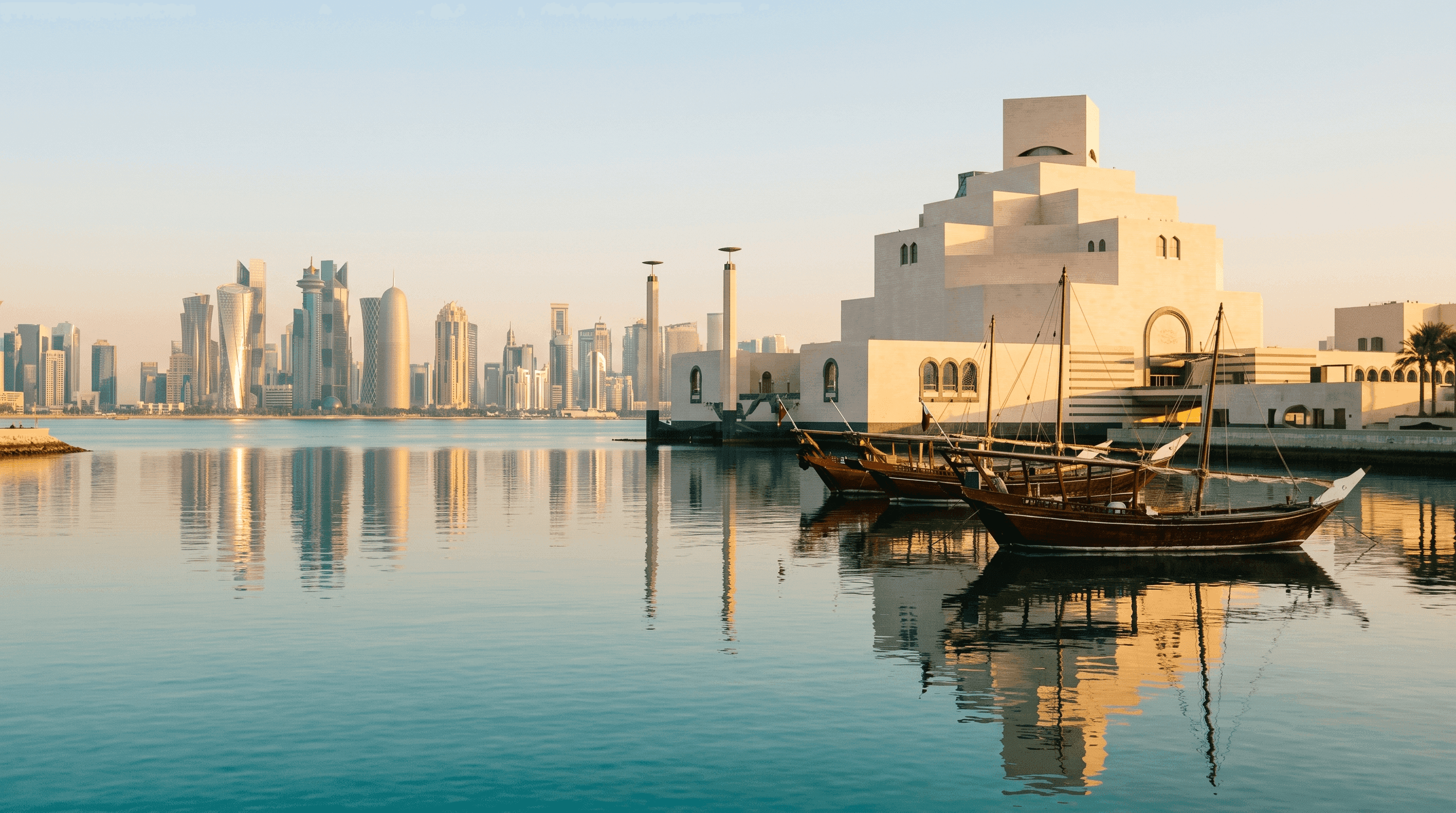
10:00–13:00 – Museum of Islamic Art (MIA). I.M. Pei's limestone building houses manuscripts, ceramics, carpets and metalwork from Spain to Central Asia. Allow at least two and a half hours. Non-resident tickets typically cost around 50 QAR (about AED 50), and GCC residents and students often get discounts. The atrium window facing West Bay is the photo everyone takes. Walk out to MIA Park to see Richard Serra's steel sculpture 7.
13:30 – Lunch at the MIA café or walk to the souq (about 15 minutes along the Corniche).
15:00–16:30 – Rest. The afternoon lull is real. Many souq shops close from around 12:00 to 16:00.
16:30 onwards – Souq Waqif. Explore the spice and textile lanes, the Falcon Souq (you can watch birds being traded and the Falcon Hospital next door) and the camel and horse stables. Karak tea costs around 2–3 QAR from stalls.
Dinner: Parisa for Persian food in a mirrored interior (around 150–250 QAR for two), Damasca One for Syrian mezze and grills (around 120–200 QAR for two), or Bandar Aden for Yemeni mandi at a lower price.
Getting around: Souq Waqif station is on the Gold Line, and Corniche station is on the Red Line.
Day 2: National Museum, Msheireb and a Katara sunset
9:00–12:00 – National Museum of Qatar. Jean Nouvel's building, shaped like a desert rose, tells Qatar's story from Bedouin life and pearl diving to oil. It includes the restored Palace of Sheikh Abdullah bin Jassim. The immersive galleries take at least two hours. Tickets are typically around 50 QAR. It's a short taxi ride from the souq, or take National Museum station on the Gold Line.
12:30–15:30 – Msheireb Downtown. This rebuilt district is shaded, walkable and good for lunch. The four Msheireb Museums are heritage houses. Bin Jelmood House, about the history of slavery in the Gulf and the Indian Ocean, is the one you shouldn't skip. Entry has typically been free. Msheireb station is the interchange for all three metro lines.
16:00–19:00 – Katara Cultural Village. Take the Red Line north to Katara station. See the amphitheatre, the pigeon towers and the tiled Katara Mosque, then watch the sunset from the beach promenade. The beach itself usually charges an entry fee of around 100 QAR, but the promenade is free. Chapati & Karak by the amphitheatre is the cheap local snack stop, with most items under 15 QAR.
19:30 – The Pearl-Qatar. Take a 10-minute taxi to Porto Arabia or the Venetian-style Qanat Quartier. The waterfront has dozens of mid-range to upscale restaurants. Expect around 200–400 QAR for two.
Day 3: Library morning, then dunes at the Inland Sea
9:30–12:00 – Education City or 3-2-1. You have two options. The first is Qatar National Library, Rem Koolhaas's vast, light-filled reading hall with a heritage collection in a sunken lower level. Entry is free, and it's close to Education City on the Green Line. The second is the 3-2-1 Qatar Olympic and Sports Museum next to Khalifa International Stadium, typically around 50 QAR, near Sport City station on the Gold Line. Families usually prefer 3-2-1.
12:30 – Early lunch and a rest at the hotel. You'll be out until after dark.
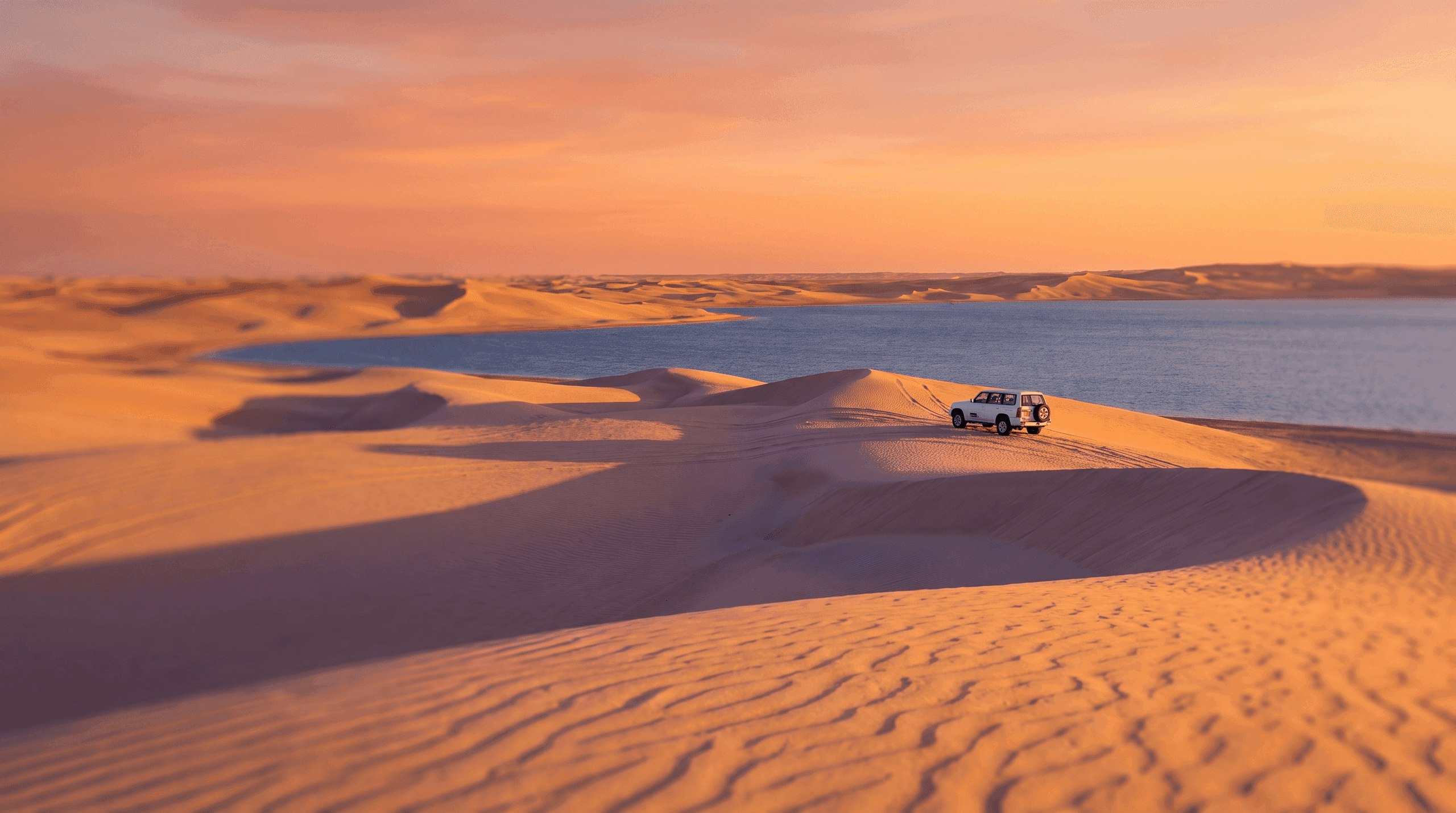
14:00–20:00 – Desert safari to Sealine and Khor Al Adaid. This is the highlight for most visitors. A 4x4 drives you about 60 km south to Sealine, where tyres are deflated before the dune crossing to the Inland Sea, a tidal inlet where Qatar faces Saudi Arabia across the water. Most tours include dune bashing, a stop at the shoreline, a short camel ride and sandboarding. Sunset is the best part.
Typical prices: shared half-day tours cost around 200–350 QAR per person. A private 4x4 for up to six people typically costs around 600–1,000 QAR. Evening tours with a camp barbecue cost more. Tell the driver if you want a gentler ride, especially with children or anyone prone to motion sickness.
Evening: if you still have energy, stroll Lusail Boulevard after dark.
Where to stay: choosing your base
Where you stay decides how much time you lose in taxis. For this plan, there are three sensible bases.
Souq Waqif and Msheireb. This is the best base for a first visit. The Souq Waqif Boutique Hotels are a group of small heritage properties inside the souq, run by Tivoli. Rooms typically cost around 600–1,000 QAR per night in winter. Msheireb also has newer hotels such as Mandarin Oriental at the top end and several mid-range options. You can walk to MIA and the souq, and Msheireb station connects you to every metro line.
West Bay. Big international hotel towers line the Corniche, with good skyline views and business-traveller facilities. Winter rates are typically around 400–800 QAR for four- and five-star rooms. Many hotels are near the Red Line, but you'll take taxis more often in the evening.
The Pearl or Lusail. These suit families and longer stays, with apartment hotels, marina walks and calmer evenings. The downside is 20–30 minutes by road to the old centre.
Booking tips: prices jump sharply around big events such as major sporting fixtures, conferences and the Qatar National Day period in mid-December. For those dates, book at least six to eight weeks ahead. In the rest of peak season, three to four weeks is usually enough. Check whether breakfast is included. Hotel buffets in Doha are expensive to add on the day, typically 80–150 QAR per person.
What to eat and what it costs
Qatari food is rarely on hotel menus, so look for it.
Qatari dishes to order:
- Machboos: spiced rice with chicken, lamb or hammour, the national dish.
- Harees: slow-cooked wheat and meat, very popular in Ramadan.
- Thareed: bread soaked in a meat and vegetable stew.
- Balaleet: sweet vermicelli with saffron and cardamom, topped with an omelette, for breakfast.
- Luqaimat: fried dough balls with date syrup, usually for dessert or with tea.
Where to try them: Shay Al Shoomoos in Souq Waqif is a small breakfast spot run by a Qatari woman, Shams Al Qassabi, and well known for balaleet and chickpeas. Breakfast is typically under 50 QAR per person. Al Jasra Traditional Food, also in the souq, is a good choice for machboos.
Typical costs:
- Karak tea from a stall: around 1–3 QAR
- Shawarma or a sandwich: around 8–15 QAR
- Casual sit-down lunch: around 40–70 QAR per person
- Mid-range dinner in the souq or at the Pearl: around 100–200 QAR per person
- Fine dining in a hotel: 350 QAR per person and up
Alcohol is served only in licensed hotel venues and is expensive. Restaurants add service charges inconsistently, so check the bill. A 10% tip is appreciated but not expected.
Insider tips that save time and money
- Plan around Friday. Many museums open only in the afternoon on Fridays, and the metro doesn't start until around 14:00. Use Friday morning for the Corniche, a hotel brunch or a slow start, and never schedule the desert then if you need the metro to reach your pickup.
- Check museum closing days. Qatar Museums sites follow different weekly schedules, and hours change during Ramadan. Check the Qatar Museums website the night before.
- Get a metro travel card. A standard single fare typically costs around 2 QAR, and a standard day pass around 6 QAR. Gold Class costs several times more. It's quieter but not necessary.
- Walk in the late afternoon. Even in January, midday sun is strong. Leave outdoor walks for after 15:30.
- The souq has a rhythm. Busiest after sunset and on Thursday and Friday nights. Go around 16:30 for photos without the crowds.
- Bargain lightly. Haggling is expected for spices, pashminas and souvenirs in Souq Waqif but not in food outlets. Asking for 10–20% off is normal.
- Dhow ride on the Corniche. Shared rides from the dhow jetty near MIA typically cost around 20–30 QAR per person for 30–45 minutes. A private boat costs roughly 150–300 QAR per hour. Agree the price before you board.
- Look for free art. Public artworks, the Fire Station galleries and the Flag Plaza area near the Corniche are free to see.
Practical Doha: getting there, getting around, money and safety
Getting there via DOH. Hamad International Airport has direct flights from across the Gulf and the Levant. Dubai to Doha takes about 1 hour 10 minutes, Riyadh about 1.5 hours and Amman about 3 hours. Qatar Airways, flydubai and Air Arabia fly the Gulf routes. GCC nationals enter without a visa, and many other nationalities get visa-free entry on arrival. Check the official Hayya and Qatar visa portals before you travel, because rules change.
From the airport. The Red Line starts at the airport terminal and reaches Msheireb in about 20–25 minutes. A Karwa taxi, Uber or Careem to West Bay or the souq typically costs around 50–80 QAR.
Getting around. The Red, Green and Gold metro lines cover most of this itinerary, and the Lusail Tram connects Lusail's districts. The metro usually runs from around 06:00 to 23:00, later on Thursday, with the Friday late start noted above. Budget around 150–250 QAR for taxis over three days.
Money. Cards are accepted almost everywhere. Keep 100–200 QAR in cash for souq stalls and tips. 1 QAR is roughly 1 AED (about 3.64 QAR to the US dollar).
Safety and etiquette. Doha is very safe, including late at night. Cover shoulders and knees in malls, souqs and museums, and women should bring a scarf for mosques. Don't photograph people, especially women, without asking. Public drunkenness is a serious offence.
Is 3 days enough for Doha?
Yes, for a first visit. Three days covers the Museum of Islamic Art, the National Museum, Souq Waqif, Msheireb, Katara, the Pearl and a half-day desert trip to the Inland Sea without rushing. A fourth day lets you add Al Zubarah Fort in the north or simply rest at a beach.
How much should I budget for 3 days in Doha?
A mid-range traveller should budget roughly 1,000–1,500 QAR (about the same in AED) per person for three days, excluding hotel and flights. That covers museum tickets of around 50 QAR each, a shared desert safari at around 200–350 QAR, taxis, and eating at mid-range restaurants.
Can I use the Doha Metro for this itinerary?
Mostly, yes. Souq Waqif, Msheireb, the National Museum, Katara, Education City, Sport City and Lusail all have stations. You'll need taxis for the Pearl and late evenings, and the desert tour includes hotel pickup. Remember that the metro starts only in the early afternoon on Fridays.
Is the Doha desert safari suitable for children?
Generally yes for school-age children, but dune bashing can be rough. Ask your operator for a gentler drive, make sure proper child seats are fitted, and bring water, hats and a light jacket. Evenings in the dunes can feel cool in December and January.
What is the best month to visit Doha?
November to March. December to February is the most comfortable, with mild days and cool evenings. Hotel rates rise around mid-December because of National Day, so book early for those dates.