Gulf Winter Sun, November to March: Muscat, Dubai or Salalah?
From November to March, Gulf days sit in the mid-twenties and the sea stays swimmable. Here's how to choose between slow Muscat, loud Dubai and surprising Salalah.
9 min read
Why November to March is the Gulf's best season
For about five months of the year, the Arabian Peninsula is pleasant enough that you forget how hot it gets in summer. From November to March, daytime highs along the coast from Dubai to Muscat usually run between 24°C and 30°C. Humidity drops, evenings get cool enough for a light layer, and you can walk outside at midday without planning around air conditioning.
The sea stays warm for a while after the air cools down. In November the Gulf of Oman off Muscat is still around 27–28°C, and in January it is usually 24–25°C. The Arabian Sea off Salalah stays warm too. The Arabian Gulf off Dubai cools the most. By February it can be 21–22°C, which is fine for a swim but feels fresh.
This is also high season. Hotel rates, flight prices and restaurant queues all go up, especially over Christmas and New Year. You'll get the best value in early November and in the second half of March, when the weather is still good and the peak-season crowds have thinned.

Month by month: what to expect
Each month from November to March has a slightly different character:
- November: Highs of 29–31°C in Muscat and Dubai, and the warmest sea of the season. Oman's National Day (18 November) brings lights, flags and public holidays, and local hotels fill up. In the UAE, Eid Al Etihad on 2 December often turns late November into a long-weekend rush.
- December: Highs of 25–27°C. It's the busiest and most expensive month, especially from 20 December to 3 January. Dubai Shopping Festival usually starts mid-month.
- January: The coolest month, with highs around 24–25°C and nights of 15–18°C. Most of the region's rain falls between January and March. It's usually brief, but Dubai's drainage struggles when it comes.
- February: Similar to January, with slightly more sun. Ramadan is expected to start around 8 February 2027 and run into early March. This changes restaurant hours, nightlife and the pace of the day (see the caveats section).
- March: Temperatures climb back to 28–30°C by the end of the month. The water feels warmer again, and outside Eid and school-holiday dates, prices ease.
Pick by mood: a quick comparison
The short version: Muscat is slow, Dubai is loud, Salalah is surprising. In more detail:
| Muscat | Dubai | Salalah | |
|---|---|---|---|
| Mood | Calm, low-rise, mountains to the sea | Fast, big, events every night | Palm groves, empty beaches, frankincense |
| January high / sea | ~25°C / ~24°C | ~24°C / ~22°C | ~28°C / ~25°C |
| Flight from Dubai | ~1 hr 10 min | — | ~2 hrs |
| Mid-range hotel, per night (peak) | OMR 35–70 (AED 335–670) | AED 450–1,000 | OMR 30–60 (AED 290–575) |
| Getting around | Taxi apps, hire car | Metro, tram, taxis | Hire car is essential |
| Best for | Couples, culture, day trips | Families, first-timers, nightlife | Repeat Gulf visitors, beach time |
Exchange rates are stable because both currencies are pegged to the US dollar: 1 Omani rial (OMR) ≈ AED 9.55, and 1 rial is 1,000 baisa. UAE dirhams aren't widely accepted in Oman outside a few border areas, so pay by card or withdraw rials when you arrive.

Slow: Muscat
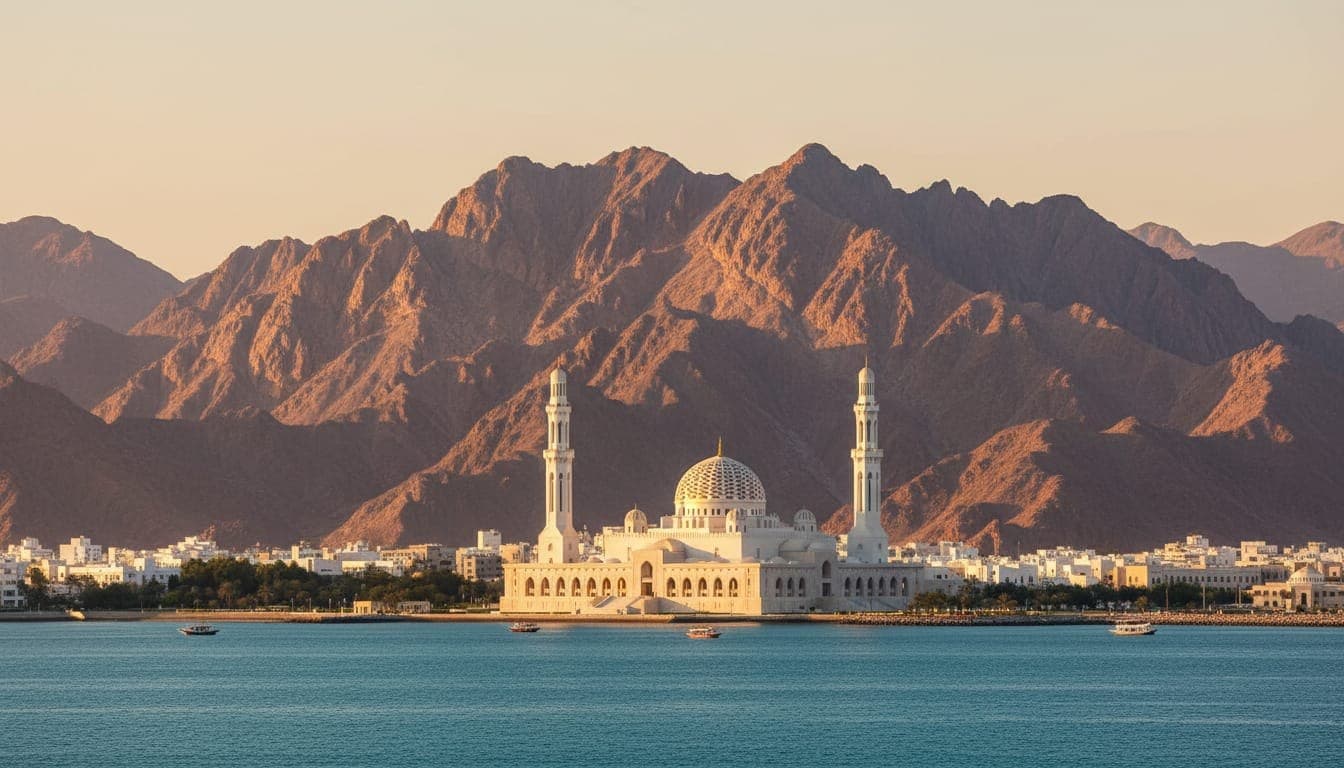
Muscat is a series of low, white neighbourhoods strung along 50 km of coast between the Hajar Mountains and the sea. There are no skyscrapers, and the traffic is manageable outside rush hour. The pace is Muscat's main appeal.
Where to base yourself
- Mutrah: The Corniche, the old souq and the fish market. It's the most walkable part of the city and has the best evening atmosphere.
- Qurum and Shatti Al Qurum: Beachfront hotels, a long sandy beach, cafés and Qurum Natural Park. A good middle-ground base.
- Al Mouj (The Wave): A newer marina district near the airport with apartments, a promenade and a golf course. Quiet and family-friendly.
- Bandar Jissah and Qantab: Resort coves south of Old Muscat. Scenic, but you'll depend on a car or taxi.
What to do
- Visit the Sultan Qaboos Grand Mosque. Non-Muslims can usually enter from about 8 to 11am, Saturday to Thursday. Entry is free, and you'll need modest dress, including a headscarf for women.
- Walk the Mutrah Corniche at sunset, then explore the souq. Many shops close from around 1 to 4pm and on Friday mornings.
- See Old Muscat: the Al Alam Palace façade, the Al Jalali and Al Mirani forts from outside, and the Bait Al Zubair museum.
- Check the programme at the Royal Opera House Muscat in Qurum. The season runs roughly September to May, and tickets for many shows are reasonably priced.
- Take a dolphin-watching boat or a snorkelling trip to the Daymaniyat Islands from Marina Bandar Al Rowdha or Al Mouj. Expect about OMR 20–45 per person, depending on the trip.
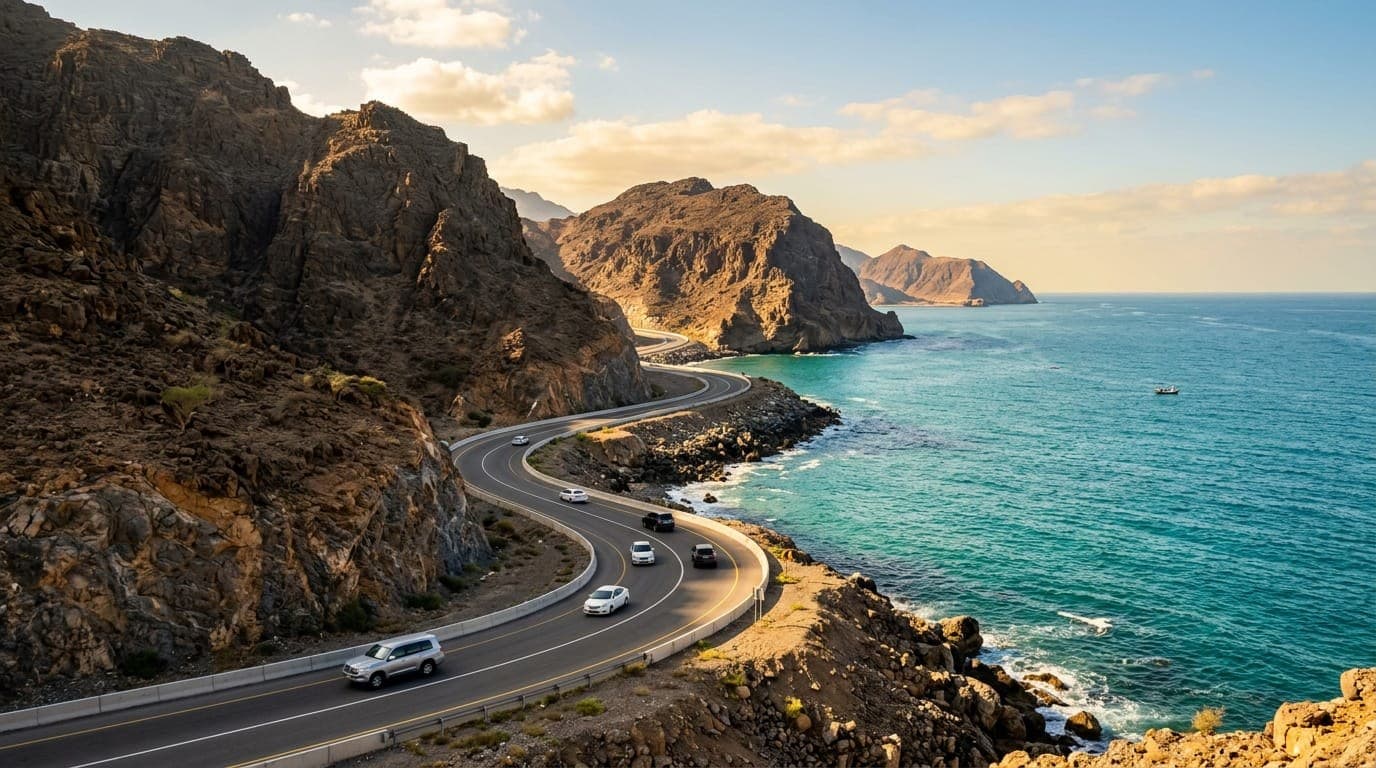
Day trips: Wadi Shab and the Bimmah Sinkhole are about 1 hr 30 min to 1 hr 45 min down the coastal highway. Nizwa, with its fort and Friday-morning livestock market, is about 1 hr 45 min inland. Jebel Akhdar is at around 2,000 m, and a police checkpoint turns back vehicles that aren't 4x4s.
Insider tip: Muscat has little public transport that works for visitors. Mwasalat buses cover main corridors for a few hundred baisa, but most travellers use the OmanTaxi or Otaxi apps, or hire a car for OMR 12–20 a day. From the airport, a taxi to Mutrah costs roughly OMR 10–15.
Loud: Dubai
Dubai in winter is the Gulf at full volume. There's an outdoor event almost every night, beach clubs are full, and the city packs its calendar into these months because it can't use them in summer.
Where to base yourself
- Downtown / Business Bay: Burj Khalifa, Dubai Mall and the fountains. Central, but expensive.
- Dubai Marina and JBR: Beach, promenade and tram access, lively late into the night.
- Deira and Bur Dubai: Old Dubai, around the Creek. Cheaper hotels, the gold and spice souqs, and Al Fahidi Historical Neighbourhood.
- Jumeirah: Low-rise villas, Kite Beach, and a more relaxed beach-town feel.
Winter-only highlights
- Global Village: Usually open late October to early May, with evening entry for about AED 25–30.
- Dubai Shopping Festival: Mid-December to January, with sales, fireworks and concerts.
- Outdoor dining and beach days: From November to March you can eat on a terrace without a mist fan.
- Desert trips and Hatta: Hatta, about 1 hr 30 min away in the Hajar foothills, is good for kayaking and mountain biking.
Getting around: The Dubai Metro's Red and Green lines connect the airport, Deira, Downtown and the Marina. Fares on a Silver nol card run about AED 3–7.50 depending on zones. The Dubai Tram serves the Marina and JBR, and a traditional abra across the Creek costs AED 1. The minimum taxi fare is about AED 12–13, and Careem and Uber both operate.
Insider tip: Hotels add a Tourism Dirham fee of about AED 7–20 per room per night, and it isn't always shown in the headline rate. Book Christmas and New Year stays early, because rates for that fortnight can double.
Surprising: Salalah
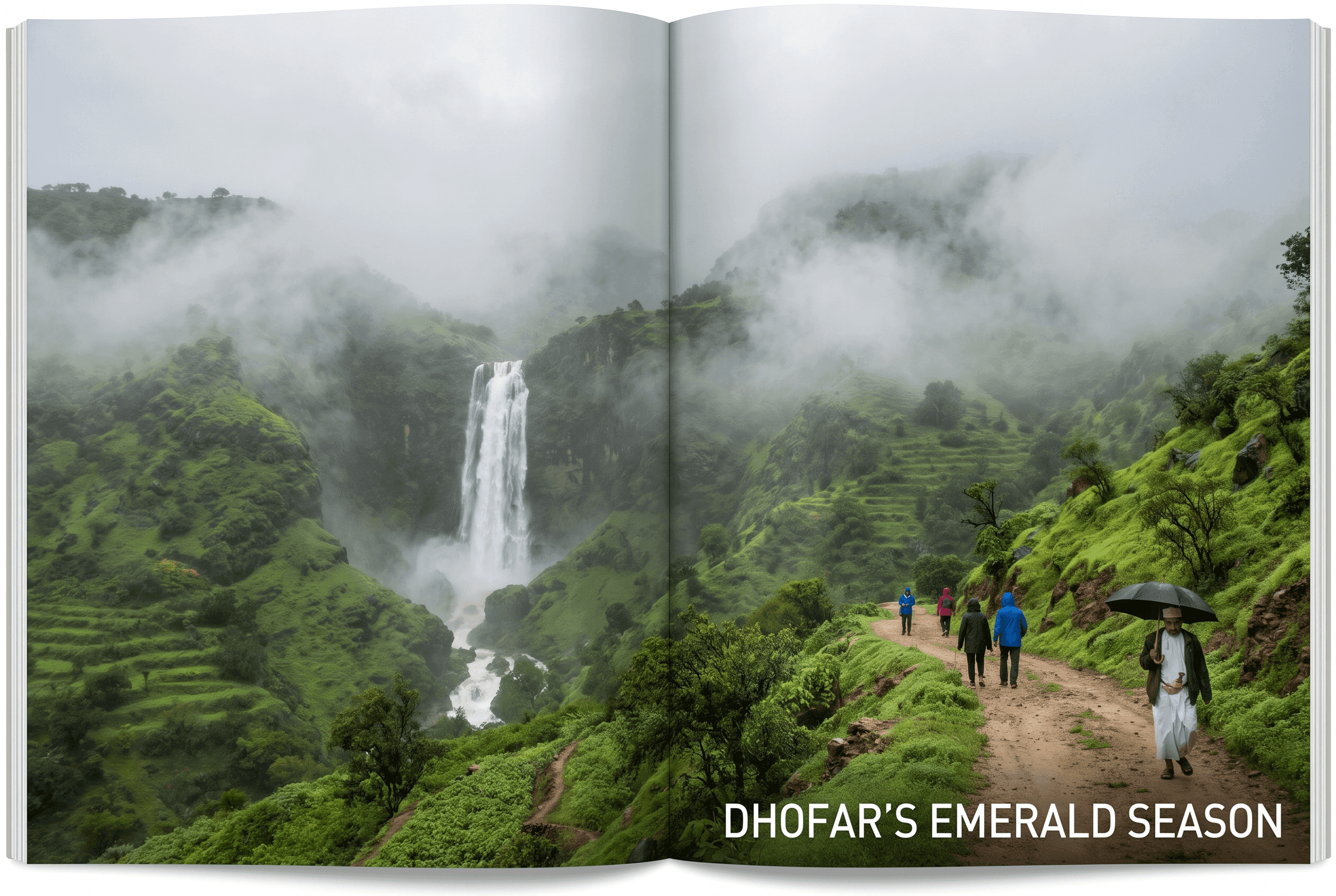
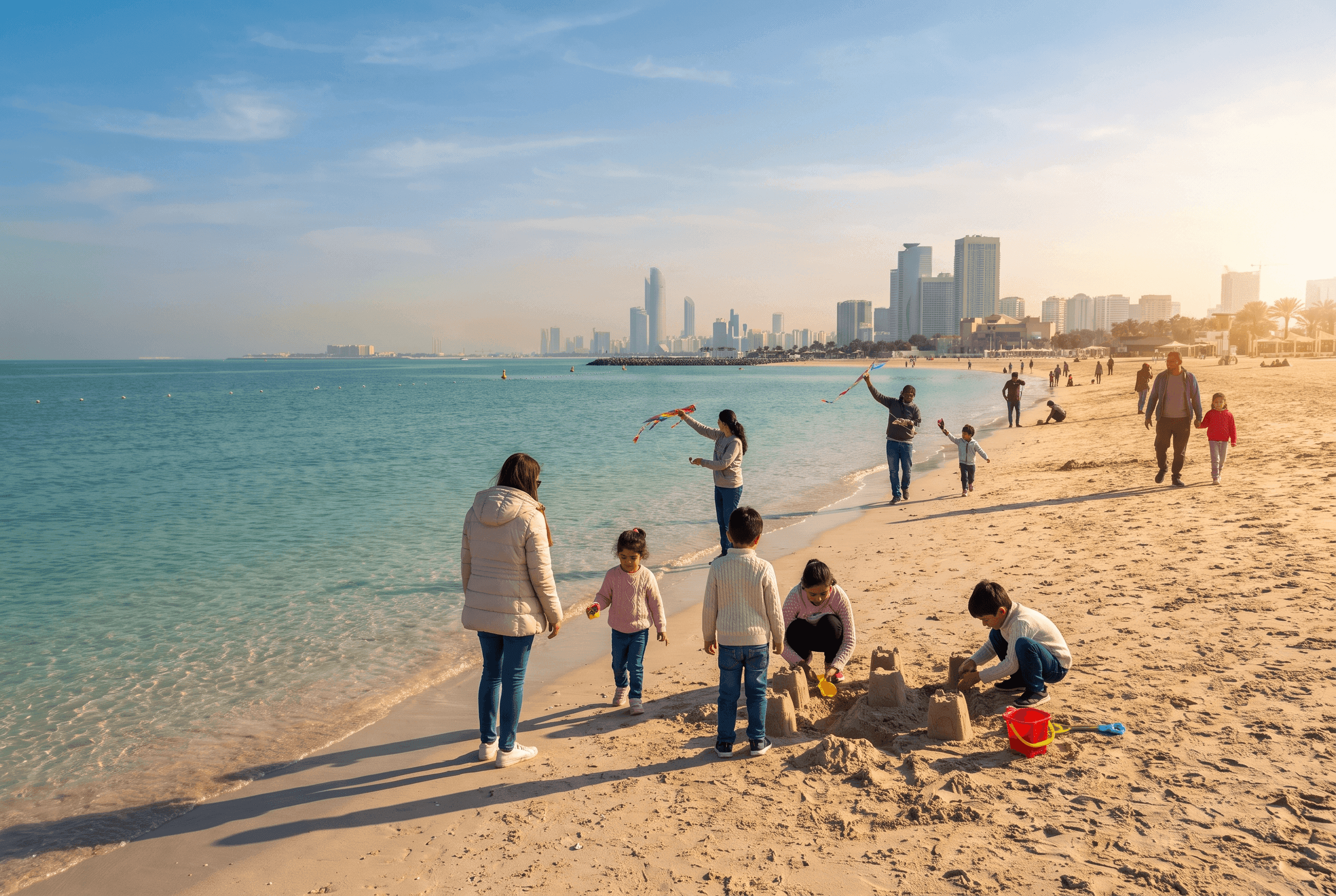
Salalah, in southern Oman's Dhofar region, is famous across the Gulf for the khareef, the June-to-September monsoon that turns the hills green. Fewer people know that it's also a strong winter destination. From November to March, the fog clears, the skies are reliably blue, highs sit around 28–30°C and the Arabian Sea is calm enough to swim at most beaches.
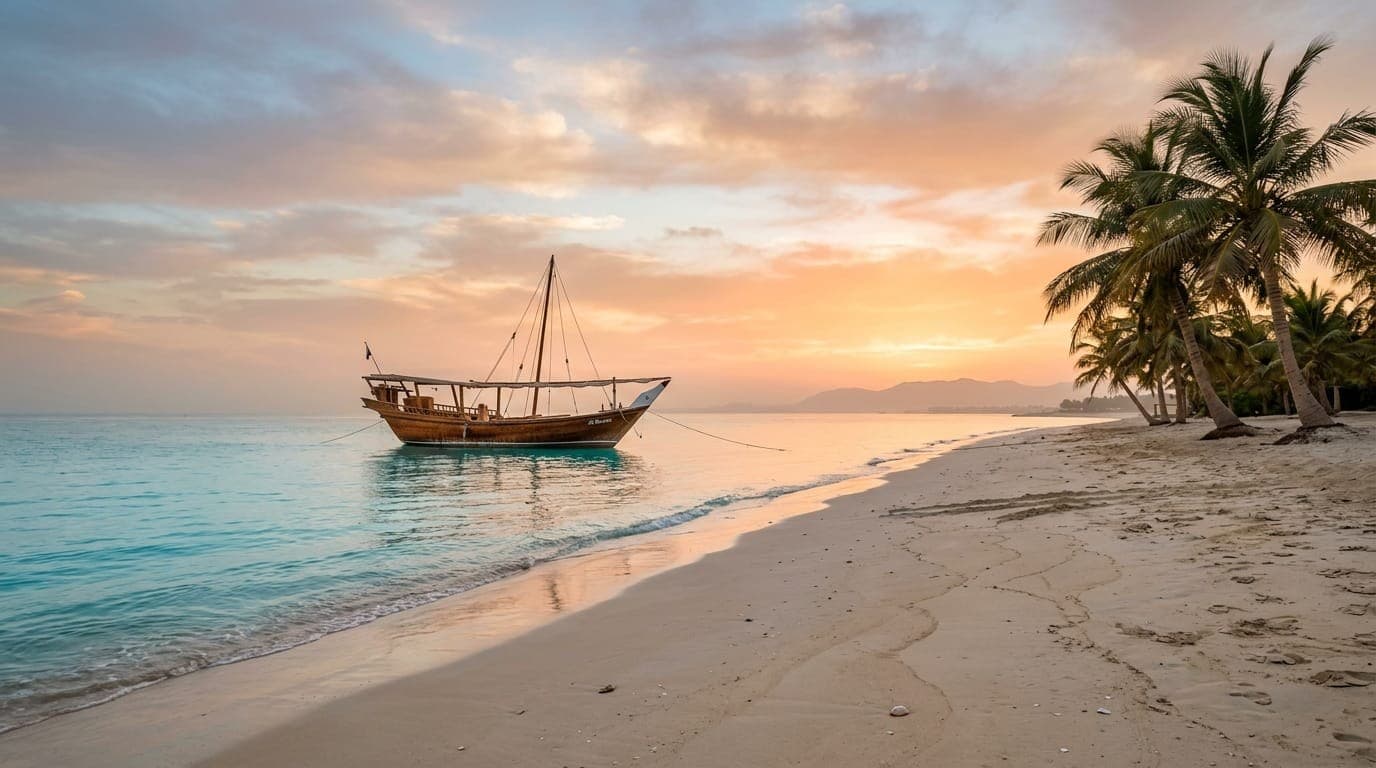
It also looks different from the rest of the Gulf. Coconut palms and banana plantations line the roads around Al Haffa, and roadside stalls sell fresh coconuts and papaya for a few hundred baisa. The coast is lined with long, empty beaches under steep limestone cliffs.
What to do
- Visit Al Baleed Archaeological Park and the Museum of the Frankincense Land. They're part of the UNESCO-listed Land of Frankincense site, and entry costs a couple of rials.
- See Khor Rori (Sumhuram), a ruined frankincense port set on a lagoon about 40 km east.
- Drive to Wadi Darbat, which usually still has water and some green in November after the monsoon. Then continue to the fishing towns of Taqah and Mirbat.
- Head west past Al Mughsail beach and its blowholes, then take the switchback road towards Fazayah, one of Oman's most dramatic beaches.
- Buy frankincense and burners in the Al Haffa souq. Ask about grades, since the pale, clear resin costs more.
Honest caveats: Salalah is spread out and has almost no public transport for visitors, so you'll need a hire car at about OMR 12–20 a day. Winter brings European charter tourists, so beach resorts can be busier than you'd expect. Nightlife is very limited. Some beaches have strong currents even in winter, so swim where locals swim and pay attention to any flags.
Getting there and combining destinations
Most Gulf and Levant travellers can reach all three destinations with a single change at most.
Typical routes and fares (economy, return, booked 4–8 weeks ahead):
- Dubai–Muscat: About 1 hr 10 min, flown by Emirates, flydubai and Oman Air, with Air Arabia and SalamAir from Sharjah. Expect roughly AED 400–900.
- Dubai–Salalah: About 2 hrs direct with flydubai, and from Sharjah on Air Arabia. Expect roughly AED 700–1,300, more over holidays.
- Muscat–Salalah: About 1 hr 30 min on Oman Air or SalamAir, at OMR 40–90 (AED 380–860) return.
- From Amman, Beirut or Cairo: Direct Muscat flights vary by season, so it's often cheaper to connect in Dubai, Doha or Bahrain. Compare the connecting fare against a direct flight into Dubai.
By road: Dubai to Muscat is about 450 km, roughly 5–6 hours including the Hatta or Al Wajajah border crossing. Mwasalat has run a scheduled coach on this route, but check the current timetable before you plan around it. If you drive a UAE hire car into Oman, you'll need written permission and Omani insurance, which rental firms charge extra for. The Hafeet Rail link between the UAE and Oman is still under construction, so don't plan around it for this season.
Good combinations:
- Seven to ten days: Four nights in Muscat, then three to four nights in Salalah, with one domestic flight between them.
- Long weekend: Two nights in Dubai for the energy, then two nights in Muscat to slow down.
- Oman in one trip: Fly into Muscat and out of Salalah (an open-jaw ticket) so you don't have to backtrack.
Money, timing and honest caveats
Budget guide (per person, per day, excluding flights):
- Muscat: OMR 35–60 (AED 335–575) on a mid-range trip. A karak tea costs about 100–200 baisa, and a casual Omani or Indian meal costs OMR 2–5.
- Dubai: AED 500–900 on a mid-range trip. Casual meals cost AED 35–70, and beach-club day passes often cost AED 150–400, usually redeemable against food and drink.
- Salalah: OMR 30–55 (AED 290–525) on a mid-range trip, plus car hire.
Things to know before you book:
- Ramadan (expected around 8 February to early March 2027): It's still a good time to visit, but a different one. Many restaurants open only after sunset (iftar), some stay open late, and you shouldn't eat or drink in public during daylight. Dubai hotels and malls keep some daytime dining open. Oman is stricter. Dates depend on the moon sighting.
- Weekends differ: Oman's weekend is Friday and Saturday, while the UAE's is Saturday and Sunday. Oman's malls, beaches and roads are busiest on Thursday evening and Friday.
- Rain happens: Winter storms are rare but can cause flash flooding, especially in wadis. Never enter a wadi when rain is forecast inland, even if the sky above you is clear.
- Dress: Beachwear is fine at hotel pools and beaches. In souqs, old towns and anywhere in Oman outside resorts, cover shoulders and knees.
- Visas: Many nationalities can get a UAE visa on arrival, and GCC residents often qualify for an Oman eVisa. Oman's visa-free list has changed in recent years, so check the official Royal Oman Police eVisa portal before you travel.
- Alcohol: It's available in licensed hotels and venues in Dubai and in larger hotels in Muscat and Salalah, where it's expensive. It isn't sold in ordinary shops or restaurants in Oman.
Is the sea warm enough to swim in January?
Yes, though it varies by destination. Off Muscat, the Gulf of Oman is usually around 24°C in January, and the Arabian Sea off Salalah is similar or slightly warmer. The Arabian Gulf off Dubai drops to about 21–22°C in January and February. That's comfortable for a short swim but feels fresh, so heated hotel pools are popular.
Which is cheaper for a winter break, Muscat or Dubai?
Muscat is usually cheaper for hotels and everyday food. Mid-range rooms often cost OMR 35–70 (about AED 335–670), against AED 450–1,000 in Dubai in peak season. Dubai can come out even thanks to its metro and heavy promotions. Muscat's savings shrink if you rely on taxis or hire a car for day trips.
Is Salalah worth visiting outside the khareef season?
Yes. Many travellers prefer it in winter. From November to March the skies are clear, highs are around 28–30°C and the sea is calm enough for swimming at many beaches. You won't see the monsoon greenery, but you'll get quiet beaches, frankincense heritage sites and dramatic coastal drives. Plan to hire a car, because public transport is minimal.
Can I combine Dubai and Muscat in one trip?
Easily. The flight takes about 1 hr 10 min and is covered by several airlines, including flydubai, Emirates, Oman Air, Air Arabia and SalamAir. By road it's about 5–6 hours including the border. If you drive a UAE hire car across, you'll need rental-company permission and Omani insurance. A popular split is two nights in Dubai followed by three or four in Muscat.