Salalah Month by Month: When to Catch the Khareef Mist, Winter Sun or Green Sarb
A month-by-month guide to Salalah's four seasons, covering monsoon fog, calm winter seas, prices that triple in August and the quiet green weeks most visitors miss.
11 min read
Why Salalah's calendar works differently
Salalah does not follow the normal Gulf rule of going in winter and avoiding summer. The capital of Dhofar sits on the Arabian Sea, close to Yemen. Every summer it catches the edge of the Indian Ocean monsoon, known locally as the khareef. From late June to mid-September, a damp sea mist settles over the Jebel Qara and Jebel Samhan escarpments. Daytime temperatures hover around 24–28°C, and the hills turn a colour of green you will not see anywhere else in Arabia.
That is why Salalah has two peak seasons that attract completely different travellers:
- July–August belongs to Gulf families escaping 45°C heat in Riyadh, Dubai and Kuwait. They come for drizzle, waterfalls and the festival.
- November–February belongs to Europeans on winter-sun charters and to Gulf residents who want calm turquoise water, reef snorkelling and dry desert trips.
The months between these peaks are also worth knowing. The post-monsoon sarb in late September and October is green, sunny and noticeably cheaper. April to June is hot and humid, but you will see the frankincense harvest and have the place to yourself.
This guide goes month by month. It covers what the weather actually feels like, how busy the roads and wadis get, what hotels typically charge, and which events are worth planning around. The aim is to match the month to the trip you want, not the other way round.
The four seasons at a glance
Dhofaris think in four seasons, not twelve months. Getting this right matters more than any single date.
Winter (November–March). Expect clear skies with daytime highs of around 27–30°C and nights of around 18–22°C. The sea is calm and visibility is good. This is the window for swimming at Al Mughsail and Fazayah, snorkelling off Mirbat and taking dune trips into the Rub al Khali. The hills are brown and dry, and the waterfalls are mostly off.
Pre-monsoon heat (April–mid June). Highs climb to around 32–35°C with heavy humidity. From May the southwest swell builds, and beaches start flying red flags. Crowds are very thin. Frankincense tapping is at its best quality in the hot months.
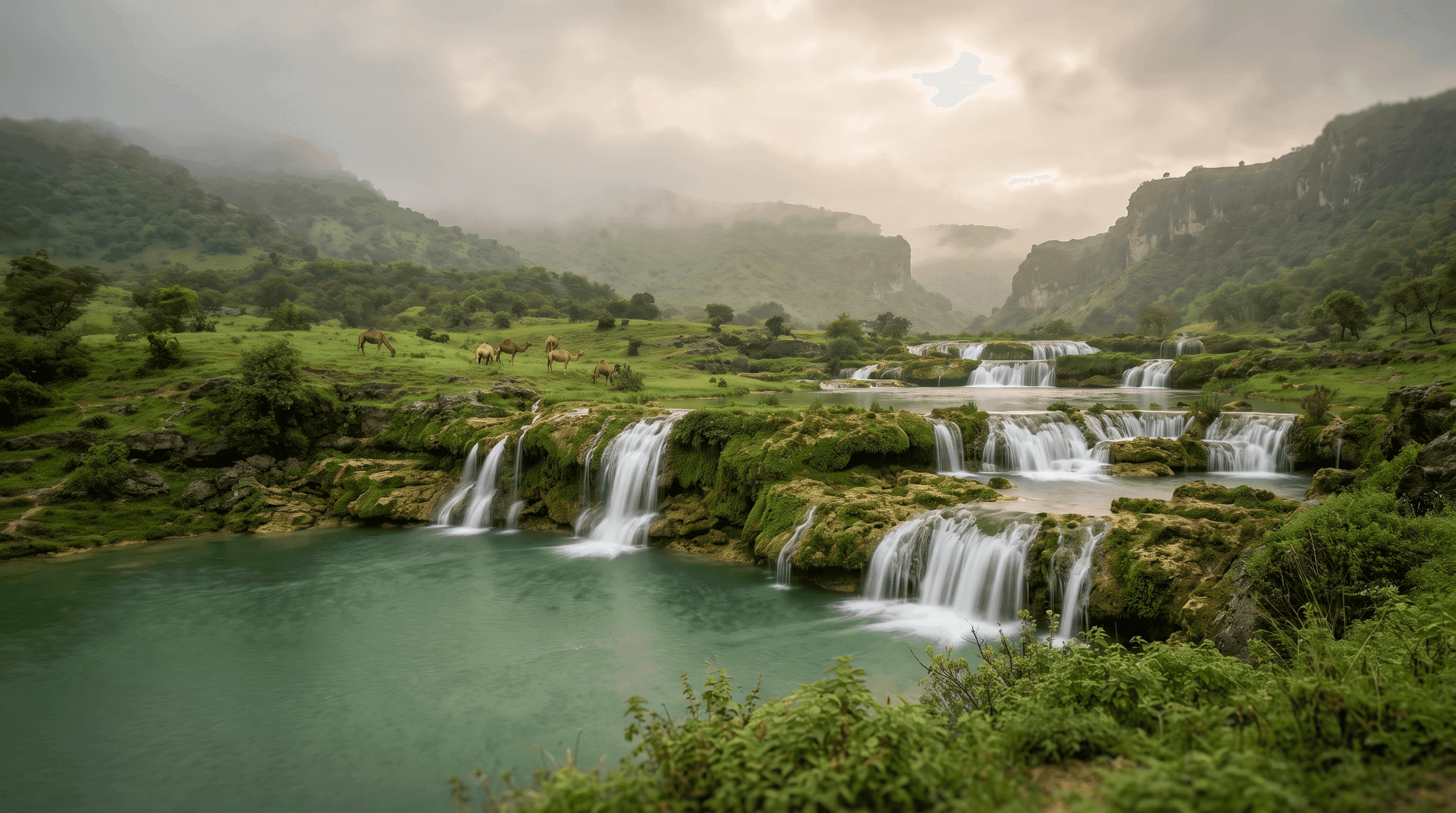
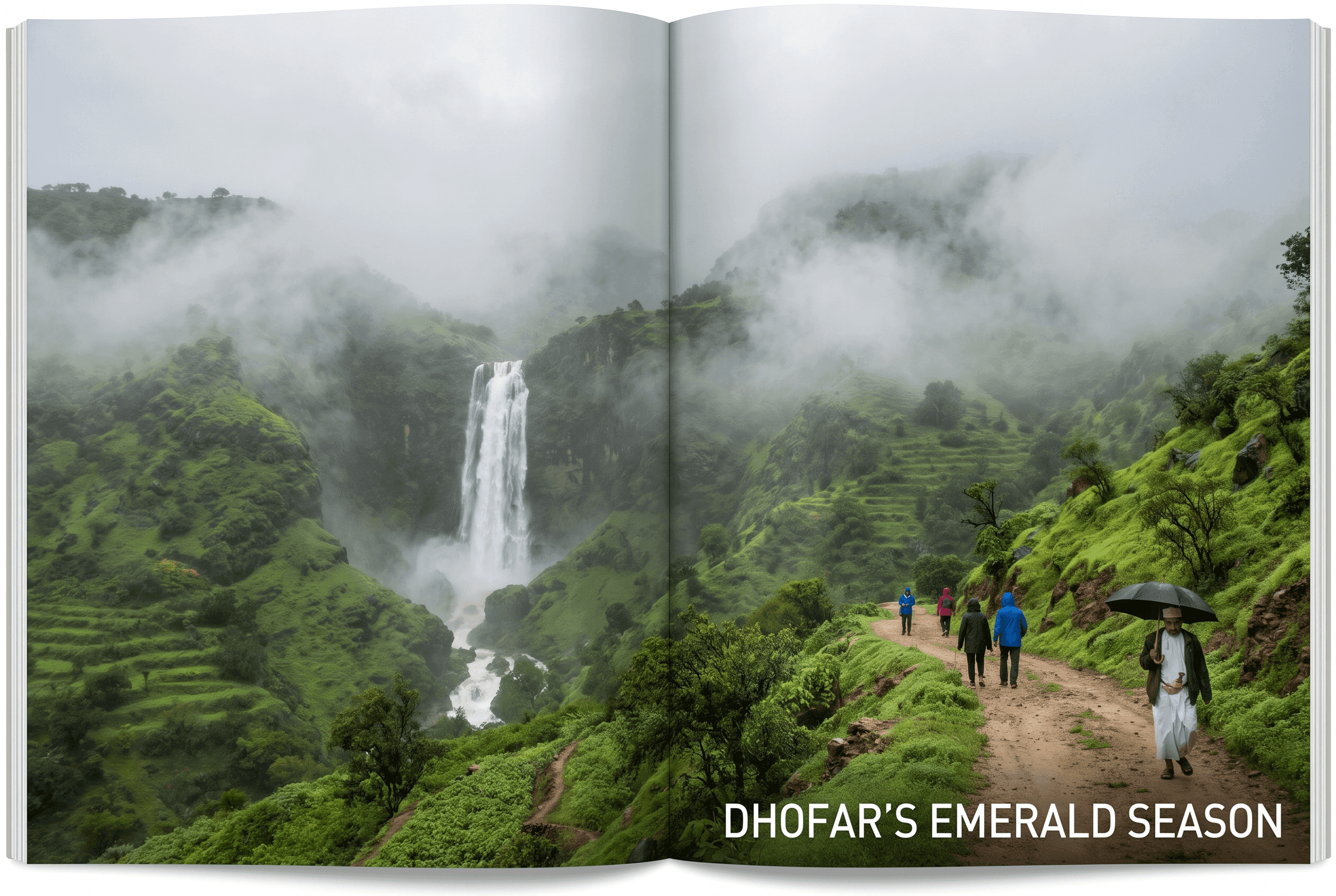
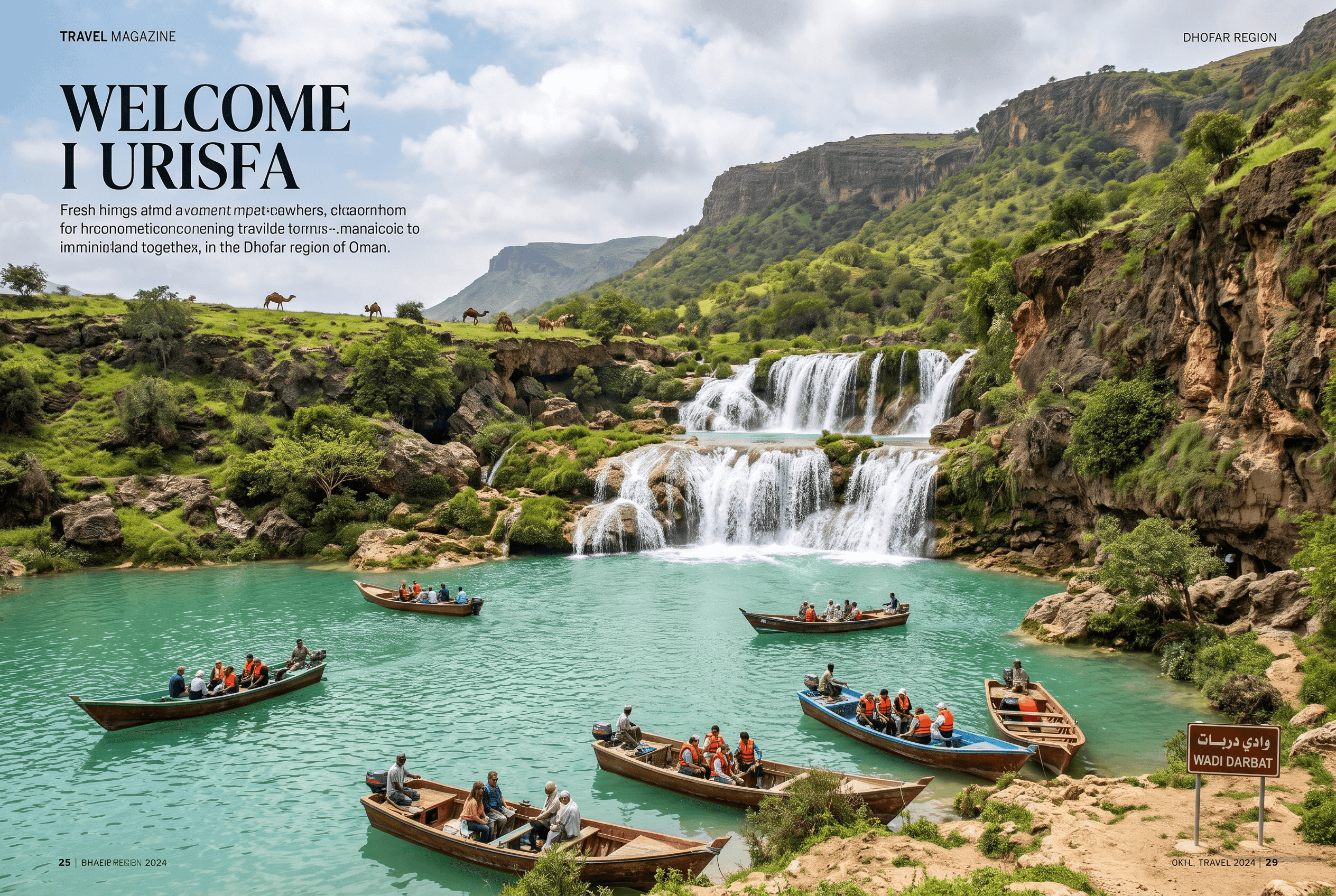
Khareef (roughly 21 June–21 September). Fog and drizzle settle on the mountains, and town stays humid at around 24–28°C. Wadi Darbat, Ayn Athum and Ayn Khor run with water, and the camels graze on fresh grass. The sea is rough and dangerous, so do not swim. This is the most crowded and most expensive period by far.
Sarb (late September–October). The mist lifts while the landscape is still green. Skies are blue, temperatures sit around 29–32°C and the waterfalls fade gradually. The sea starts calming in October. Prices drop sharply once Gulf schools are back.
If you want green hills, go from July to early October. If you want the beach and the reef, go from November to March.
January to March: peak winter sun and calm seas
January is the most reliable beach month. Days are around 26–28°C with almost no rain, and the water sits around 24–25°C. It is good for snorkelling at Mirbat and diving the Hallaniyat side when operators run trips. European charter flights are at full capacity, so beachfront resorts in Al Haffa and around Hawana Salalah fill up. Expect around OMR 60–120 (AED 575–1,150) a night for a good resort. City hotels typically cost around OMR 25–45 (AED 240–430).
February feels much the same, with slightly warmer afternoons. Ramadan 2027 is expected to begin around 8 February. During the fast, daytime restaurant service is limited outside hotels, and eating in public by day is not appropriate. Evenings are lively, though, with iftar buffets and late-night shawarma and harees. Tour operators and car rentals stay open, and some prices soften.
March brings warmer days of around 29–31°C as winter crowds start thinning. Eid al-Fitr is expected around 9–10 March 2027. It brings a short spike of Omani and Gulf domestic tourists, so book that week early.
These three months are best for:
- Beach-and-reef holidays and family swimming
- Rub al Khali day trips from Thumrait. Desert mornings are cool, and a 4x4 tour typically runs around OMR 40–70 per person
- Visiting Al Baleed Archaeological Park, Sumhuram and Wadi Dawkah in comfortable midday temperatures
April to June: heat, frankincense and empty roads
This is Salalah's low season. It suits flexible travellers who do not mind heat.
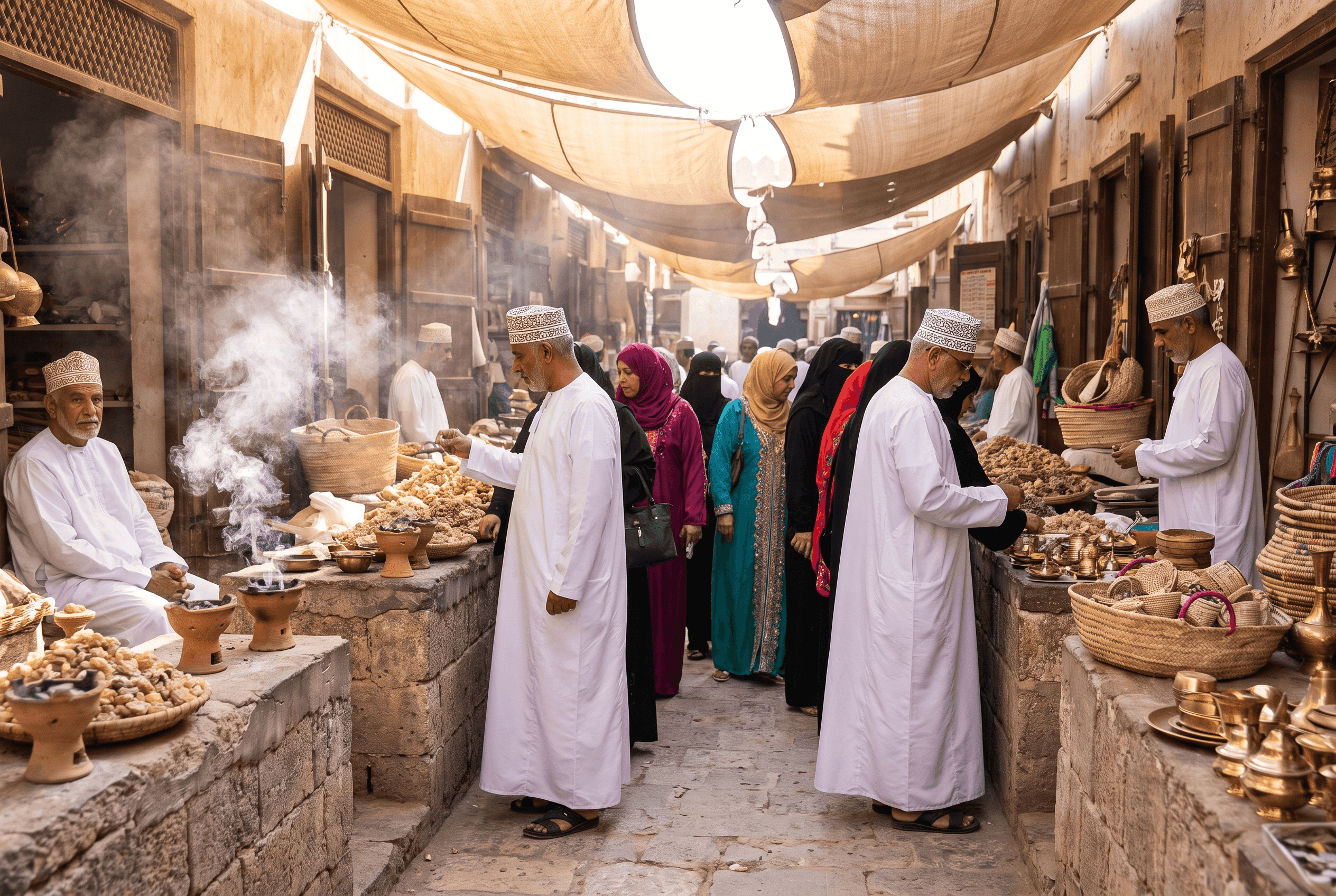
April is still workable, with highs around 31–33°C and the sea mostly swimmable early in the month. Hotel rates fall to their lowest. Good four-star rooms are typically around OMR 25–40 (AED 240–380), and some resorts discount heavily. This is also when frankincense trees in Wadi Dawkah and the hills behind Hasik are tapped. Harvesters return to collect the hardened resin, and the souq at Al Haffa gets fresh stock. Prime hojari grades typically cost around OMR 5–15 per bag depending on quality.
May turns sticky, with humidity often above 70% and highs around 33–35°C. The southwest swell builds through the month, and lifeguard flags go red at Al Mughsail and Dahariz. Eid al-Adha is expected around 16 May 2027 and brings a brief domestic rush.
June is transitional. The first fog usually arrives in the second half of the month, so the hills can still be brown on 15 June and misty by the 25th. Hotels start raising rates from around mid-June.
These months work for:
- Budget travellers who mostly want the city, the souq and the archaeology
- Photographers wanting harsh, empty landscapes
- Anyone combining Salalah with a cheap SalamAir fare
Skip them if your priority is swimming or greenery.
July and August: full khareef and festival season
These are the months that made Salalah famous across the Gulf. It is the only place on the peninsula where you will need a light jacket in August.
What it feels like. In town, expect around 24–27°C with overcast skies and fine drizzle. On the Jebel Qara road towards Ittin and Ayn Razat, the fog can drop visibility to a few metres. Wadi Darbat's waterfall and lake are at their fullest, and camels and cattle wander across the roads. Brief sunny breaks are common around midday near the coast.
Crowds. Gulf traffic peaks from early July through August, especially around school holidays. Weekend afternoons at Wadi Darbat and Ayn Khor see long queues of cars. Arrive before 9am or after 4pm.
Prices. This is the most expensive period by a wide margin. Furnished apartments, the Gulf family favourite, typically run around OMR 60–150 (AED 575–1,430) a night. Mid-range hotels that charge OMR 30 in April can reach OMR 80–120. Rental cars often double, so expect around OMR 25–45 a day for a sedan. Book flights and accommodation two to three months ahead.
Events. The Khareef Salalah Festival typically runs from around mid-July to the end of August, with recent editions centred on the Ittin area. Expect a mix of Dhofari folk music and dance, a heritage village, food stalls, concerts and children's shows. Check the official dates each spring.
Warning: beaches are closed to swimming. Rip currents during the khareef are deadly, and drownings happen most years.
September and October: the sarb, Salalah's best-kept secret
Ask Dhofari locals their favourite time and many will say the sarb. Visitors rarely plan for it.
September is a hybrid month. Through the first half, the mist still lingers on the escarpment and the waterfalls keep running. Once Gulf schools reopen in late August and early September, crowds drop dramatically. By the third week, the fog lifts and you get blue skies over still-green hills. Prices fall quickly. Apartments that cost OMR 120 in August are typically around OMR 40–60 (AED 380–575).
October is mostly sunny, with highs around 30–32°C. The hills slowly turn golden by the end of the month. Wadi Darbat usually keeps its pools and greenery into mid-October, even if the falls weaken. The sea calms through the month, and beaches start to reopen for swimming, though conditions vary year to year. Lifeguard flags are your guide.
This is the season for:
- Photography. Green valleys with clear skies, and long views from the Taiq Sinkhole area and the Jebel Samhan viewpoint.
- Road trips. The coastal road to Mirbat, Taqah and Sadah is quiet. Fog-free mountain drives are far safer than in August.
- Value. You get khareef-like scenery at near off-season prices.
One caveat is that late-monsoon years vary. Some Septembers stay misty almost to the end, while others clear early. Book flexible rates if green hills are the main goal.
November and December: winter season opens
November is when Salalah switches into beach mode. Highs sit around 29–31°C and nights cool to around 22°C. The sea is generally calm and clear, and dive centres in Mirbat restart regular trips. Oman National Day falls on 18 November, and public holiday days are often announced shortly beforehand. Expect flags, illuminated roundabouts and a bump in domestic visitors over that long weekend. Winter charters from Europe usually begin around late October to November, so resort rates rise across the month.
December is ideal weather, around 27–29°C, with warm water and near-zero rain. It is the busiest winter month. The festive period, from Christmas to New Year, plus UAE school holidays, pushes resort prices to their winter peak of around OMR 80–150 (AED 765–1,430) a night at the better Hawana and Al Haffa beachfront properties. City hotels stay reasonable at around OMR 25–50.
What to do in early winter:
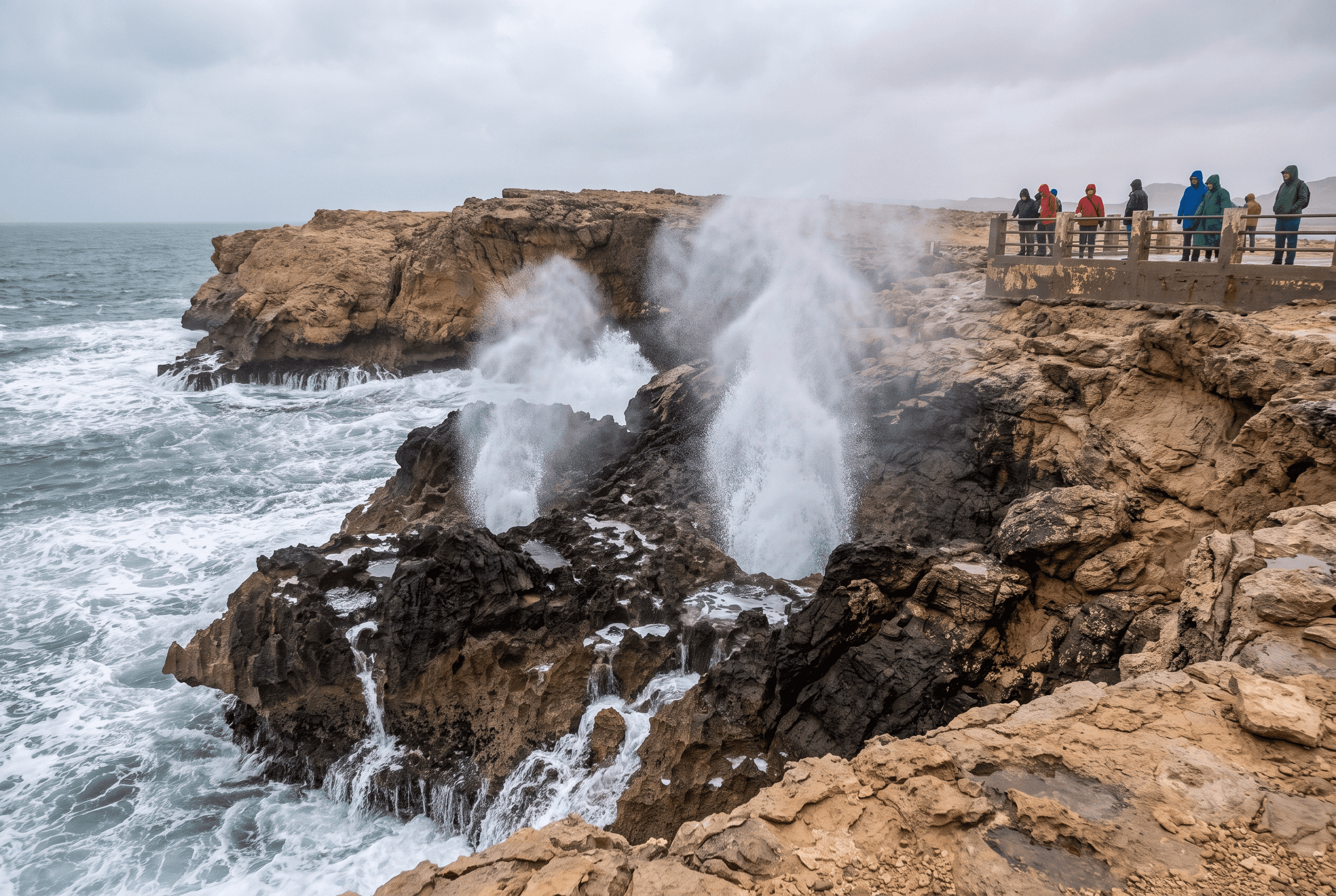
- Swim and snorkel at Fazayah and Al Mughsail. Watch the Marneef Cave blowholes on calmer days for less spray but safe viewing.
- Eat whole grilled kingfish and Dhofari mishkak at the seafront stalls, and drink fresh coconut water from the roadside plantations along Sultan Qaboos Street. A coconut typically costs around OMR 0.3–0.5.
- Drive to Hasik and Shuwaymiyah for empty coves. Allow a full day.
The hills are dry, so do not come for waterfalls.
Month-by-month cheat sheet: prices and booking windows
Use this as a quick reference. Prices are typical nightly ranges for a comfortable mid-range hotel or apartment for two.
- January: peak winter. Around OMR 40–80 (AED 380–765). Book 6–8 weeks ahead.
- February: peak winter. Ramadan is expected to start around 8 February 2027. Around OMR 35–75.
- March: shoulder. There is an Eid spike around early-to-mid March. Around OMR 30–60.
- April: low. Around OMR 20–40 (AED 190–380). Book last minute.
- May: low with a short Eid al-Adha spike. Around OMR 20–40.
- June: low, rising late month. Around OMR 25–50.
- July: khareef peak. Around OMR 60–150 (AED 575–1,430). Book 2–3 months ahead.
- August: khareef peak. Around OMR 60–150. Book 2–3 months ahead.
- September: dropping fast. Around OMR 35–70 after the first week.
- October: shoulder sarb. Around OMR 30–55. This is the best value for scenery.
- November: shoulder rising. Around OMR 35–70.
- December: peak around the holidays. Around OMR 45–100.
Flights from Dubai typically cost around AED 700–1,400 return outside khareef. In July and August, they often run around AED 1,500–2,800 or more.
Insider tips:
- Gulf weekend demand is Thursday to Saturday. Sunday-to-Wednesday stays in khareef are often noticeably cheaper.
- Apartments in Al Saada and near Al Haffa are better value for families than resorts.
- In winter, check for European school holidays. Resort availability tightens around late December and February half-term.
Practical: getting there, getting around, money and safety
Getting there. Salalah International Airport (SLL) is about 10–15 minutes from the city centre. Direct flights from Dubai, Abu Dhabi, Doha, Riyadh and Jeddah run on carriers such as flydubai, Air Arabia, SalamAir, Qatar Airways and saudia, with schedules expanding during khareef. Flying time from Dubai is around 2 hours. Oman Air and SalamAir run frequent Muscat–Salalah shuttles of around 1.5 hours. Many Emiratis and Saudis drive. From Muscat, it is around 1,000 km, or roughly 10–12 hours, via Adam and Thumrait. Keep in mind there are long, empty stretches.
Getting around. A rental car is close to essential, since the sights are spread over around 150 km of coast. Winter rates are typically around OMR 12–25 a day, and khareef rates are much higher. Taxis are orange-and-white, unmetered and negotiable. An airport-to-city ride typically costs around OMR 5–8. In fog, drive slowly with low beams and watch for camels.
Money. The Omani rial is roughly AED 9.5. Cards are widely accepted in hotels and malls. Carry cash for souq stalls, coconut stands and small cafés.
Visas and dress. GCC nationals enter freely. Many GCC residents qualify for an e-visa, so check the Royal Oman Police portal before booking. Dress modestly away from the beach.
Safety. Never swim during the khareef. Respect red flags all year, and stay behind railings at Marneef Cave and the cliffs at Al Mughsail.
Read more: Salalah · Salalah in 3 Days: Frankincense Ruins, Monsoon Waterfalls and Empty Beaches · What a Day in Salalah Really Costs: Budget, Mid-Range and Splurge Breakdown
What is the single best month to visit Salalah?
It depends on your goal. For green mountains and waterfalls, late July or the first half of September balances scenery with slightly lower crowds. For beaches, snorkelling and guaranteed sun, January or November is hard to beat. October is the best compromise, with green hills, clear skies and lower prices.
Can you swim in Salalah during the khareef?
No. From roughly June to September, the monsoon swell creates powerful rip currents, and beaches fly red flags. Drownings happen almost every season. Save swimming for November to March, and check lifeguard flags even in winter.
When does the Khareef Salalah Festival take place?
It typically runs from around mid-July to the end of August, with recent editions centred on the Ittin area. Exact dates and venues are announced each year by the Dhofar authorities, so confirm before booking.
Is Salalah too hot to visit in May or June?
It is hot and humid rather than scorching. Expect highs of around 32–35°C with high humidity, which feels uncomfortable at midday. It is fine for early-morning sightseeing and air-conditioned hotel stays, and prices are at their lowest. The sea is often too rough for swimming by May.
How far ahead should I book for July and August?
Book around two to three months ahead for flights, apartments and rental cars, and earlier if you are travelling around Gulf public holidays. Midweek stays from Sunday to Wednesday are often cheaper and easier to find.