Muscat to Ras Al Jinz in One Day: Bimmah Sinkhole, Wadi Shab and the Evening Turtle Walk
Leave Muscat by 7am to reach Bimmah Sinkhole and Wadi Shab before the heat, then drive on to Ras Al Jinz for a pre-booked evening turtle walk.
8 min read
Why this route works
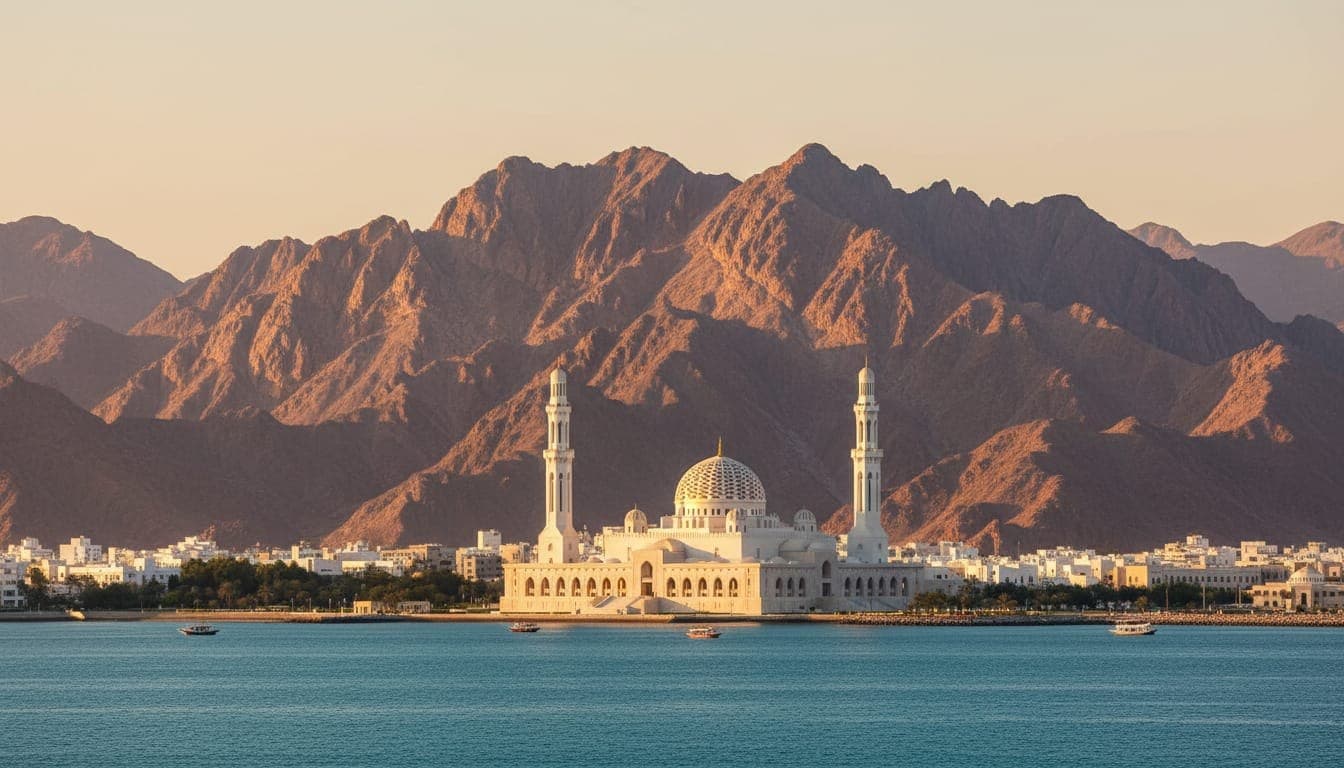
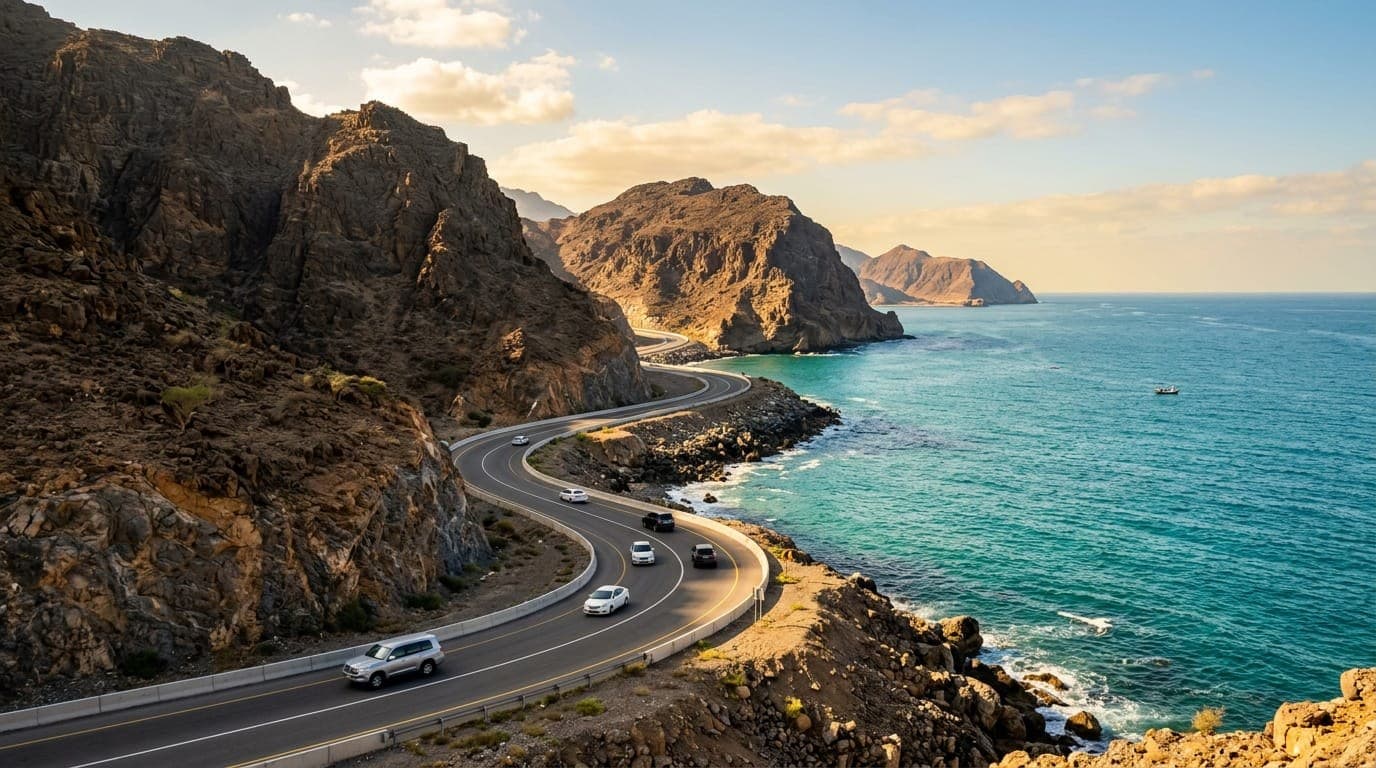
The coastal highway south of Muscat gives you some of Oman's best scenery on a single road: rocky mountains to one side, the Gulf of Oman to the other, and turquoise water hidden in the limestone. In one long day you can swim in Bimmah Sinkhole, hike and swim through Wadi Shab, and finish at the Ras Al Jinz Turtle Reserve, where green turtles come ashore to nest after dark.
The order matters. Bimmah and Wadi Shab are hot, exposed and busy in the afternoon. The turtle walk only happens in the evening. So the plan is simple: leave Muscat by 7am, see Bimmah first, reach Wadi Shab before the heat builds, rest through the middle of the day, and drive the last stretch to Ras Al Jinz in the late afternoon.
If you're flying in from the Gulf, the plan also fits a long weekend. Muscat is about 1h15 from Dubai and roughly 1h30–2h from Doha, Kuwait or Bahrain. Oman Air, SalamAir, flydubai, Emirates and Air Arabia (from Sharjah) all fly into Muscat International Airport.

Getting there: car hire, fuel and the road
Self-drive is the realistic option. Mwasalat, Oman's state bus company, runs intercity buses between Muscat and Sur. The stops don't line up with the wadi entrances or the turtle reserve, though, and you'd be stuck after dark with no transport.
Car hire basics (2026 typical ranges):
- Compact sedan: about OMR 12–20 per day (roughly AED 115–190)
- SUV/4x4: about OMR 25–45 per day (AED 240–430). You don't need one for this route, which is paved all the way
- Petrol (M91): capped at around OMR 0.23 per litre, so a full return trip of roughly 550–600 km costs about OMR 12–15 (AED 115–145) in a sedan
- Exchange rate: OMR 1 ≈ AED 9.55 (both currencies are pegged to the US dollar)
The route: From central Muscat (Qurum, Al Khuwair or Mutrah), take the Muscat Expressway to Al Amerat, then Route 17, the coastal highway towards Quriyat and Sur. Bimmah is about 130 km from Qurum, or 1h30 without traffic. Wadi Shab is about 20 km further on, near the village of Tiwi.
Driving from the UAE? You can drive in through Hatta/Al Wajajah or other land borders, but you need Oman insurance cover (check your UAE policy or buy it at the border). Allow extra time for immigration. For a two-day trip, most UAE residents find flying to Muscat and renting a car faster.
Speed cameras on Route 17 are frequent and the fines are real. Stick to the posted limit, usually 120 km/h on the highway and lower through villages.
Sample timetable for the day
This timetable assumes you're staying in Muscat and sleeping near Ras Al Jinz or Sur that night. Driving back to Muscat after a late turtle walk is possible but tiring (see caveats below).
| Time | Stop | What you're doing | Cost (approx.) |
|---|---|---|---|
| 07:00 | Depart Qurum/Al Khuwair | Coffee and fuel, join Route 17 | Fuel ~OMR 6 (AED 57) each way |
| 08:30–09:30 | Bimmah Sinkhole (Hawiyat Najm Park) | Swim before the tour buses | Free |
| 09:45–13:30 | Wadi Shab | Boat, hike, swim to the cave | Boat ~OMR 1–2 return (AED 10–19) |
| 13:30–15:30 | Tiwi / Sur | Lunch, shade, rest | Meal OMR 3–8 (AED 30–75) |
| 15:30–17:00 | Sur and Al Ayjah | Dhow yard, lighthouse, sunset | Free |
| 17:00–18:00 | Drive to Ras Al Jinz | About 60 km from Sur | — |
| Evening | Turtle walk | Guided beach visit | Roughly OMR 7–10 (AED 65–95) per adult |
Times on the ground slip easily, especially at Wadi Shab. Build in at least an hour of buffer before the turtle walk.

Stop 1: Bimmah Sinkhole
Bimmah Sinkhole sits inside Hawiyat Najm Park, just off Route 17 near the village of Dibab. It's a collapsed limestone pit roughly 20 metres deep, filled with blue-green water that is a mix of seawater and fresh water. A concrete staircase takes you down to the water's edge. Entry is free, and there are toilets, shaded seating and parking.
Why go first: Tour groups from Muscat usually arrive mid-morning, and there's almost no shade down at the water. At 8:30am you'll often share it with only a few families.
Good to know:
- Swimming is allowed. The water is deep in the middle, so weak swimmers should stay near the rocky edge
- Small fish nibble at your feet. It's harmless, but it surprises people
- Cliff jumping is officially discouraged and has caused injuries
- Dress modestly on the park paths and save swimwear for the water. Omani families use the park, and it's a respectful norm
- Allow 45–60 minutes. You won't need longer
Stop 2: Wadi Shab, the day's main event
Wadi Shab starts under the highway bridge at Tiwi, about 15–20 minutes south of Bimmah. It's the most popular wadi on the Muscat–Sur coast because the whole thing is on foot: a short boat crossing, a rocky hike between cliffs and date plantations, then a series of pools you swim through to reach a cave with a waterfall inside.
How it works:
- Park in the lot under the bridge. It's free, but it fills up by late morning on weekends
- Take the small boat across the lagoon, about OMR 1–2 return (AED 10–19). Keep your receipt
- Hike 45–60 minutes each way over rocks and falaj (irrigation channel) ledges. Some sections are narrow and a few need hands
- At the first big pool, change into swimwear and swim upstream through several pools
- At the end, squeeze through a narrow gap to reach the cave and waterfall. This is the part everyone photographs
What to bring:
- Water shoes or sturdy sandals with grip. Flip-flops are a bad idea
- At least 1.5 litres of water per person
- A dry bag for your phone and car key. You'll swim with your valuables or leave them on a rock, so pack light
- Clothes that cover your shoulders and knees for the hike. Swimwear should stay at the pools
Honest caveats: The boat usually runs from early morning until late afternoon, and the last return crossing is typically around 5pm. Check on arrival, because missing it is a real problem. The wadi can close after heavy rain because flash floods are dangerous. The trail is also crowded on Fridays and Saturdays. For the calmest experience, reach the car park before 10am on a weekday.

Midday break: Tiwi, Sur and the coast
Don't head straight to Ras Al Jinz after Wadi Shab. You'll arrive hours early, and the reserve area has very little to do until evening.
- Eat simply: Small restaurants in Tiwi and Sur serve shuwa-style rice and grilled fish, biryani, and Indian or Pakistani staples for about OMR 2–5 (AED 19–48) per plate. Sur has the most choice
- Wadi Tiwi: If you still have energy, this wadi next door is mostly driveable, with villages and plantations along it. The road inside is steep and narrow, and a 4x4 is recommended past the lower section
- Sur's dhow yard: Craftsmen still build traditional wooden dhows here using long-established methods. Visits are informal and free. Be polite and don't climb on the vessels
- Al Ayjah: Cross the bridge to the whitewashed lighthouse and the old merchant houses. Late afternoon light is the best of the day for photos
Also fuel up in Sur. There are few stations between Sur and Ras Al Jinz.
Stop 3: Ras Al Jinz turtle walk, and why you must book ahead
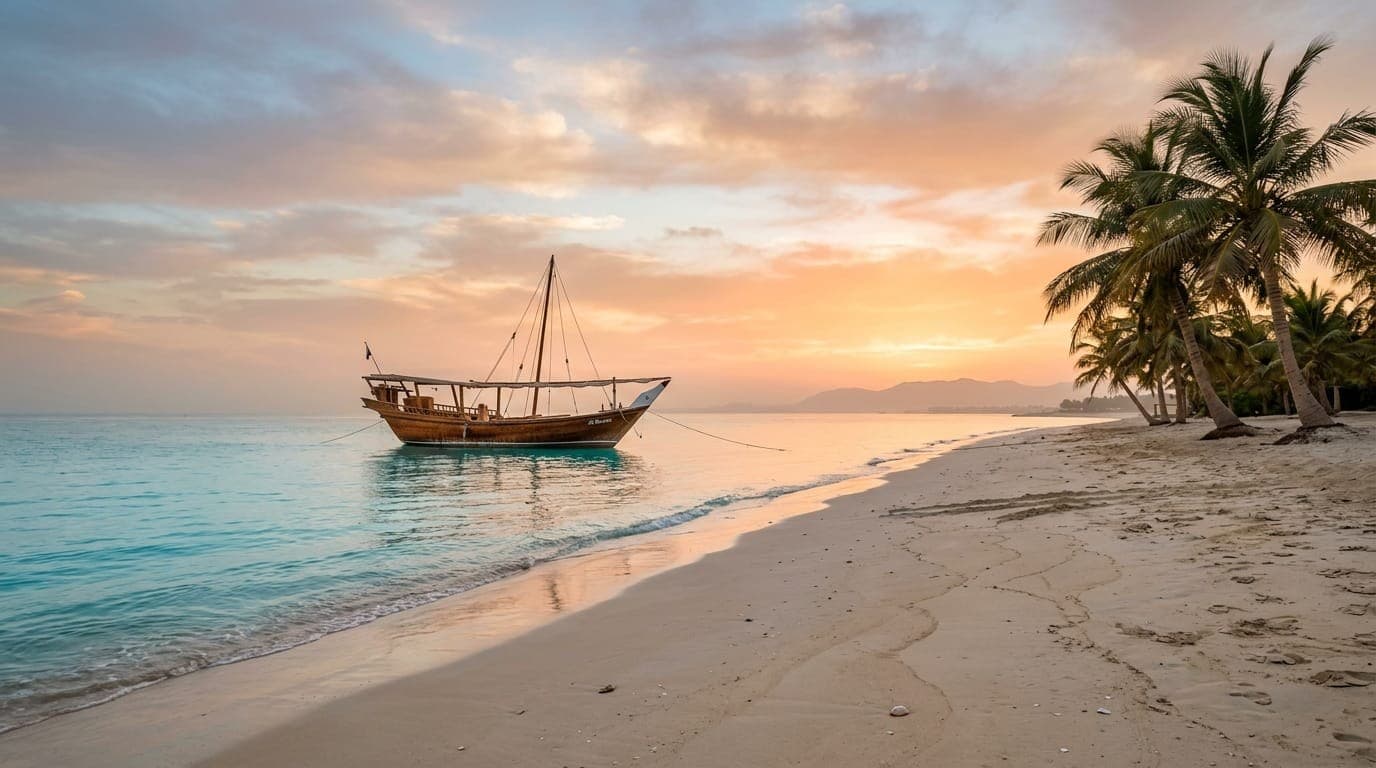
The Ras Al Jinz Turtle Reserve sits at the easternmost tip of the Arabian Peninsula, about 60 km beyond Sur (roughly 50 minutes). It's one of the most important nesting sites for endangered green turtles in the Indian Ocean region. Access to the nesting beach is only with a reserve guide, in small groups, on the evening and dawn walks.
Book in advance on the reserve's official website. Group numbers are capped, and evening slots sell out days or weeks ahead from October to April and on Gulf holidays such as Eid and National Day. Walk-up places are sometimes available, but don't count on it.
What to expect:
- The evening walk usually starts around 8–9pm. Arrive 30 minutes early to check in. There's also a short museum on site
- Prices are roughly OMR 7–10 (AED 65–95) per adult, with reduced child rates. The reserve's current tariff is the final word
- The walk to the beach takes a few minutes, and total time on the sand is usually around an hour
- Sightings aren't guaranteed. Most nights have at least one turtle nesting, digging or returning to sea, but it's wildlife, not a show
Rules the guides enforce:
- No flash, torches or phone screens pointed at turtles. Guides use dim red lights
- Keep your distance and stay quiet. A disturbed turtle may abandon her nest
- Wear closed shoes. The beach is dark and uneven
Evening walk vs dawn walk:
- Evening: Easier to combine with this day trip. You're most likely to see adults nesting
- Dawn (usually around 4–5am): Better light and fewer people, with a chance of seeing hatchlings running to the sea in season. It means staying overnight nearby
Where to sleep, when to go and final tips
Sleeping arrangements: The simplest option is to stay at the reserve itself. The on-site hotel and the Carapace Lodge eco-tents are run under the reserve, and staying there lets you do both the evening and dawn walks. Expect roughly OMR 60–120 (AED 575–1,150) per night depending on season and room type. Cheaper guesthouses are in Ras Al Hadd, 15 minutes away, and there are mid-range hotels in Sur. Driving 3–3.5 hours back to Muscat after 10pm is possible, but the road has camels and unlit village stretches. Most people who try it regret it.
When to go:
- October to April: The best weather, with daytime highs of 25–32°C and comfortable swimming. It's also peak season, so book the turtle walk early
- May to September: Temperatures often pass 40°C, so the 7am start matters even more. Green turtle nesting peaks roughly June to August, and hatchlings are common late summer into autumn, so wildlife is excellent even though hiking is tough
- Ramadan: Eat discreetly in public during daylight. Some rural restaurants close until iftar
Insider tips:
- Download offline maps. Mobile signal drops in Wadi Shab and around Ras Al Jinz
- Pack a spare dry outfit and a towel in the car. You'll be wet from Wadi Shab until mid-afternoon
- Carry some cash in rials for the boat, small cafés and fuel in villages. Cards are widely accepted in Sur and at the reserve
- Check Oman visa rules before booking flights. GCC residents in eligible professions and many nationalities can visit visa-free or get an e-visa, but rules change and depend on your passport
Can I do Bimmah, Wadi Shab and Ras Al Jinz as a day trip from Muscat?
Yes, but it makes for a very long day, roughly 16 hours door to door. Driving back to Muscat after the evening turtle walk means 3 or more hours on dark roads where camels may wander. Most travellers are happier sleeping at the reserve, in Ras Al Hadd or in Sur, then returning the next morning with a stop at another wadi on the way.
How much does the whole trip cost per person?
For two people sharing a rental sedan, a rough budget is OMR 25–40 each (AED 240–380). That covers car hire, fuel, the Wadi Shab boat, meals and the turtle walk, but not accommodation. A night at the reserve adds OMR 60–120 per room, and Ras Al Hadd guesthouses and Sur hotels are usually cheaper.
Is Wadi Shab suitable for children or non-swimmers?
Older children who are confident swimmers usually manage well. The hike involves uneven rocks and narrow ledges, and reaching the waterfall cave requires swimming through deep pools. Non-swimmers can still enjoy the boat ride and the hike to the first pools, where they can paddle in the shallows. A life jacket helps in the deeper sections.
Will I definitely see turtles at Ras Al Jinz?
Not definitely, but your chances are good, because green turtles nest there year-round. Numbers peak roughly from June to August, and hatchlings are most common from late summer into autumn. Guides search the beach before bringing groups down, so on most nights you'll see at least one turtle. Booking the dawn walk as well improves your odds.