Muscat Month by Month: Heat, Sea Temperatures, Hotel Rates and the Events Worth Timing
A 12-month calendar for Muscat: what the weather does to wadis, beaches and turtle beaches each month, when prices spike, and which events and holidays shift your plans.
12 min read
Why the calendar matters more in Muscat than most Gulf cities
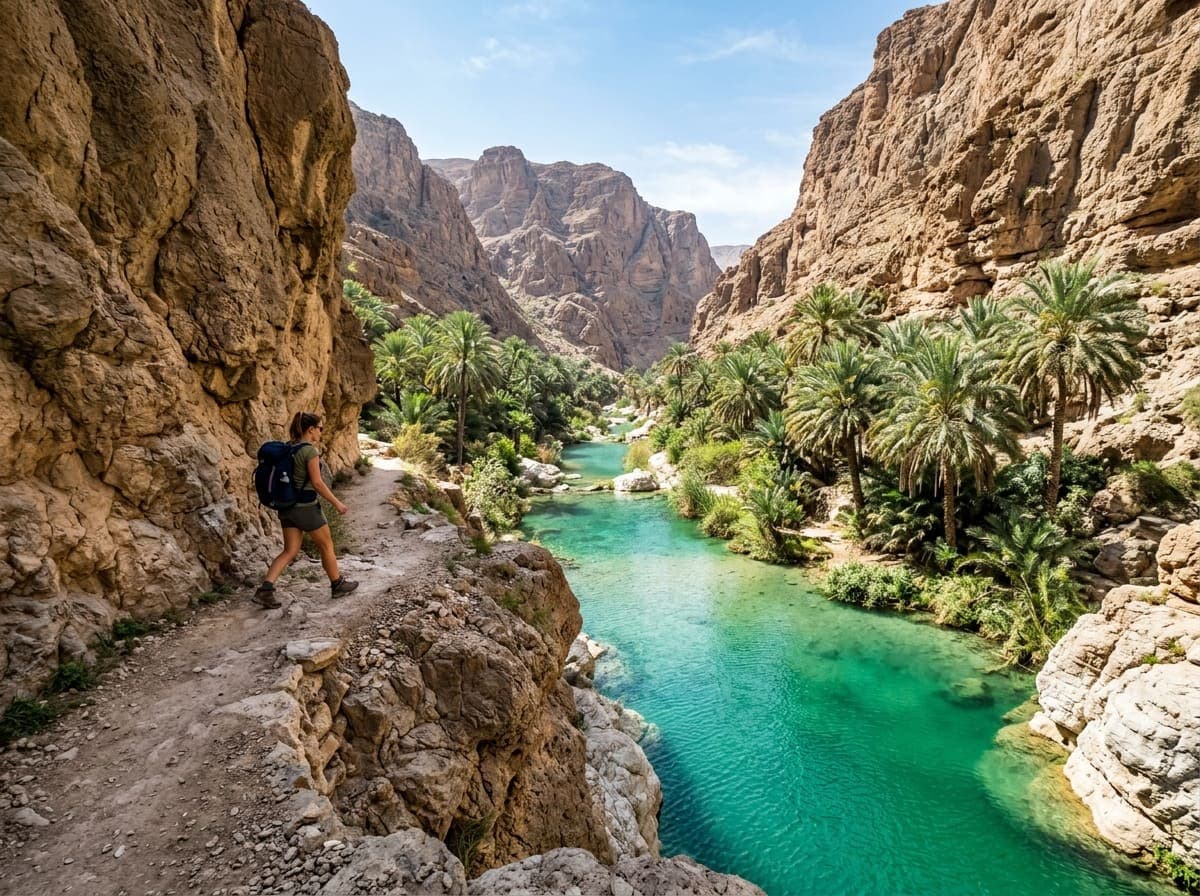
Muscat rewards people who get outside. The best of it is the Mutrah Corniche at dusk, the fish market at dawn, the swim holes of Wadi Shab and Wadi Al Arbeieen, the coves past Qantab, and the turtle beaches further down the coast. None of that works the way Dubai's malls do in any weather, so the month you pick shapes the whole trip.
The broad pattern is simple. October to March is outdoor season, with daytime highs of around 25–32°C. April and May heat up quickly. June to September is properly hot and, on the coast, humid. But a straight 'go in winter' rule misses the details that matter.
- The sea is warmest when the air is least pleasant.
- Turtle hatchlings peak just before the winter crowds arrive.
- Ramadan falls in the cool season in 2027.
- Hotel rates in late December can be double those of early November for the same room.
This guide goes month by month through four things:
- Weather, including air temperature, sea and humidity
- Crowds, including Gulf school holidays and long weekends
- Prices, quoted in Omani rial (OMR) with AED equivalents at roughly OMR 1 = AED 9.5
- Events and holidays that open or close doors
It also says plainly which months suit families, divers, hikers and travellers watching their budget. Muscat is still a small capital where much shuts in the early afternoon, so timing affects your daily rhythm as well as your choice of month.
October and November: the season switches on
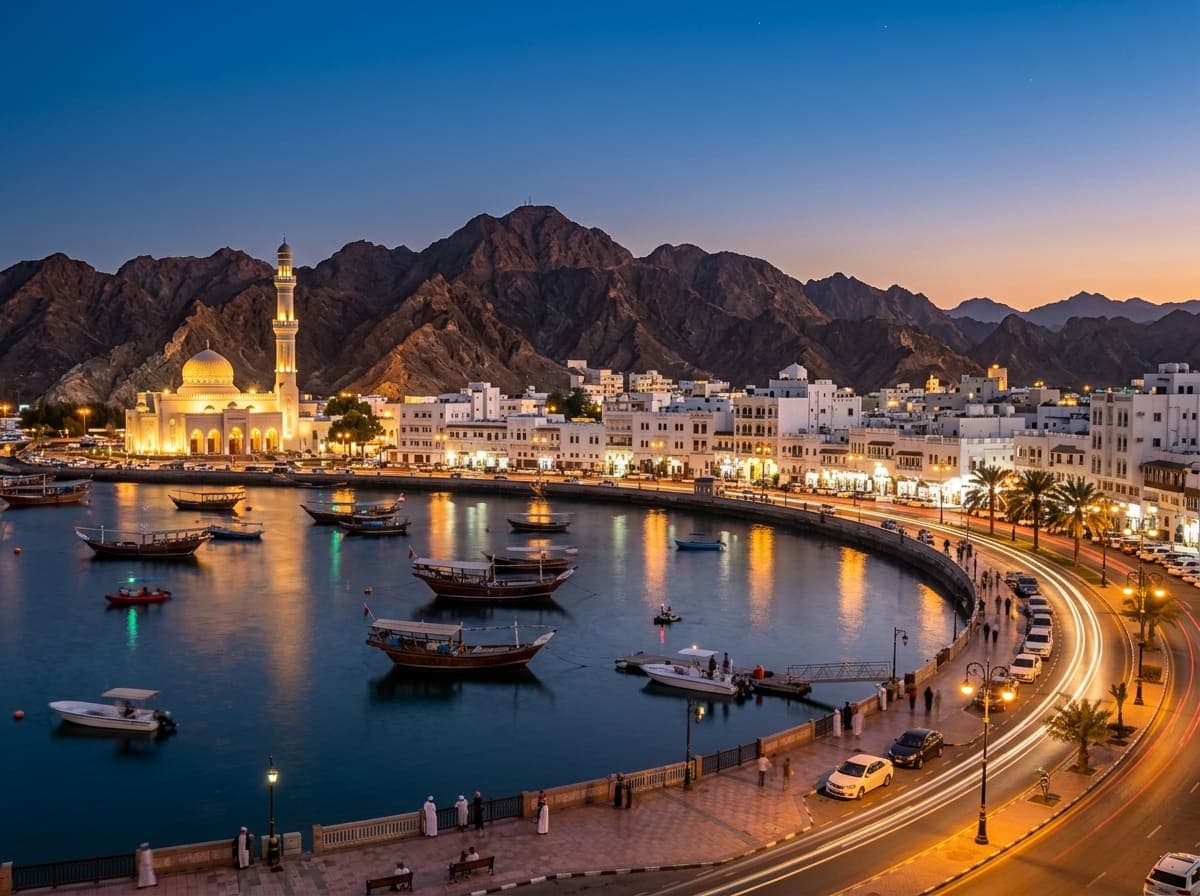
October is the most underrated month. Highs typically start around 34–35°C and ease to the low 30s by the end of the month. Evenings on the Corniche become pleasant again. The sea is still around 28–30°C, which is ideal for snorkelling at Fahal Island or the Daymaniyat Islands. Whale shark sightings around the Daymaniyat are often reported in late summer and autumn, though never guaranteed. At Ras Al Jinz, green turtle nesting is winding down, but hatchlings are still common. Many visitors find October the best balance for turtle-watching.
Hotels are still on shoulder pricing. A good four-star in Qurum or Al Khuwair typically runs around OMR 40–65 (AED 380–620) a night. Wadi hikes should start by 7am.
November is close to ideal. Highs sit around 29–31°C, nights cool to around 22°C and the sea stays in the high 20s. National Day on 18 November brings flags, lit-up roundabouts and usually a public holiday of a few days. Omani families head to the wadis and to Jebel Akhdar, so expect busy weekends at Wadi Bani Khalid and the Sur road.
Prices climb through the month, and European tour groups return. It is still easier to get a table at Bait Al Luban in Mutrah, or a dhow cruise slot, than in late December.
One caveat applies to both months. The Arabian Sea's post-monsoon cyclone season runs roughly October to November. Cyclone Shaheen hit in October 2021. Storms are rare, but watch the forecast and buy flexible fares.
December and January: peak weather, peak demand
December brings highs of around 26–28°C, lows of around 18–20°C and almost no rain. This is postcard weather for walking Old Muscat:
- Al Alam Palace and the Al Jalali and Al Mirani forts
- The coastal path past Kalbuh Park
- The Mutrah Fort climb at sunset
The sea cools to around 25–26°C, which is still swimmable for most people from the Gulf.
Demand changes sharply after about 15 December. UAE and Saudi school breaks and the Christmas–New Year window can push that same four-star room to around OMR 80–130 (AED 760–1,240). Beach resorts get pricier still: Shangri-La Barr Al Jissah, Al Bustan Palace and The Chedi can pass OMR 250 (AED 2,400) on peak nights. Book by October for the holidays. Rental cars also run short, so reserve early.
January is the coolest month. Highs are typically around 25°C. Nights can drop to about 15–17°C, and colder on Jebel Akhdar, where nights of around 3–5°C are normal. Pack a fleece if you plan to drive up to Sayq and the Diana's Viewpoint area.
The first half of January stays expensive. After about the 10th, rates soften noticeably, and the second half of the month is one of the year's best value-for-weather windows.
Around January and February, the city usually hosts Muscat Nights, the winter festival that replaced the old Muscat Festival. It has been staged at sites such as Qurum Natural Park and Al Amerat Park, with food stalls, heritage villages and evening shows. Dates and venues are announced late, so check before you book.
February and March: Ramadan, cycling and the first roses
February is warm rather than hot, with highs of around 26–27°C. Brief showers are possible, and this is the one time of year when a flash flood can close a wadi road. Never enter a wadi if rain is forecast inland, even under a clear sky in Muscat.
The Tour of Oman cycle race usually runs in February and can close sections of road for a few hours. The Muscat International Book Fair is typically held around late February to early March at the Oman Convention and Exhibition Centre. It draws publishers from across the Arab world and is worth a half day.
In 2027, Ramadan is expected to run from around 8 February to 9 March. The exact start depends on the moon sighting. For visitors, this means:
- Daytime eating and drinking in public is not acceptable. Hotels serve guests discreetly, and some malls keep screened food courts.
- Working hours shorten and many souq shops open later.
- Evenings come alive. Iftar buffets typically cost around OMR 12–25 (AED 115–240), and Mutrah and Ruwi stay busy until well after midnight.
- Prices dip slightly, because Gulf leisure travel slows.
Eid al-Fitr (around 10 March 2027) flips this pattern. Expect a multi-day holiday, full hotels, busy beaches and higher rates. Book early if Eid is your window.
Outside Ramadan, March is warm, with highs of around 29–31°C. It is still comfortable for the Muttrah–Riyam walking trail if you start by 8am. On Jebel Akhdar, the Damask rose bushes begin to bud late in the month.
April and May: shoulder heat and the rose harvest
April is when Muscat starts asking you to plan around the sun. Highs typically reach around 33–35°C and the sea warms to around 27°C.
The big reason to come is Jebel Akhdar's rose harvest, usually from late March through April. In villages such as Al Ayn, Al Aqr and Wadi Bani Habib, families pick Damask roses at dawn. They distil rosewater in clay pots over wood fires, and some will let you watch for a small fee or a purchase. A bottle of local rosewater typically costs around OMR 3–6 (AED 30–55). The mountain is about 2,000 m up and roughly 10–12°C cooler than the coast.
You need a 4x4 to pass the police checkpoint at Birkat Al Mouz. A 4x4 rental typically costs around OMR 30–45 (AED 285–430) a day.
In the capital, April hotel rates fall to around 60–70% of winter levels. Outdoor days follow a pattern:
- Morning: the Grand Mosque, open to non-Muslims from around 8 to 11am except Fridays, then the Bait Al Zubair museum
- Midday: a long lunch and a rest
- Evening: the Corniche or a dhow cruise
May is hot, with highs of around 38–39°C and early heat waves above 40°C. Hiking is out except at altitude.
Eid al-Adha is expected around 16–17 May 2027. It brings a holiday of around a week for many Gulf residents and a spike in short-haul arrivals from the UAE, Qatar and Saudi Arabia. Beach resorts fill and prices jump for that week. Late May also marks the start of the pre-monsoon cyclone window. Cyclone Gonu struck in June 2007.
June to September: hot, humid and surprisingly rewarding
The summer facts first. Coastal highs typically run around 38–41°C in June and July. Humidity often pushes the feels-like temperature into the mid-40s. Even at night it rarely drops below about 30°C. August and September ease only slightly, to around 35–37°C.
Wadi hikes at sea level are risky after mid-morning. Outdoor sightseeing comes down to the hours from dawn until 9am and after sunset.
So why come? There are three reasons.
- Prices. Five-star resorts that charge OMR 250 in January often sell for around OMR 70–110 (AED 670–1,050), sometimes with half-board included. Four-stars drop to around OMR 25–40 (AED 240–380).
- Turtles. Nesting at Ras Al Jinz peaks from roughly June to September. On a good night, the ranger-led walks can show several green turtles laying at once.
- The sea. Water is around 30°C, and visibility around the Daymaniyat is often good. Note that beach landings on the islands are generally restricted from around May to October to protect nesting birds and turtles. Boat trips and dives still run.
How to make it work:
- Base yourself at a beach resort with shade and a pool.
- Do Mutrah Souq in the evening, when it is busiest anyway.
- Spend two nights on Jebel Akhdar, where pomegranates and walnuts ripen in August and September and highs sit around 28°C.
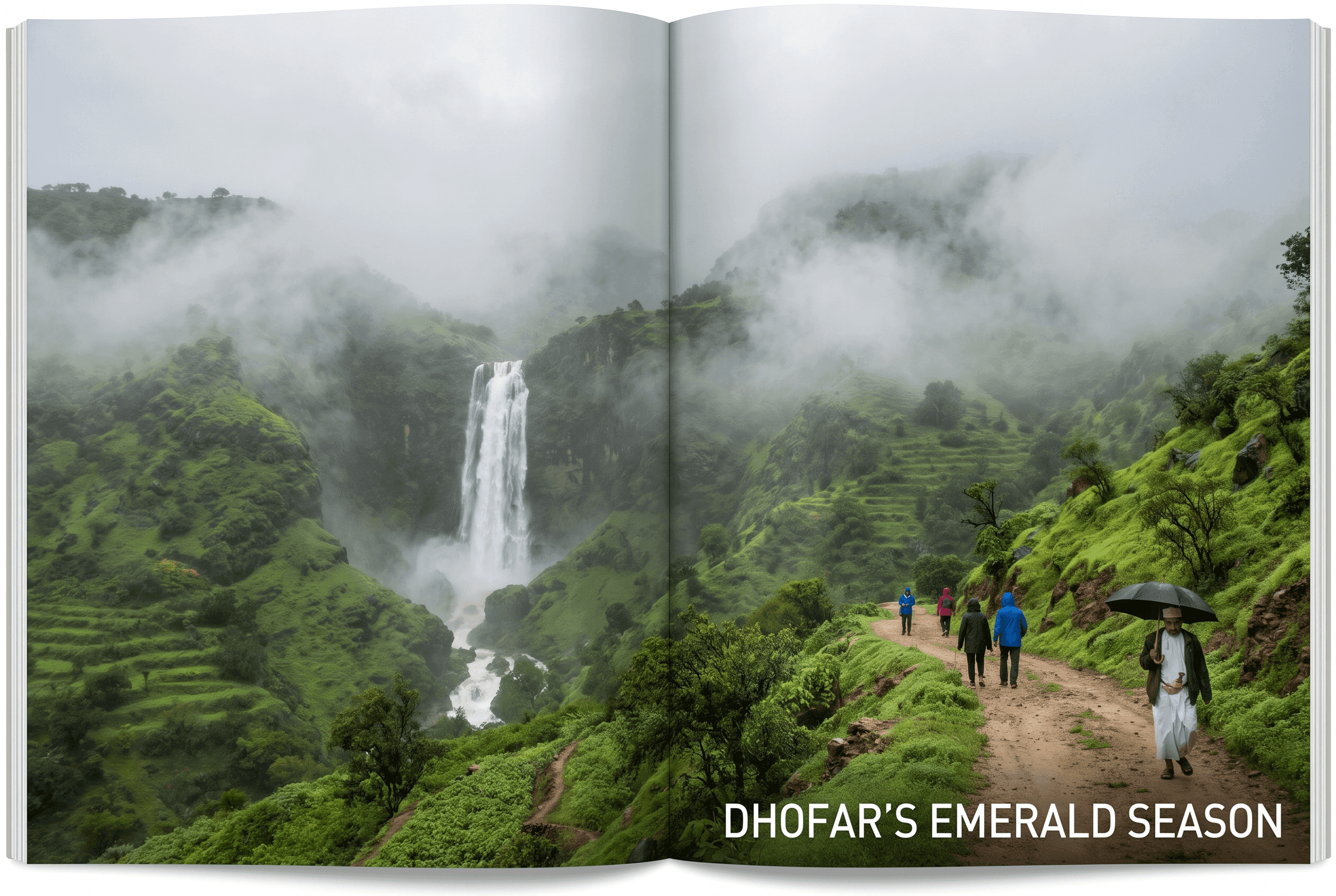
The khareef monsoon greens Salalah from roughly late June to early September. Many Omanis leave Muscat for it, so internal flights on that route fill early.
There are a few caveats. Opera House performances pause in high summer, and some tour operators cut their schedules.
Prices and crowds at a glance, month by month
Use this as a quick planning reference. Hotel figures are typical for a well-rated four-star in Qurum or Al Khuwair, per night for a double room.
- January: around 25°C, sea 24°C. Busy until the 10th, then calmer. Around OMR 60–100 (AED 570–950). Muscat Nights possible.
- February: around 26°C, sea 24°C, rare showers. Moderate crowds. Around OMR 55–85. Ramadan in 2027, Tour of Oman.
- March: around 30°C, sea 25°C. Quiet in Ramadan, very busy over Eid al-Fitr. Around OMR 50–90.
- April: around 34°C, sea 27°C. Moderate crowds. Around OMR 40–65. Jebel Akhdar roses.
- May: around 38°C, sea 29°C. Quiet, apart from the Eid al-Adha spike. Around OMR 35–60.
- June: around 40°C, humid. Very quiet. Around OMR 25–45. Peak turtle nesting.
- July: around 39°C, humid. Quiet in Muscat, busy towards Salalah. Around OMR 25–40.
- August: around 36°C. Quiet. Around OMR 25–40. Turtles, mountain fruit harvest.
- September: around 36°C, sea 30°C. Quiet. Around OMR 30–45. Hatchlings begin.
- October: around 34°C, sea 29°C. Building crowds. Around OMR 40–65. Hatchlings, best snorkelling.
- November: around 30°C. Busy, especially at weekends. Around OMR 50–80. National Day on the 18th.
- December: around 27°C. Peak from mid-month. Around OMR 70–130.
Watch the weekends. The Omani weekend is Friday–Saturday. UAE and Saudi long weekends also drive Thursday-night arrivals and fuller wadis.
Food costs barely change across the year. Shuwa, mashuai (grilled kingfish with lemon rice) and halwa from Mutrah cost the same in July as in January. A local lunch typically runs around OMR 3–6 (AED 30–55).
Practical: getting there, getting around, money and safety
Getting there. Muscat International Airport (MCT) is in Seeb, about 25–35 minutes by car from Qurum and around 40 minutes from Mutrah. Typical flight times:
- Dubai: around 1 hour 10 minutes, on Oman Air, flydubai, SalamAir and Air Arabia
- Riyadh: around 2 hours
- Doha: around 1 hour 45 minutes
- Amman or Beirut: around 3–3.5 hours
From the UAE you can also drive. Allow about 4.5–5.5 hours from Dubai, depending on the border queue. Check that your car insurance covers Oman. Mwasalat also runs coaches from Dubai, typically taking around 6 hours.
Visas. GCC citizens need no visa. GCC residents and many other nationalities can apply online or qualify for visa-free short stays. Confirm the current rules on the Royal Oman Police eVisa portal before you travel.
Getting around. Muscat sprawls along about 50 km of coast. Ride-hailing and taxi apps such as OTaxi and Oman Taxi are the easiest option. Most cross-city rides cost around OMR 4–10 (AED 40–95). Mwasalat buses link the airport, Ruwi and Mutrah cheaply but run infrequently. For wadis, Sur or Jebel Akhdar, rent a car. A saloon typically costs around OMR 12–20 (AED 115–190) a day. Fuel is inexpensive by regional standards.
Money. The rial is pegged to the dollar, at roughly OMR 1 = AED 9.5. Cards work almost everywhere except at small souq stalls and wadi parking attendants, so carry small notes.
Safety. Oman is one of the region's safest countries. The real risks are environmental:
- Heat exhaustion
- Flash floods in wadis
- Strong currents off open beaches in summer
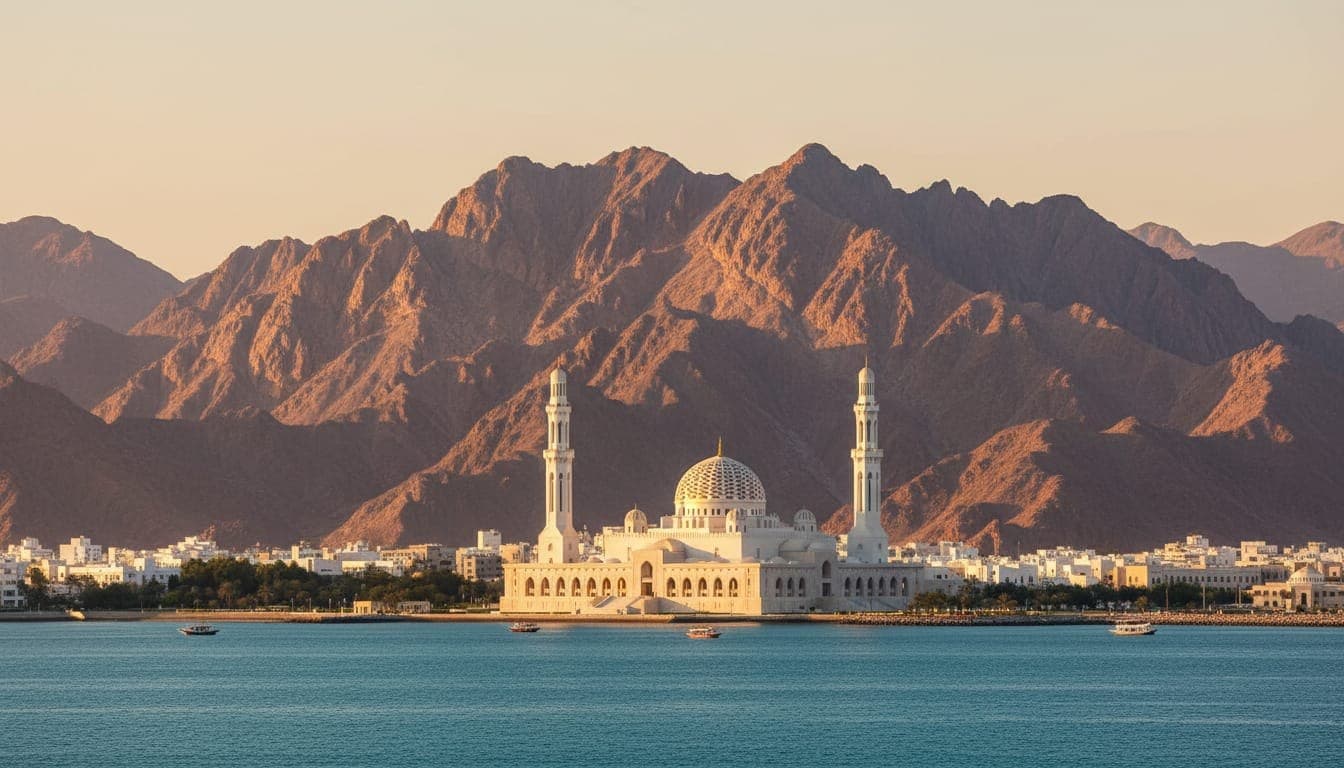
Dress modestly in Mutrah and the old town. At the Grand Mosque, women need a headscarf, and both men and women must cover their arms and legs.
Read more: Muscat · Gulf Winter Sun, November to March: Muscat, Dubai or Salalah? · Muscat to Ras Al Jinz in One Day: Bimmah Sinkhole, Wadi Shab and the Evening Turtle Walk
What is the single best month to visit Muscat?
For most travellers, November or the second half of January. November has warm sea, comfortable days and pre-peak prices. Late January has the coolest weather and rates that drop after the New Year rush. If turtles and snorkelling matter most, choose October.
Is it worth visiting Muscat in summer?
Yes, if you plan around the heat. Expect highs of around 38–41°C with humidity. You get resort rates often 50–60% below winter, peak turtle nesting at Ras Al Jinz and warm, clear water. Keep sightseeing to early mornings and evenings, and add a night or two on Jebel Akhdar.
How does Ramadan in 2027 affect a trip to Muscat?
Ramadan is expected from around 8 February to 9 March 2027. Expect shorter daytime hours, no public eating or drinking by day and lively evenings with iftar buffets. Prices are slightly softer. Eid al-Fitr right after brings full hotels and higher rates for several days.
When can I see turtles near Muscat?
Green turtles nest at Ras Al Jinz and Ras Al Hadd all year. Nesting peaks from roughly June to September, and hatchlings are most common from around August to October. In winter, sightings are fewer but still possible. Book the reserve's guided walks in advance during busy periods.