Sarajevo on a Budget: What a Day Really Costs, From Burek Breakfasts to Hotel Europe
A costed guide to Sarajevo in KM and AED: shoestring, mid-range and splurge days, where your money goes, and where tourists overpay.
9 min read
Why Sarajevo Is Still One of Europe's Best-Value Cities
Sarajevo gives you Ottoman lanes, Austro-Hungarian boulevards and a serious coffee culture at prices that look a decade out of date next to Istanbul, Vienna or even Belgrade. A plate of ćevapi with fresh somun bread still typically costs less than a coffee at Dubai Mall, and a tram ride across the city costs about the same as a bottle of water.
For Gulf and Levant travellers there is a second advantage: the old town of Baščaršija is largely halal by default. Most grill houses and bakeries there serve no alcohol, mosques are open to respectful visitors, and the call to prayer from Gazi Husrev-beg Mosque sets the rhythm of the day. You do not need to hunt for suitable food.
The local currency is the convertible mark (KM, BAM), pegged to the euro at roughly 1.96 KM per euro. For quick maths, think of 1 KM as roughly 2 AED (a little more, depending on your card's rate). Every price in this guide is a typical range, not a fixed fare; prices creep up in summer and around the Sarajevo Film Festival in August.
The best months for value and weather are May, June and September: warm days, cool evenings, hotels below peak rates and the hills around Trebević green rather than snowy or scorched.
Your Daily Budget at a Glance: Three Ways to Do Sarajevo
Here is what a day realistically costs per person, including accommodation (shared between two where relevant), food, transport and one or two paid sights.
Shoestring: around 80–110 KM (about 160–220 AED)
- Hostel dorm or basic private room in Baščaršija or Marijin Dvor
- Burek breakfast, ćevapi lunch, a bakery or grill dinner
- Walking plus a tram ride or two
- Free sights, one museum
Comfortable mid-range: around 200–280 KM (about 400–560 AED)
- Boutique hotel or well-reviewed apartment, half a double room
- One sit-down Bosnian dinner with a view
- Trebević cable car, the War Tunnel or Gallery 11/07/95
- A taxi or two after dark
Splurge: around 450–700 KM+ (about 900–1,400 AED+)
- Hotel Europe, Swissôtel or a high-floor suite, half a double room
- Private guide or driver for the day
- Long lunches at hillside restaurants, dessert at a historic pastry shop
- Day trip by car to Mostar or Jajce
The big variable is accommodation. Food and transport barely change between tiers. Even splurge travellers usually end up eating the same 12 KM ćevapi as everyone else, because the best ones are in plain grill houses, not hotel restaurants.
Where to Sleep and What It Costs
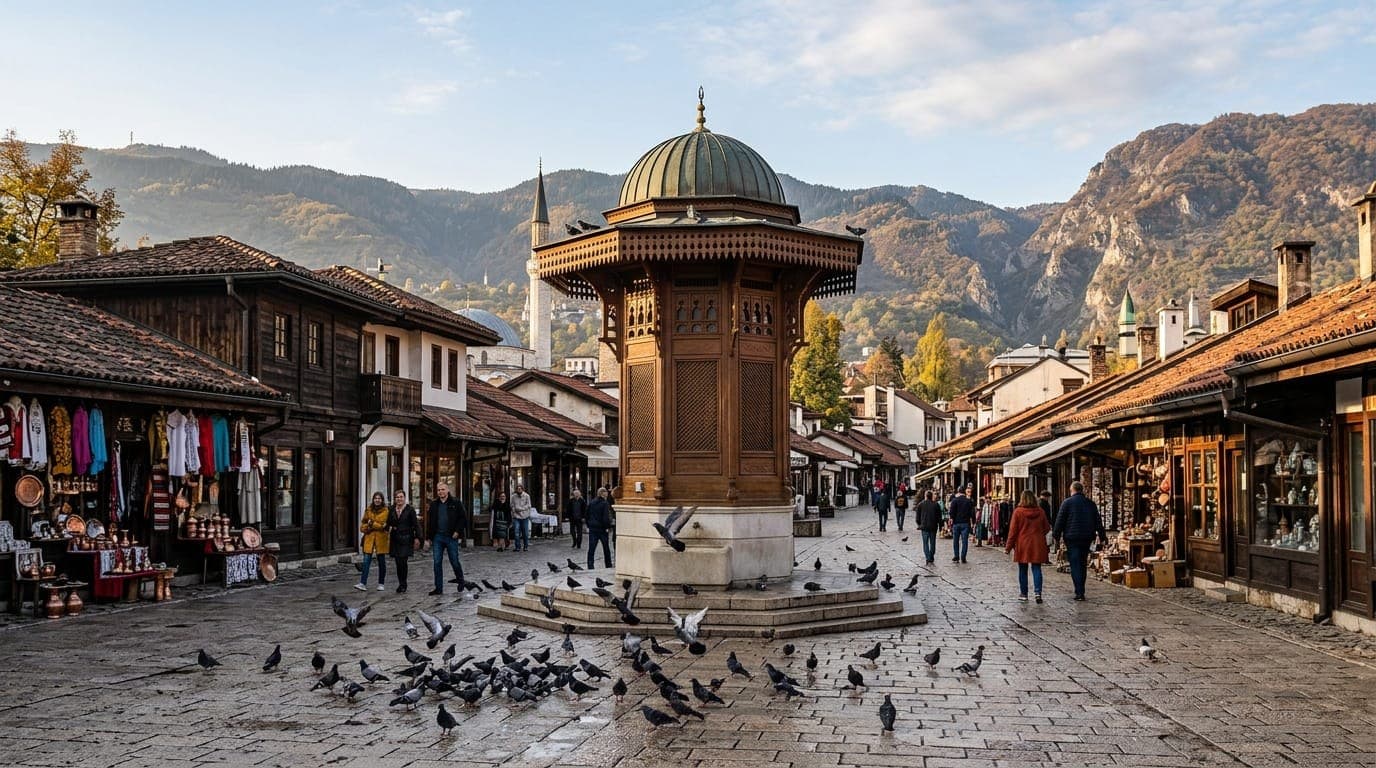
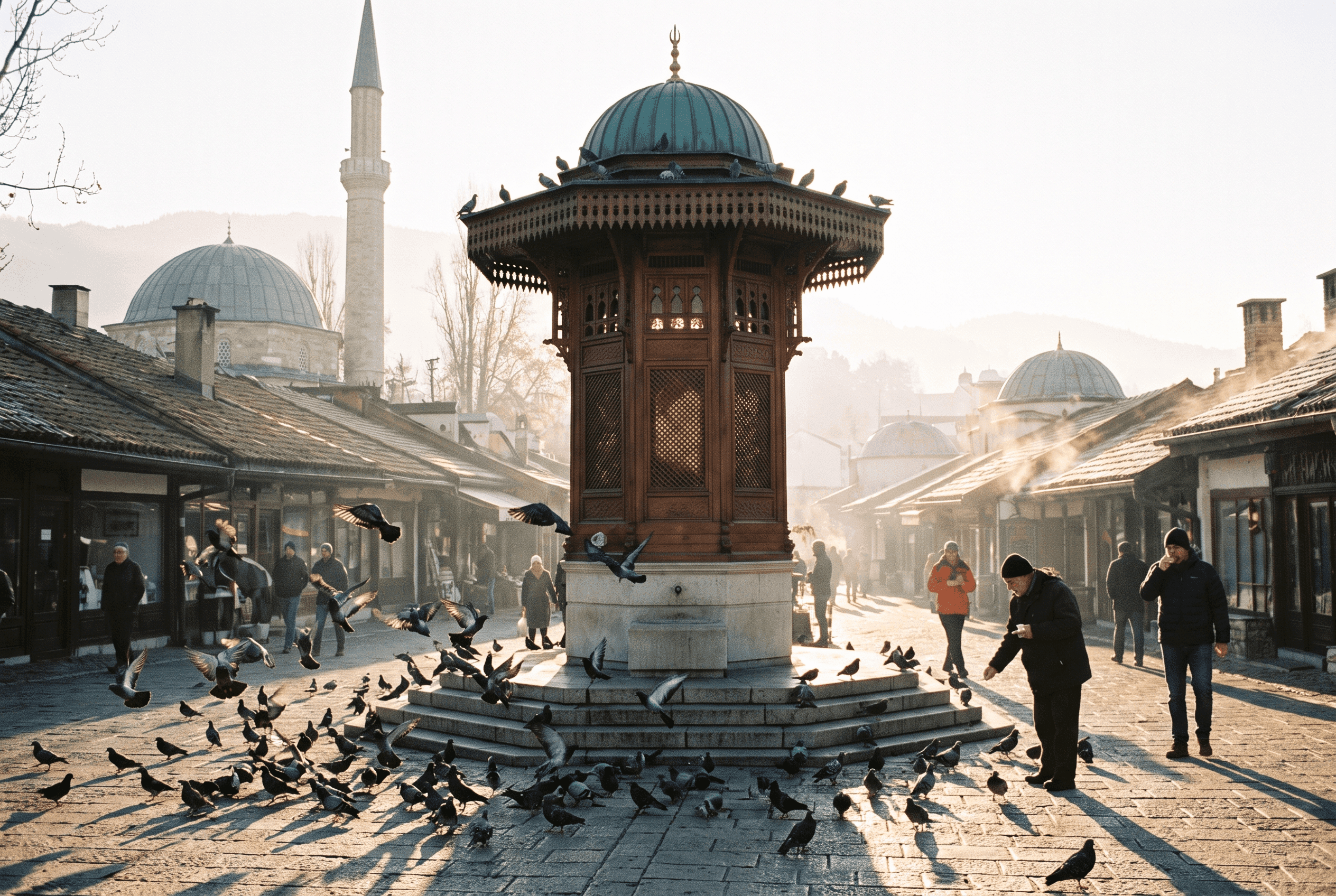
Baščaršija and the old town put you within steps of the mosques, bazaars and grill houses. It is also where noise and prices are highest. Ferhadija and the streets just west of the Eternal Flame are a good compromise: quieter at night and still a five-minute walk from Sebilj fountain.
Typical nightly rates (room, not per person):
- Hostel dorm bed: around 25–40 KM (50–80 AED). Old-town hostels fill fast in June and September.
- Basic guesthouse or private room: around 60–90 KM (120–180 AED), often in a family-run house on the slopes of Vratnik or Bistrik. Expect stairs.
- Mid-range boutique or apartment: around 110–200 KM (220–400 AED). Apartments around Marijin Dvor and Skenderija give you more space and a kitchen, and the tram is close.
- Top-end: around 250–450 KM+ (500–900 AED+) at Hotel Europe (historic, beside Baščaršija), Swissôtel (modern, in the Marijin Dvor business district) or the Hotel Bristol.
Insider tip: hillside guesthouses in Vratnik and Kovači are often cheaper and have better views than old-town flat-level rooms, but the walk up after a heavy dinner is steep. Families with small children or older parents should pay the extra for flat ground or confirm that taxis can reach the door.
Eating and Drinking: From 4 KM Burek to Hillside Dinners
Food is where Sarajevo is most generous to your budget.
Cheap and excellent
- Burek and pita (meat, cheese, spinach or potato) from a buregdžinica in Baščaršija: typically sold by weight, around 4–8 KM for a hearty portion with yoghurt.
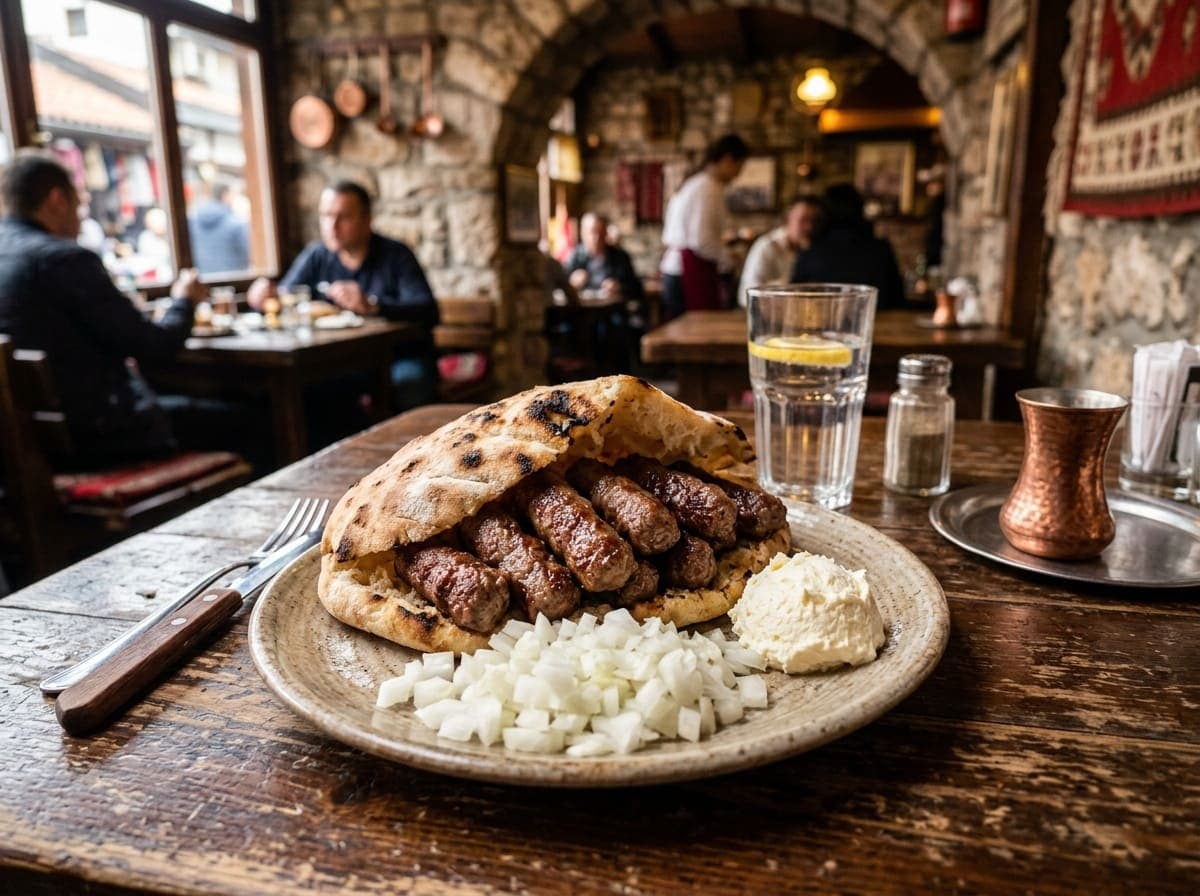
- Ćevapi: a portion of ten in somun with raw onion and kajmak costs around 10–14 KM at institutions like Željo or Hodžić. Five pieces, around 6–8 KM, is plenty for lunch.
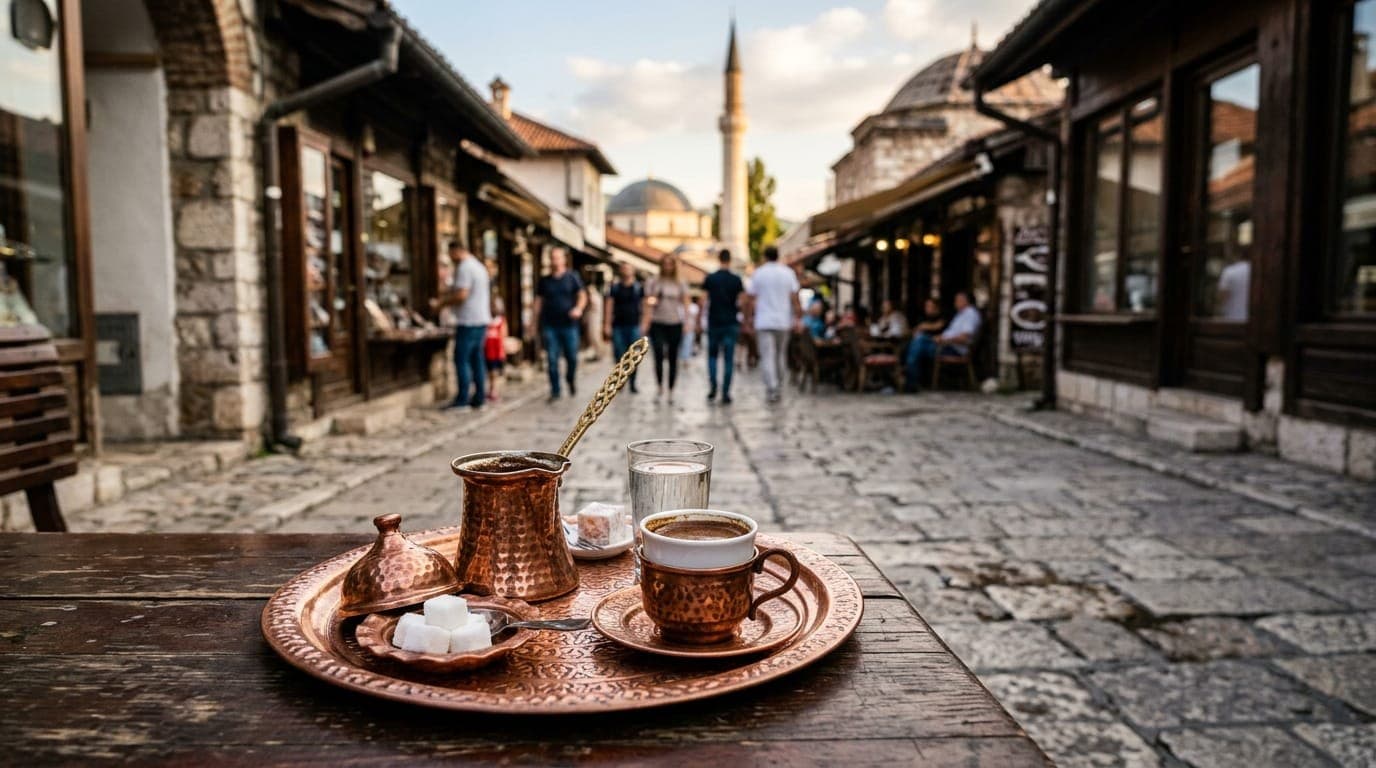
- Bosnian coffee served on a copper tray with rahat lokum: around 2–4 KM in the old town.
- Tufahija (poached apple with walnuts and cream) or baklava: around 3–6 KM.
Mid-range sit-down meals Inat Kuća, opposite the Vijećnica, serves Bosnian classics such as begova čorba, sogan dolma and klepe in a house moved stone by stone across the river. Expect around 25–40 KM for a main and soup. Alcohol-free and alcohol-serving places are mixed outside Baščaršija, so ask if it matters to you.
Splurge Kibe Mahala and Park Prinčeva sit on the hillsides and look over the whole valley. Lamb, slow-cooked veal and grilled trout run around 30–50 KM per main, and a full dinner for two with dessert often lands around 120–180 KM. Book a sunset table in May, June and September.
Sights and Experiences: What Is Free and What Is Worth Paying For
Free (or nearly)
- Walking Baščaršija, Kazandžiluk (the coppersmiths' lane) and Ferhadija to the Eternal Flame
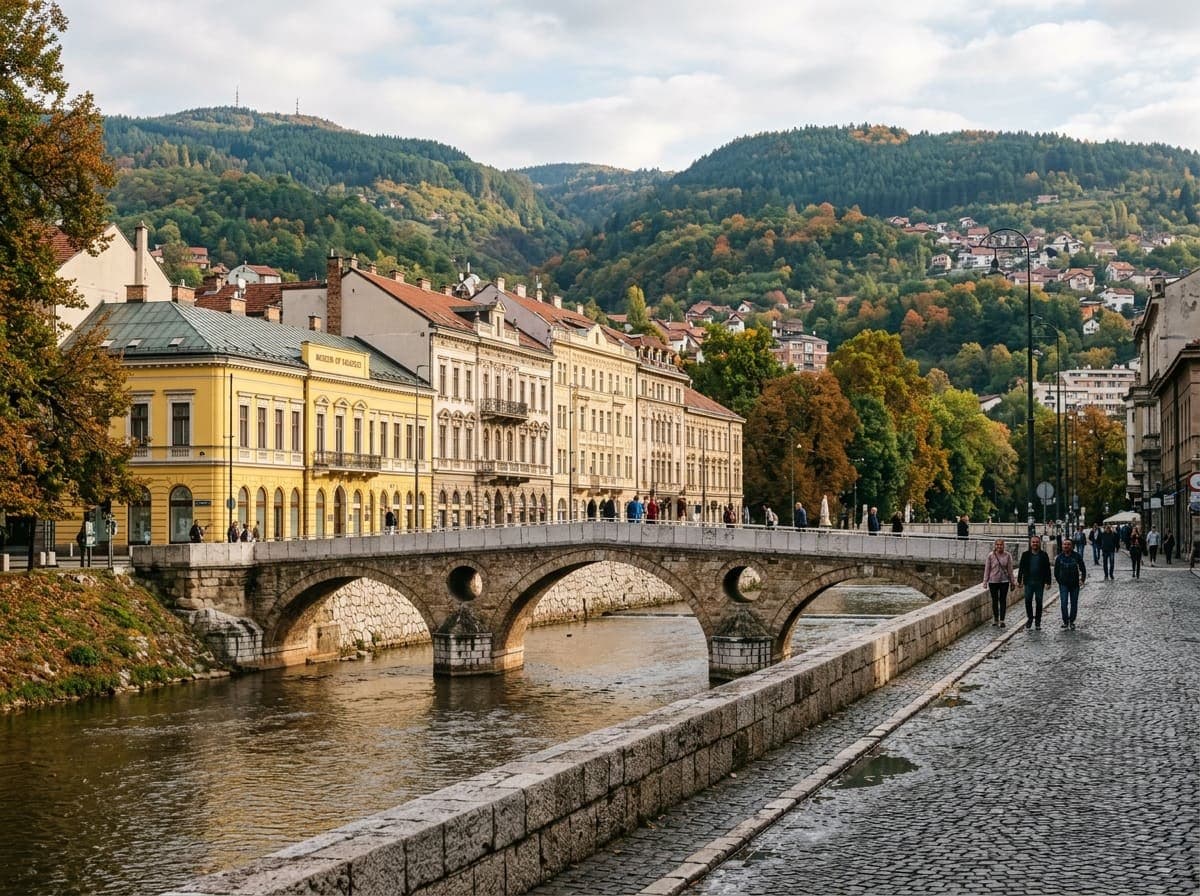
- The Latin Bridge and the corner where Archduke Franz Ferdinand was shot in 1914
- The Sarajevo Roses (shell scars filled with red resin) on pavements across the centre
- Sunset from the Yellow Fortress (Žuta Tabija) above Vratnik, with tea or coffee from a kiosk at a few KM
- The Ashkenazi Synagogue, the Orthodox Cathedral and the Sacred Heart Cathedral viewed from outside
Paid, and worth it
- Gazi Husrev-beg Mosque courtyard and interior: a small visitor fee, typically a few KM, outside prayer times
- Vijećnica (City Hall, rebuilt after 1992 shelling): around 10–15 KM
- Svrzo House, an Ottoman family home: a few KM
- War Childhood Museum: around 10–15 KM, moving and well curated
- Gallery 11/07/95 on Srebrenica: around 15–25 KM; plan for 90 minutes
- Sarajevo War Tunnel near the airport: around 15–20 KM entry, plus transport
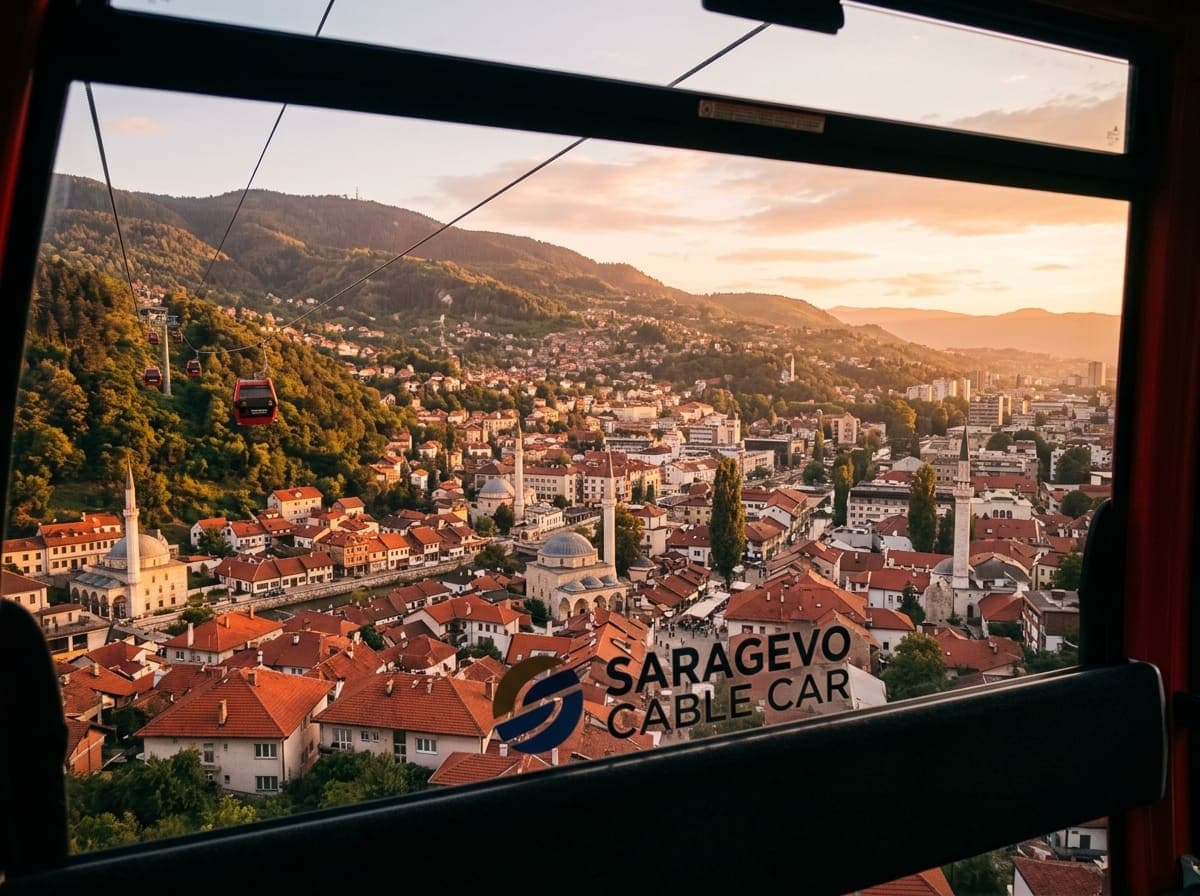
- Trebević cable car from Bistrik: return around 20–30 KM for visitors, depending on season
Paid, and optional Short guided war tours with transport typically cost around 60–100 KM per person. Worth it if you want context and a driver; skip them if you plan to read and use the tram.
A Costed Three-Day Plan: Shoestring vs Splurge
Day 1: Old Town and Ottoman Sarajevo Morning burek near Baščaršija (around 6 KM), Gazi Husrev-beg Mosque and Svrzo House (around 10 KM together), ćevapi lunch (around 12 KM), Vijećnica (around 12 KM), sunset at the Yellow Fortress. Shoestring dinner: pita and yoghurt (around 8 KM). Splurge: dinner at Kibe Mahala with a taxi up and back (around 80–100 KM per person). Day total excluding bed: around 50 KM vs 150 KM.
Day 2: Austro-Hungarian Centre and Recent History Coffee on Ferhadija (around 3 KM), walk to Marijin Dvor, War Childhood Museum (around 12 KM), Gallery 11/07/95 (around 20 KM), lunch at a canteen-style aščinica serving stews and stuffed peppers (around 12–15 KM). Shoestring: tram to Ilidža and walk the plane-tree avenue to Vrelo Bosne springs (small entry fee). Splurge: private guide for the afternoon (around 150–250 KM per group).
Day 3: Trebević and the Tunnel Cable car to Trebević (around 25 KM), walk to the graffiti-covered 1984 Olympic bobsleigh track, lunch back in Bistrik. Afternoon at the War Tunnel by tram, then bus or taxi. Shoestring: public transport (around 5 KM). Splurge: taxi or driver (around 40–60 KM).
Where Visitors Overpay, and How Not To
Airport taxis. Hailing a taxi at SJJ without a meter conversation can cost noticeably more than the typical 20–30 KM to the centre. Use a ride app where available, insist on the meter, or take the airport shuttle bus for around 5 KM.
Baščaršija main square. Cafés directly facing Sebilj charge a premium for the view. Walk one lane back and coffee drops by a KM or two, while the copper tray and lokum stay the same.
Souvenirs. Engraved copper coffee sets (džezva and fildžani) range from around 30 KM for machine-made pieces to well over 150 KM for hand-hammered work. Ask the smith to show you the hammer marks, and compare a few shops on Kazandžiluk before buying. Gentle haggling is normal; aggressive haggling is not.
Currency exchange. Avoid airport kiosks and hotel desks. Bank ATMs give the best rates; always choose to be charged in KM, not in AED or euros, when the machine or card terminal offers a conversion.
Tours. Many tunnel and war tours bundle transport you could do yourself. If you are confident on trams, you can see the same sites for a fraction of the price.
Water. Sarajevo's tap water is drinkable, and the public Sebilj and old-town fountains are local institutions. Carry a bottle and refill.
Practical Sarajevo: Getting There, Getting Around, Money and Safety
Getting there. Sarajevo International Airport (SJJ) is around 12 km from the old town. flydubai has operated direct flights from Dubai, roughly five hours, and other Gulf and Levant cities usually connect via Istanbul on Turkish Airlines or Pegasus. Many GCC passport holders can enter visa-free or with simple rules, but check current requirements before booking.
From the airport. The shuttle bus to the centre costs around 5 KM and takes around 30–40 minutes. Taxis typically cost around 20–30 KM and take 20–25 minutes.
Getting around. The tram line runs east–west from Baščaršija through Marijin Dvor to Ilidža. A single ticket is typically around 2 KM from a kiosk (slightly more from the driver), and you validate it on board. The centre itself is very walkable but hilly. Metered taxis are cheap by Gulf standards, often around 5–10 KM for short hops.
Money. Cards work in hotels and most restaurants, but bakeries, coffee stalls and small shops are often cash-only. Euros are sometimes accepted at poor rates; carry KM.
Safety. Sarajevo is generally safe, including late evenings in the centre. Watch for pickpockets in crowded Baščaršija and on trams. Stick to marked paths on Trebević and other hillsides, because landmine risk remains in some rural areas. Dress modestly for mosque visits; scarves are usually available at the entrance.
How much cash should I bring to Sarajevo for a week?
Many places take cards, so a mid-range traveller usually withdraws around 300–500 KM in cash from a bank ATM for bakeries, coffee, small museums, trams and markets, and pays hotels and restaurants by card.
Is Sarajevo cheaper than Istanbul or Mostar?
For food, coffee and public transport, Sarajevo is typically cheaper than central Istanbul. Mostar's old town can be pricier per meal because of day-trip crowds, but accommodation is similar.
Is it easy to find halal food in Sarajevo?
Yes. Most grill houses, bakeries and traditional restaurants in Baščaršija serve halal meat and many serve no alcohol. Outside the old town, ask the staff or check menus, as some places serve alcohol and pork.
Is the Trebević cable car worth the price?
For most visitors, yes. At around 20–30 KM return, you get a ride of about ten minutes, panoramic views of the valley, the abandoned Olympic bobsleigh track and cooler air on summer afternoons.
When are prices lowest in Sarajevo?
Late spring and September give the best balance of weather and value. July and August, especially during the Sarajevo Film Festival, push hotel rates up noticeably, while winter is cheap but cold and grey in the valley.
Tags:SarajevoBudget TravelHalal TravelBosnia and HerzegovinaBalkans