A Weekend in Sarajevo: Baščaršija on Saturday, Trebević on Sunday
A practical two-day Sarajevo plan: Saturday in the Ottoman old town with ćevapi for lunch, and Sunday on the Trebević cable car and the 1984 Olympic bobsled track.
10 min read
Why Sarajevo Works for a Weekend
Sarajevo is a compact city. It sits in a narrow valley along the Miljacka river, and in one afternoon you can walk from Ottoman bazaars through Austro-Hungarian boulevards to socialist-era tower blocks. For travellers from the Gulf and Levant it's a practical choice. Flights are short, food is easy for Muslim visitors to navigate, and prices are well below most of Europe.
This plan divides the city into two halves:
- Saturday: the old town (Baščaršija), starting at the Sebilj fountain, with ćevapi for lunch and an evening stroll west along Ferhadija.
- Sunday: the Trebević cable car up the mountain, a walk along the graffiti-covered 1984 Winter Olympics bobsled track, then an afternoon option depending on your energy.
Money basics: The currency is the convertible mark (KM, code BAM), pegged to the euro at 1.95583 KM = €1. As a working figure, 1 KM ≈ AED 2.1. Cards are accepted in most restaurants and shops in the centre, but small grills, bakeries and kiosks often take cash only. Carry 50–100 KM in small notes. Many places accept euros, but usually at a poor rate and with change given in KM.
Getting There and Getting Around
Flights from the Gulf: flydubai flies direct from Dubai to Sarajevo International Airport (SJJ), and Air Arabia has flown from Sharjah. Saudi and Kuwaiti carriers add seasonal routes, mostly in summer. Direct flights take around 5–6 hours. In peak summer (July–August), when Gulf demand is highest, return fares can double, so book early.
Entry: Rules depend on your passport. UAE citizens are visa-free, and several other GCC nationalities have had visa exemptions (some only seasonal). Residents of the Gulf holding a valid multiple-entry Schengen, UK or US visa can generally enter visa-free for short stays. Check the Bosnia and Herzegovina Ministry of Foreign Affairs website before you book, because these rules change.
Airport to centre: SJJ is about 12 km from Baščaršija.
- Taxi: roughly 25–35 KM (AED 53–75) to the old town. Use a marked taxi from the rank or a ride-hailing app, and agree that the meter will be used.
- Airport shuttle bus: a few KM, timed loosely to flight arrivals. It's cheap but can be infrequent.
In the city: Trams run east–west along the valley between Baščaršija and Ilidža. Buy tickets from kiosks (around 1.80–2 KM) and validate them on board. Buying from the driver costs more. Inspectors do check. The old town and the cable car station are both walkable, so on this itinerary you may only need a tram on Sunday afternoon.
Saturday Morning: Sebilj and the Old Bazaar
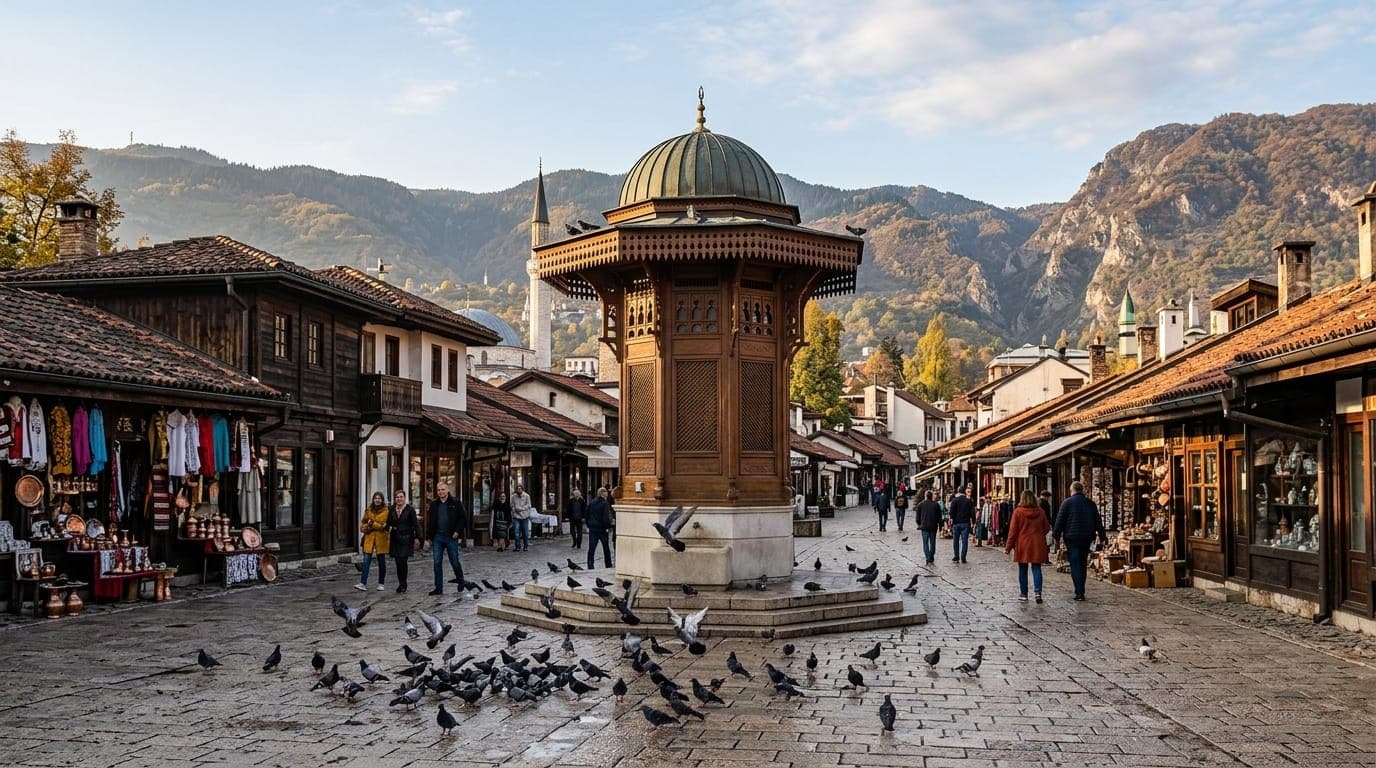
Start at the Sebilj, the wooden Ottoman-style fountain in Baščaršija square. The current structure dates from 1891, during Austro-Hungarian rule, and replaced an 18th-century original. Local legend says anyone who drinks from it will return to Sarajevo. Get there before 9:00. By mid-morning the square fills with tour groups and pigeons.
From there, follow this loop (about 2–3 hours at a relaxed pace):
- Kazandžiluk (coppersmiths' street): Craftsmen still hammer coffee sets (džezva) and trays here. A small hand-engraved džezva costs roughly 20–60 KM (AED 42–126). Machine-pressed versions are cheaper and look it.
- Gazi Husrev-beg Mosque: Completed in 1531, this is the most important Ottoman building in the Balkans. Visitors can enter outside prayer times for a small fee (roughly 5–10 KM). Modest dress is expected, and headscarves are available for women. Muslim visitors joining prayer are of course welcome at any time.
- Gazi Husrev-beg Bezistan and Morića Han: The first is a covered stone market. The second is a restored caravanserai whose courtyard now holds cafés and carpet sellers.
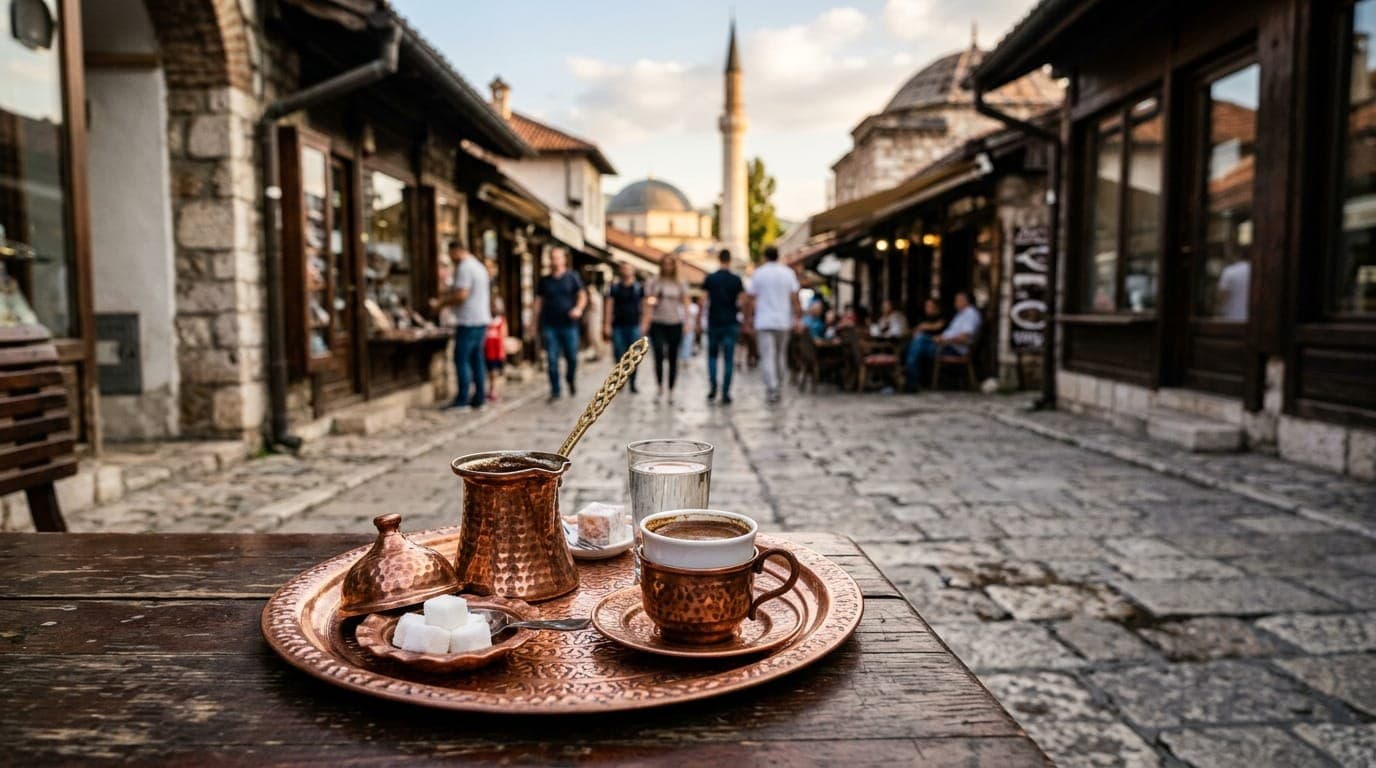
- Bosnian coffee break: Order bosanska kafa. It's served on a copper tray with a sugar cube and usually a piece of rahat lokum. Expect 3–5 KM. Sit down and take your time; locals treat coffee as a slow ritual.
Insider tip: Shop prices on the main lanes (Sarači and Ćurčiluk) are set for tourists. Walk one street back and prices for the same items often drop. Gentle bargaining is normal for souvenirs but not for food.

Saturday Lunch: How to Pick Your Ćevapi
Sarajevo's signature dish is ćevapi: small, hand-rolled grilled minced-meat fingers, traditionally beef or a beef-lamb mix. They're served in a soft, fluffy flatbread called somun, with chopped raw onion and often kajmak, a rich clotted dairy spread.
The draft's rule still holds: go where locals are queuing. The famous names cluster around Baščaršija. Ćevabdžinica Željo on Kundurdžiluk is one of the best-known, and there are several respected rivals within a few minutes' walk. The standard is high across the old town, so the queue is a better guide than the name on the sign.
How to order:
- Mala porcija (small, 5 pieces): roughly 7–10 KM (AED 15–21)
- Velika porcija (large, 10 pieces): roughly 12–16 KM (AED 25–34)
- Add kajmak for a small surcharge. It's worth it.
- Drink the way locals do: yoghurt (jogurt) or a soft drink. Many traditional ćevapi places don't serve alcohol.
Halal note: Sarajevo is a majority-Muslim city, and most traditional ćevapi and burek shops in Baščaršija serve halal meat. Some display a halal certificate from the Islamic Community of Bosnia and Herzegovina. If you need certainty, ask or look for the certificate. Elsewhere in the city, and in hotels, don't assume it.
If you're still hungry later: try burek, the spiral pastry. In Sarajevo burek means meat only. Cheese is sirnica, spinach is zeljanica, and potato is krompiruša. Ask for a meat one by name and you may get a friendly lecture.
Saturday Afternoon and Evening: From East to West
After lunch, walk west along Ferhadija, the main pedestrian street. Watch the pavement for the "Sarajevo Meeting of Cultures" marker. Behind you the buildings are Ottoman; ahead of you they're Austro-Hungarian. It's the clearest example of how layered the city is.
Along the way:
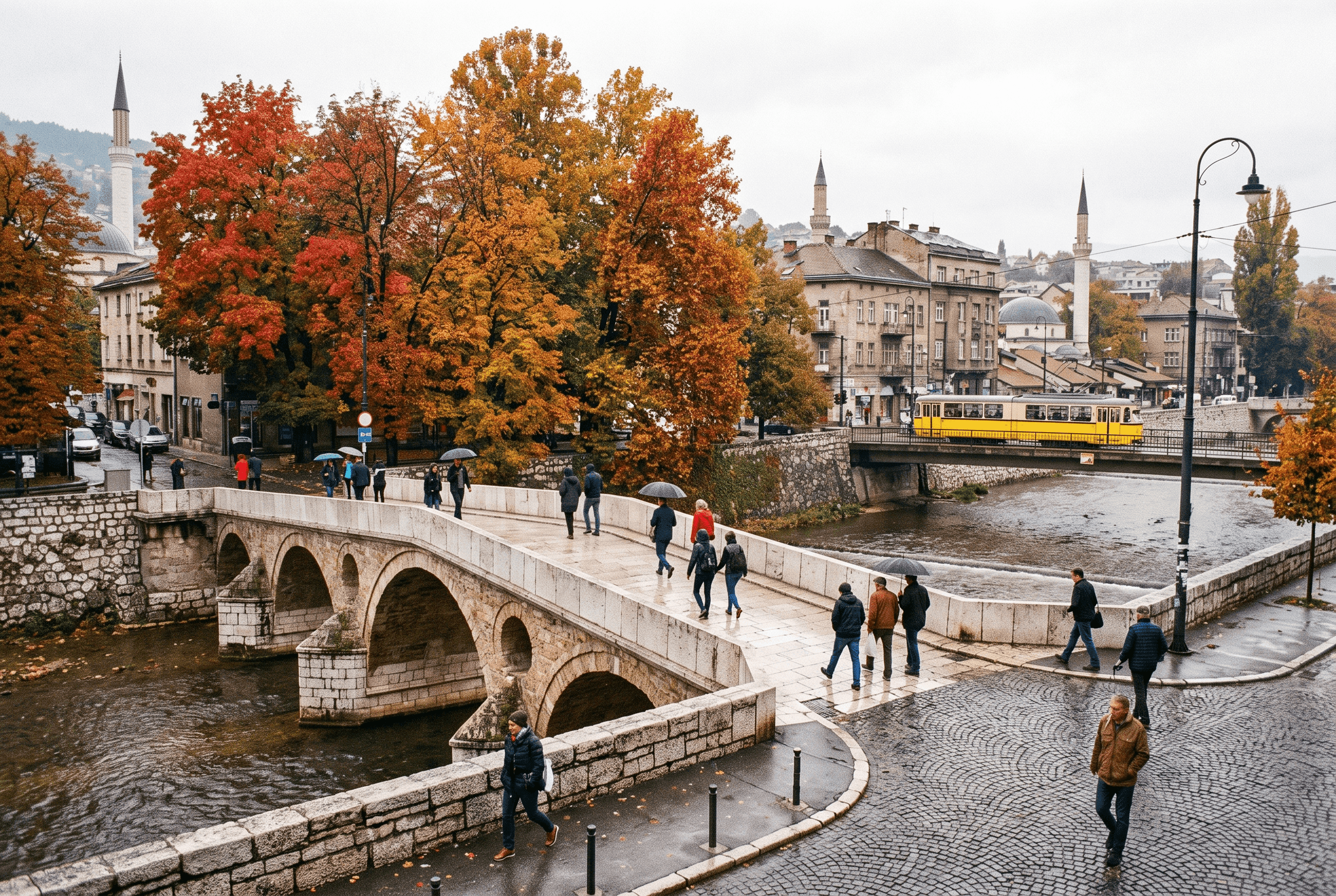
- Latin Bridge: a short detour south to the river. Archduke Franz Ferdinand was assassinated on the corner nearby in June 1914. A small museum on the corner covers the Austro-Hungarian period.
- Sarajevo Cathedral and the Old Orthodox Church: a few minutes apart. Together with the mosques and the Ashkenazi synagogue across the river, they explain the city's nickname, "the Jerusalem of Europe".
- Eternal Flame (Vječna vatra): at the western end of Ferhadija, a memorial to the victims of the Second World War.
- Sarajevo Roses: mortar-shell scars in the pavement filled with red resin, marking places where people were killed during the 1992–1995 siege. Please don't stand on them for photos.
Sunset: Walk (or take a short taxi) uphill to the Yellow Fortress (Žuta tabija) above Vratnik. Allow 20–25 minutes on foot from Baščaršija, on steep lanes. The café terrace looks straight down the valley. During Ramadan, the iftar cannon is fired from this area. Dinner can be back in the old town or along the Miljacka. A full sit-down meal with a main course and drink typically costs 25–45 KM (AED 53–95) per person.

Sunday Morning: Trebević Cable Car and the Bobsled Track
The Trebević cable car (Trebević žičara) leaves from a lower station in Bistrik, south of the river. It's about a 10–15 minute walk from Baščaršija across the Latin Bridge or the Šeher-ćehaja Bridge. The original 1959 line was destroyed in the war, and the rebuilt cable car reopened in 2018. The ride takes around 7–10 minutes up to the Vidikovac station at roughly 1,160 m, with views over the whole valley.
Practical details:
- Tickets: foreign visitors pay a higher return fare than residents. Expect roughly 20–30 KM return (AED 42–63). Check the current price at the station, because fares have gone up since opening.
- Hours: usually from around 10:00 until early or late evening depending on season. It closes periodically for maintenance and in strong wind, so check before you walk down.
- Timing: on a sunny Sunday, local families arrive from late morning. Aim for the first cabins, or expect a queue.
The bobsled track: Built for the 1984 Winter Olympics, the concrete track was a frontline position during the siege. Today it's covered end to end in graffiti. From Vidikovac, follow signs and the steady stream of walkers downhill for about 15–20 minutes to reach it. You can walk inside the curves or alongside them for more than a kilometre. Allow 1.5–2.5 hours for the round trip, including photos.
Important safety caveat: Trebević was a front line, and Bosnia still has unexploded mines in rural areas. The main paths, the track and the areas around the cable car are heavily used and considered safe. Stay on established paths. Don't wander into overgrown woodland or ruined buildings, and take any red-and-white mine warning signs seriously.
Wear proper shoes. The concrete is uneven and slippery when wet, and it's several degrees cooler up here than in the city.
Sunday Afternoon: Choose Your Ending
Once you're back down in Bistrik (or after lunch in the old town), pick one of these depending on your energy and time before your flight:
| Option | Getting there | Time needed | Approx. cost | Best for |
|---|---|---|---|---|
| Tunnel of Hope (Tunel spasa), Butmir | Taxi (~25–30 KM) or tram + taxi; near the airport | 1.5–2 hrs incl. transfer | Entry ~20 KM (AED 42) | History; convenient before an evening flight |
| Vrelo Bosne, Ilidža | Tram to Ilidža, then walk the tree-lined avenue or take a horse carriage | 3 hrs | Tram ~2 KM, small park entry fee | Families, nature, a slow Sunday |
| Old town revisit + Avaz Twist Tower viewpoint | Walk / tram | 2 hrs | Viewpoint a few KM | Shopping, last photos, coffee |
The Tunnel of Hope is a preserved section of the roughly 800 m tunnel dug under the airport runway in 1993. It was the besieged city's lifeline. It's small, sobering and very well explained, and because it's close to SJJ it works well on a departure day.
Vrelo Bosne, the spring of the Bosna river, is a green park of streams and wooden bridges at the western end of the tram line. It's where Sarajevo families spend their Sundays, and it's pleasant for children and older travellers.
Budget, Timing and Honest Caveats
Typical weekend spend per person (excluding flights and hotel):
- Food and coffee: 60–100 KM (AED 126–210)
- Cable car, museums, entries: 50–70 KM (AED 105–147)
- Local transport and taxis: 30–70 KM (AED 63–147)
- Total: roughly 140–240 KM (AED 295–505)
Mid-range hotels in or near Baščaršija typically cost 120–250 KM (AED 250–525) a night, more in July–August.
When to go: May–June and September–October bring mild weather and fewer crowds. July–August is hot and busy, especially with Gulf visitors. Winter is atmospheric and snowy, but Sarajevo sits in a basin and suffers from serious air pollution on cold, still days. Visitors with asthma should check air-quality apps.
Honest caveats:
- Smoking indoors is still common in cafés and some restaurants. Ask for a terrace table if it bothers you.
- Steep old-town lanes and uneven cobbles are hard for strollers and for anyone with limited mobility.
- Some of the war sites are emotionally heavy. The Galerija 11/07/95 on Srebrenica, near the cathedral, is powerful, but not light Sunday viewing.
- Around Baščaršija, restaurant menus near the Sebilj are pricier. Moving two streets away saves 20–30%.
Is Sarajevo suitable for Muslim and family travellers from the Gulf?
Yes. Sarajevo is majority-Muslim, the call to prayer carries across the old town, and most traditional grills and bakeries in Baščaršija serve halal meat. Modest dress fits in easily. Alcohol is available in the wider city, so check at restaurants outside the old town. Families especially enjoy Vrelo Bosne, the cable car and the relaxed café culture.
How much does the Trebević cable car cost and how long does it take?
Foreign visitors should expect to pay roughly 20–30 KM (about AED 42–63) return, with lower fares for residents. The ride from Bistrik to Vidikovac takes about 7–10 minutes. Hours vary by season, and the cable car closes for maintenance or high winds, so check the day before and arrive early on sunny weekends.
Is it safe to walk the old Olympic bobsled track?
Yes, if you stay on established routes. The track and the main paths from the cable car are walked by thousands of people. Trebević was a wartime front line, though, so don't go into overgrown forest or ruined buildings, and respect any mine warning signs. Wear shoes with good grip, because the concrete gets slippery.
Should I bring euros or convertible marks to Sarajevo?
Use convertible marks (KM). Withdraw them from bank ATMs in the centre, and decline the machine's own currency conversion. Many shops accept euros, but usually at a rounded, unfavourable rate, with change in KM. Cards work in most restaurants and hotels, but small ćevapi shops, bakeries and kiosks are often cash only, so carry small notes.
Tags:SarajevoCity BreakBosnia and HerzegovinaBalkansWeekend Itinerary