What a Day in Doha Really Costs: Budget, Mid-Range and Splurge, Riyal by Riyal
A line-by-line breakdown of daily costs in Doha, covering beds, karak, metro rides, museums and dune trips, with cheap swaps and worthwhile splurges in QAR and AED.
10 min read
Why Doha costs less than you think
Doha has a reputation as a city of five-star towers and expense accounts, and the top end does fit that picture. But the everyday city that runs on karak, shawarma and a cheap, spotless metro is affordable once you know where it sits. A careful traveller can get by on around QAR 250–350 (roughly the same in AED) a day including a modest bed. A comfortable mid-range trip runs around QAR 700–1,000, and a full splurge can pass QAR 3,000 without much effort.
The arithmetic is easy for Gulf visitors. The Qatari riyal is pegged to the US dollar, and 1 QAR is worth almost exactly 1 AED (a fraction more), so prices convert in your head. For Levant travellers, assume around USD 0.27 per riyal.
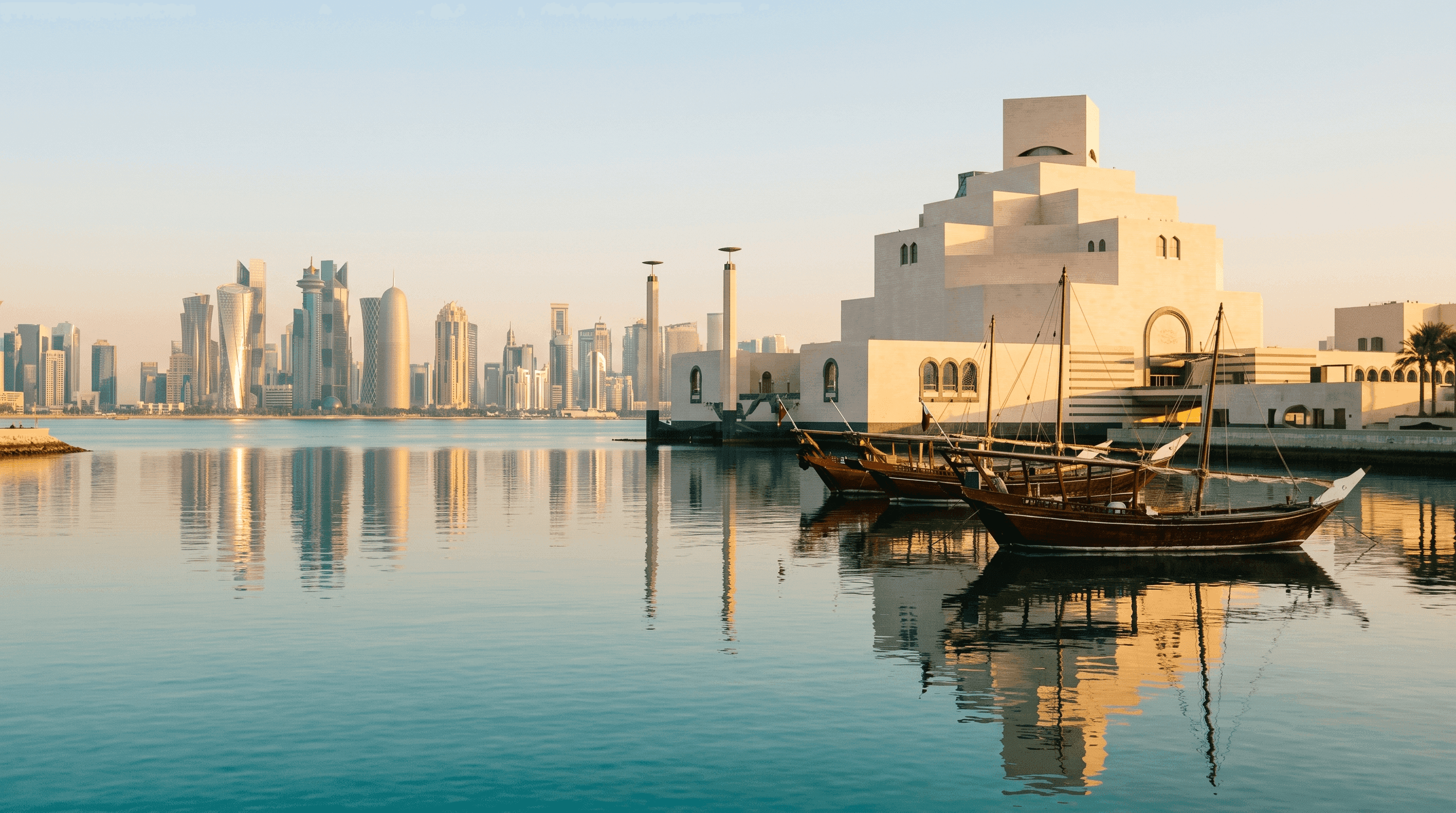
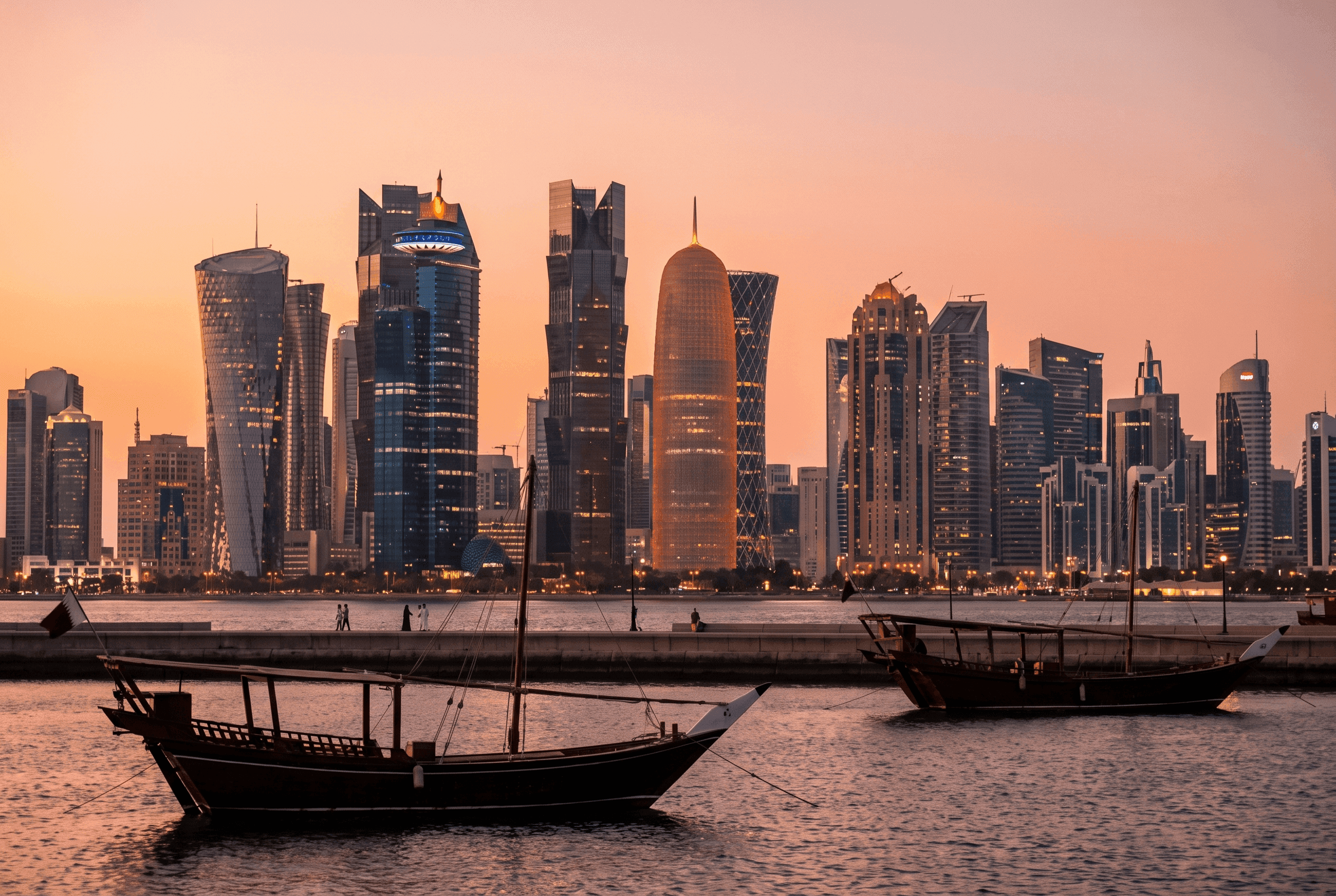
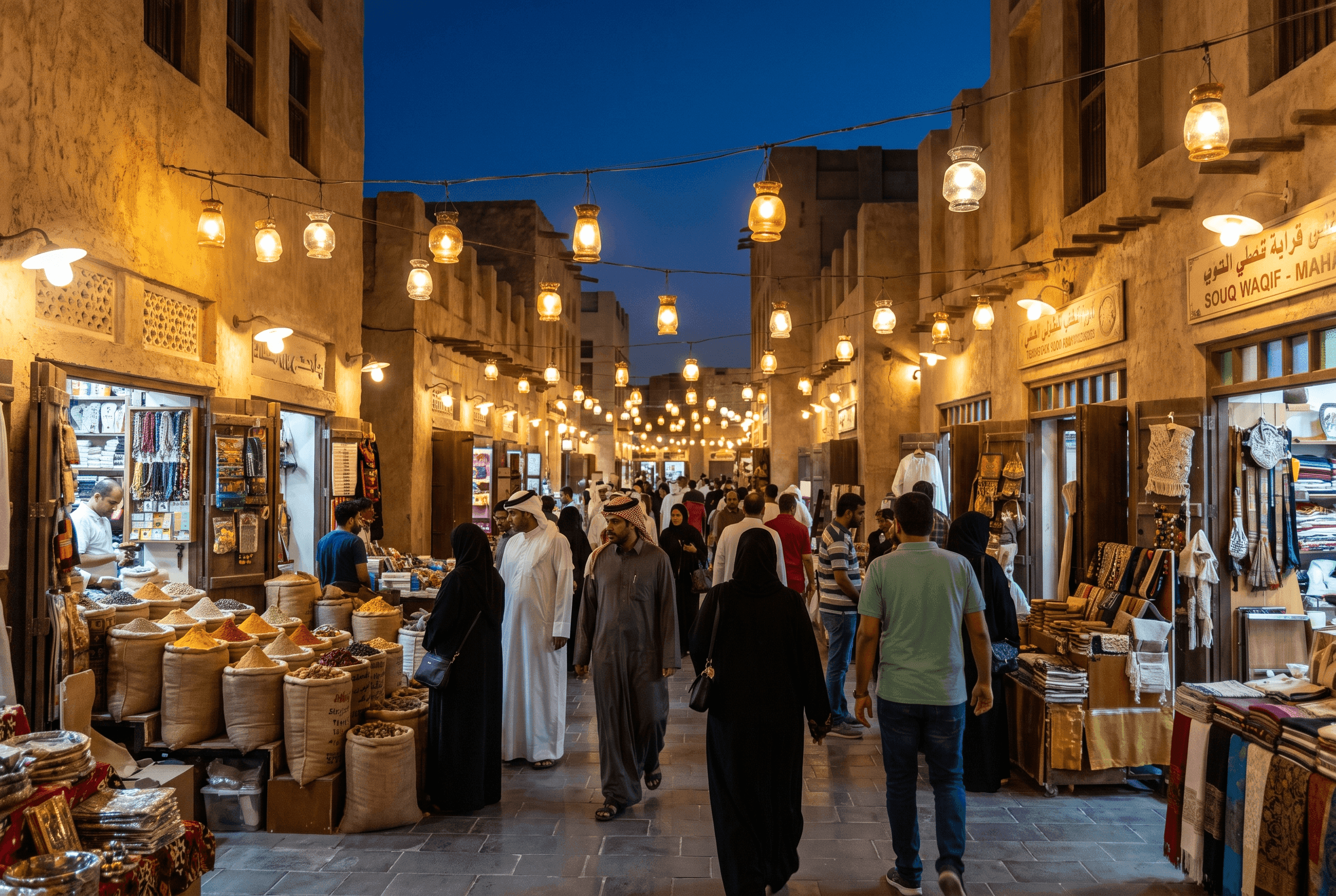
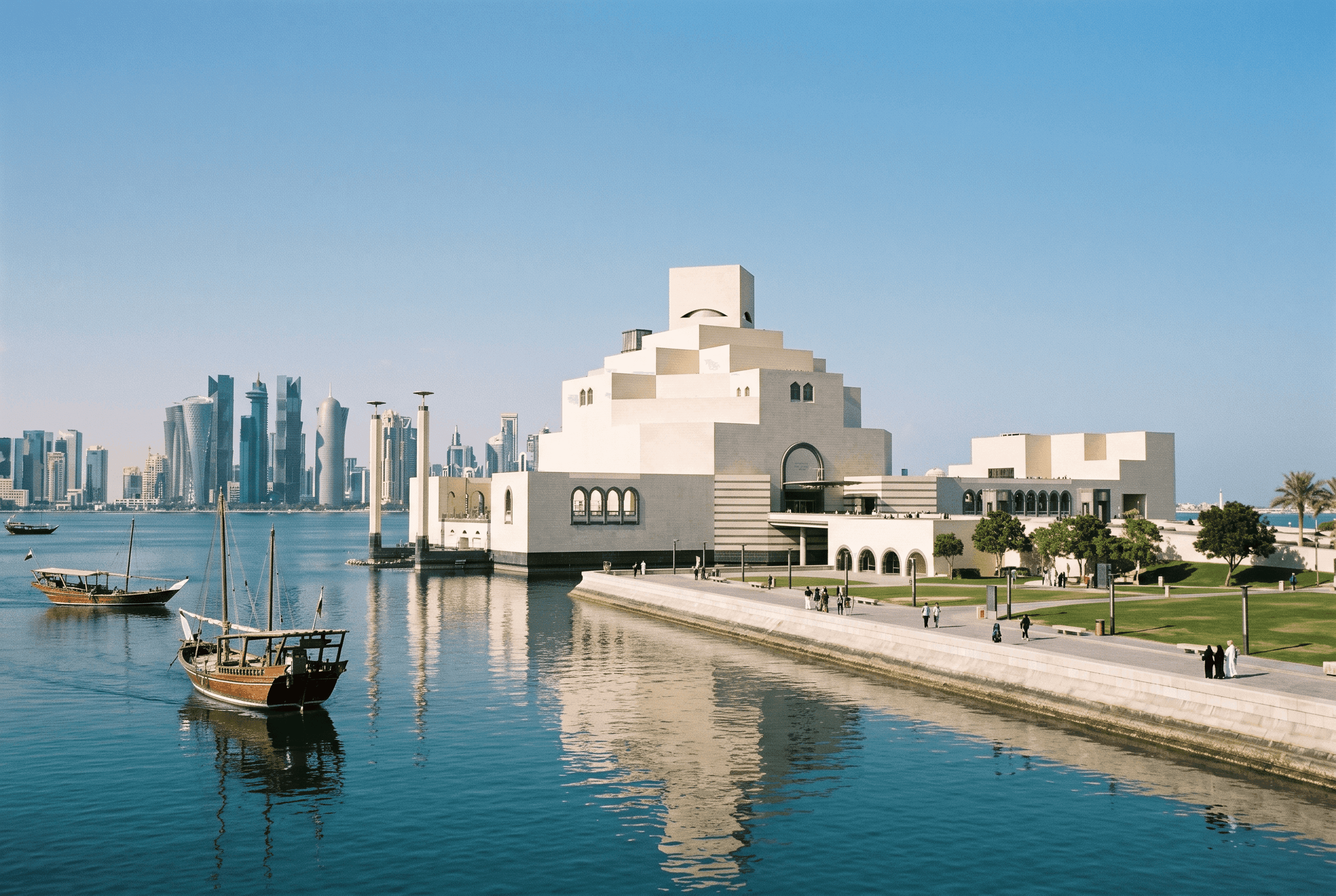
Several of Doha's best experiences cost nothing. You can walk Souq Waqif at dusk, follow the 7 km Corniche, sit in MIA Park watching the skyline light up, or wander Msheireb Downtown and Katara Cultural Village for free. Money mostly goes on three things: where you sleep, whether you drink alcohol (only in licensed hotel venues, and expensive), and any desert or sea excursion.
The best months are November to March, when daytime temperatures sit in the low-to-mid 20s°C and walking is a pleasure. Hotel rates peak around National Day (18 December) and over major events. Shoulder weeks in early November or March often bring better deals.
Where your money goes on a bed
Accommodation is the biggest line in any Doha budget, and the spread is wide.
Budget (around QAR 180–350 / AED 180–350 per night): Older three-star hotels in Al Najada, Al Souq and Musheireb's fringes sit within walking distance of Souq Waqif and the Gold and Red Line stations. Rooms can be dated, but they are clean and air-conditioned. Serviced apartments in Al Sadd and Bin Mahmoud are good for families and sometimes include kitchenettes. Doha has very few hostels, so solo travellers on a tight budget usually split a twin room.
Mid-range (around QAR 450–900): Look at the Souq Waqif Boutique Hotels, a cluster of small heritage properties scattered through the souq. Newer four-stars around West Bay and Msheireb also fit here. Weekday rates drop noticeably, and Thursday and Friday nights cost more.
Splurge (around QAR 1,500–4,000+): Options include the Mandarin Oriental in Msheireb, the Four Seasons and The St. Regis on the West Bay waterfront, and resort-style stays on The Pearl-Qatar. Beach access, pools and breakfast are part of what you pay for.
Money-saving tip: Qatar Airways stopover packages through Discover Qatar regularly offer heavily discounted nights at partner hotels when you transit DOH. If you are flying onwards anyway, a two-night stopover can cost less than a standalone weekend.
Eating well from QAR 5 to QAR 500
Food is where Doha rewards the curious and punishes the lazy. Hotel dining is expensive, while the streets behind it are some of the best-value eating in the Gulf.
Cheap (around QAR 5–30 per meal):
- Karak tea costs around QAR 1–3 at roadside cafeterias. At chains like Chapati & Karak, a cup with a cheese-and-egg chapati typically runs QAR 5–10.
- Shawarma and falafel run around QAR 6–12 in Al Sadd and around Souq Waqif's outer streets.
- Biryani, nihari and Kerala thalis cost around QAR 15–30 in Najma and Al Mansoura, where Doha's South Asian community eats.
Mid-range (around QAR 60–150 per person): Inside Souq Waqif, Parisa serves Persian kebabs under mirrored ceilings, Damasca One does Syrian mezze and grills, and Shay Al Shoomoos is the place for a Qatari breakfast of balaleet (sweet vermicelli with omelette) and regag bread. Try machboos, the national spiced rice with chicken or lamb, at any traditional Qatari restaurant.
Splurge (around QAR 300–600+ per person): Hotel restaurants in West Bay and The Pearl, including Nobu Doha at the Four Seasons, are where tasting menus and the only alcohol live. A glass of wine typically adds QAR 60–90, and a beer around QAR 45–60.
Daily food budget: around QAR 50 if you eat like a local, QAR 200 for comfortable sit-down meals, and QAR 600+ if you dine at hotels with drinks.
Getting around: metro, buses and ride-hailing
Transport is the easiest place to save money in Doha.
Doha Metro has three lines:
- Red Line: airport to Msheireb, West Bay and Lusail
- Gold Line: Souq Waqif, National Museum and Al Sadd
- Green Line: Education City
It is driverless, spotless and runs roughly from early morning to around midnight, with later starts on Fridays. A standard single fare is typically around QAR 2, and a day pass around QAR 6. The premium Gold Club carriage costs several times more and is rarely worth it. Buy a Travel Card at any station machine.
Metrolink feeder buses connect stations to surrounding neighbourhoods and are free with a valid card. Karwa buses cover the wider city cheaply but run less often.
Taxis and ride-hailing: Uber, Careem and the Karwa Taxi app all work. A short hop between Souq Waqif and West Bay typically costs QAR 15–25, and a ride from the souq to Katara or The Pearl usually runs QAR 30–50. Prices rise at peak hours and after big events.
Car hire starts around QAR 120–200 a day for a compact. It only makes sense if you are heading north to Al Zubarah or west to Zekreet. Even then, you cannot drive to the Inland Sea in a normal car, because that requires a 4x4 and an experienced driver.
Realistic daily transport cost: QAR 6 (metro pass only), QAR 60 (metro plus a couple of rides), or QAR 200+ (taxis everywhere).
Sights: what's free and what's worth paying for
Doha's free list is generous.
Free sights:
- Souq Waqif: the spice alleys, falcon souq and evening crowds
- The Corniche walk: about 7 km of seafront
- MIA Park: sunset over the West Bay skyline
- Msheireb Downtown: heritage houses and modern lanes
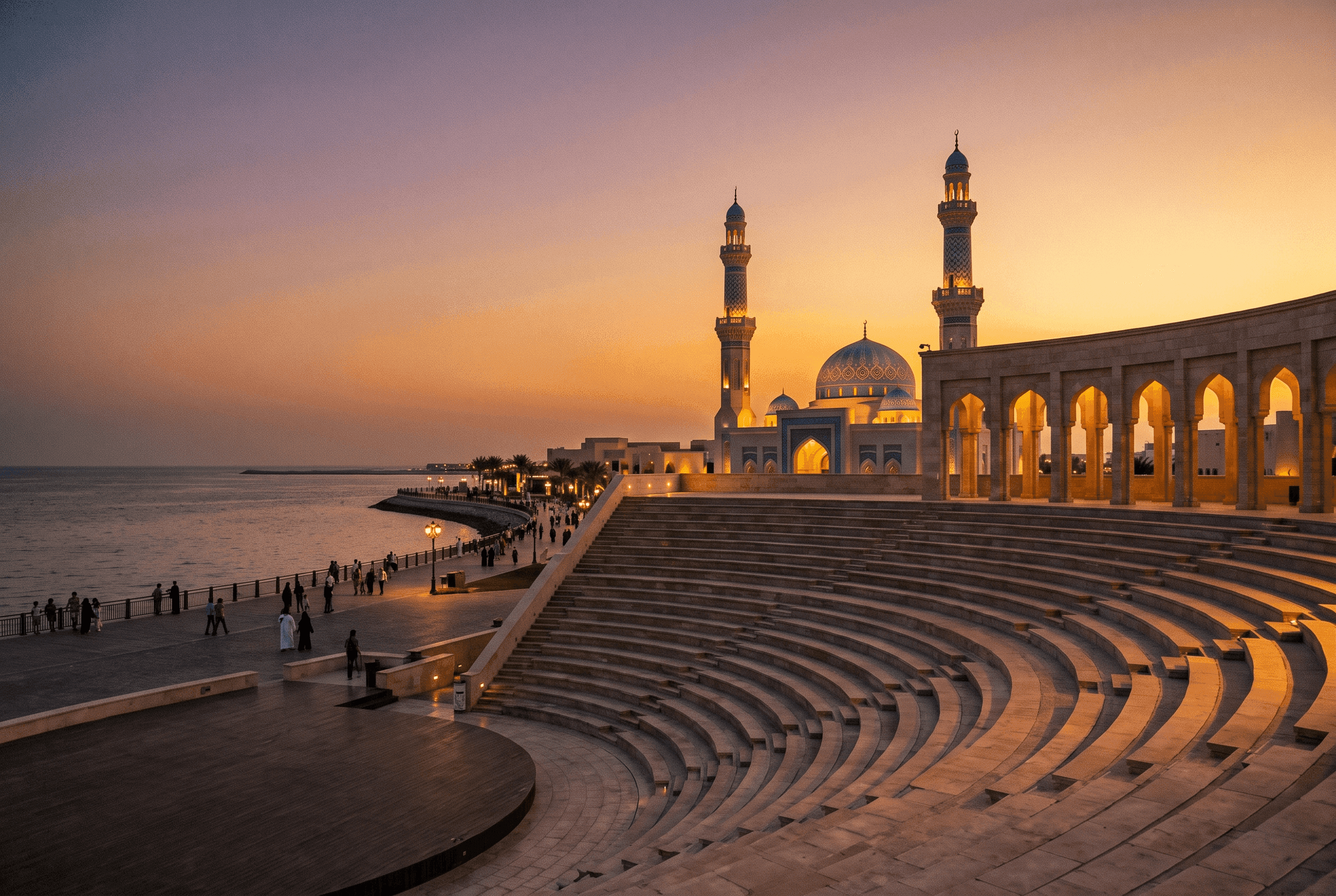
- Katara Cultural Village: the amphitheatre, pigeon towers and public beach
- 3-2-1 Qatar Olympic and Sports Museum grounds: the exterior, plus the Fire Station art spaces
Paid sights (typical adult tickets):
- National Museum of Qatar: around QAR 50. Jean Nouvel's desert-rose building alone justifies it, and you should allow 2–3 hours.
- Museum of Islamic Art: around QAR 50. It ranks among the world's best collections of its kind, so give it at least 2 hours.
- 3-2-1 Qatar Olympic and Sports Museum: around QAR 50.
- Qatar Museums Culture Pass: a membership that offers discounts across museums and cafés. It is worth checking if you live in Qatar or visit often.
Check the Qatar Museums website before you go, because pricing and resident discounts are revised from time to time and some galleries have free-entry days.
Splurge sights:
- A private dhow charter costs around QAR 400–800 for a boat for an hour or two, and is good for families or groups.
- Shared dhow rides from the Corniche cost around QAR 30–60 for a short loop.
Smart budgeting: pick two paid museums and fill the rest of the day with free neighbourhood walks. Most people find two big museums in one day is the limit anyway.
Desert and sea: the big-ticket extras
Excursions are where a Doha budget can double, so decide in advance which one matters most to you.
Desert safari to Khor Al Udeid (Inland Sea): A shared half-day tour usually runs around QAR 200–400 per person and includes hotel pickup, dune bashing, a stop at the sea's edge and sandboarding. Private 4x4 tours for a group typically cost QAR 700–1,200 per vehicle. Overnight camps with dinner range from around QAR 400 to well above QAR 1,000 depending on comfort. Choose operators who deflate tyres properly and carry recovery gear.
Camel rides and quad bikes at Sealine: Short camel rides cost around QAR 20–50. Quad bikes typically run QAR 150–300 for 30–60 minutes, and prices are negotiable on the spot.
Beaches:
- Katara Beach has a small entry fee, typically around QAR 10–25.
- Free public beaches include Al Wakrah and Sealine. Families should check which beaches are family-only.
- Hotel day passes in West Bay and on The Pearl usually cost QAR 150–400, often redeemable against food and drinks.
Kayaking the Purple Island mangroves at Al Thakhira costs around QAR 100–200 with rental. It is a cheaper, quieter alternative to the dunes, about an hour north of the city.
Splurge: a sunset yacht charter from The Pearl or Old Doha Port can easily reach QAR 1,500–3,000 for a few hours.
Three sample days: QAR 300, QAR 900 and QAR 3,000
Budget day (around QAR 250–350 / AED 250–350):
- Morning: Karak and chapati (QAR 8), then the National Museum on the Gold Line (QAR 50 plus a QAR 6 day pass).
- Afternoon: Shawarma lunch (QAR 12), MIA Park and a free Corniche walk.
- Evening: Biryani in Najma (QAR 20) and an evening in Souq Waqif.
- Bed: a three-star in Al Najada at around QAR 200.
Mid-range day (around QAR 700–1,000):
- Morning: Qatari breakfast at Shay Al Shoomoos (QAR 50), then the Museum of Islamic Art (QAR 50).
- Afternoon: Lunch at Damasca One (QAR 100), then a ride-hail to Katara and its beach (QAR 60 including entry).
- Evening: A shared dhow ride (QAR 50) and Persian dinner at Parisa (QAR 150).
- Bed: a Souq Waqif boutique hotel around QAR 550.
Splurge day (around QAR 3,000+):
- Morning: Breakfast at a West Bay five-star and a private Inland Sea safari split between two people (around QAR 500 each).
- Afternoon: A beach-club day pass (QAR 300) and spa time.
- Evening: A tasting-menu dinner with wine (QAR 700+).
- Bed: Mandarin Oriental or Four Seasons from QAR 1,500.
All figures are per person sharing a room, except the budget day.
Practical: arriving at DOH, money and safety
Getting there: Hamad International Airport (DOH) is Qatar Airways' hub, with frequent links across the Gulf and Levant. The flight takes about 1 hour from Dubai and Riyadh, and around 3 hours from Amman and Beirut.
Getting into the city: The Red Line metro runs from the airport to Msheireb in about 20 minutes for around QAR 2. A taxi to West Bay typically costs QAR 40–70.
Entry: GCC citizens enter freely. Many other nationalities get visa-free entry or a visa on arrival. Check current rules for your passport and residency before booking.
Money: Cards, including contactless, are accepted almost everywhere. Carry small cash for karak stalls, souq bargaining and tips. ATMs are plentiful. Tipping 10% at sit-down restaurants is appreciated where service is not included.
Connectivity: Ooredoo and Vodafone tourist SIMs and eSIMs typically cost QAR 50–100 for a week's data.
Safety and etiquette: Doha is among the safest cities in the region. Dress modestly in souqs, malls and museums, which means covering shoulders and knees. Public drunkenness is illegal. Fridays start slowly, and many museums open only in the afternoon.
Weather: Even in winter, carry water and sunscreen for the dunes. From June to September, outdoor sightseeing is limited to early morning and after dark.
How much cash should I carry per day in Doha?
Around QAR 50–100 in small notes covers karak, souq snacks, tips and bargaining. Almost everything else, including the metro Travel Card top-ups, can be paid by card.
Is Doha more expensive than Dubai?
Mid-range hotels and alcohol are often slightly pricier in Doha. Public transport, museum tickets and street food are comparable or cheaper. Overall a budget traveller spends about the same in both cities.
Is a desert safari worth the cost?
For most first-time visitors, yes. A shared half-day trip to the Inland Sea typically costs QAR 200–400 and is the most memorable landscape in Qatar. If your budget is tight, the free Corniche and souq evenings are better value than a quad-bike session.
Can I rely on the metro alone?
For the souq, museums, West Bay, Katara and Lusail, mostly yes. Use the free Metrolink buses for the last stretch and ride-hailing for The Pearl late at night or anywhere outside the network.