Trabzon in 3 Days: Sümela, Uzungöl and the Black Sea City, Hour by Hour
A realistic three-day Trabzon itinerary: the old city and Boztepe, the cliffside Sümela Monastery, Uzungöl and the high yaylas, with costs, dolmuş routes and food worth the detour.
13 min read
Why three days in Trabzon is the right amount
Trabzon is the Black Sea coast at its most dramatic: green mountains that rise almost vertically from the water, cloud sitting in the valleys until mid-morning, and a working port city of around 800,000 people that has never been polished for tourists. Gulf and Levant travellers have discovered it for the obvious reasons – 25°C summers while Dubai hits 45°C, a conservative, family-friendly atmosphere, and a landscape that looks nothing like the rest of Turkey.
The mistake most visitors make is treating Trabzon as a base for one long day trip. The three essentials sit in different directions: the old city and Boztepe hill are compact and walkable; Sümela Monastery is 45 km south in the Altındere Valley; Uzungöl is nearly 100 km east. Trying to do Sümela and Uzungöl in a single tour day means roughly six hours in a minibus and about ninety minutes at each site, usually in the worst of the midday crowds.
This plan gives each its own day. You will arrive at Sümela when it opens, walk the Uzungöl shoreline before the tour buses, and still have time for the things package tours skip: a tea garden above the harbour, a 13th-century church with frescoes, and the best rice pudding in Turkey in a roadside village.
May to September is the window. June and September are the sweet spots – warm, slightly less crowded than July and August, and with the yayla (summer pasture) roads fully open.
Where to stay: Meydan, the coast road or the lake
Meydan (Atatürk Alanı) and Uzun Sokak – the central square and the pedestrian shopping street running west from it. This is where to sleep if you rely on dolmuş minibuses and want restaurants, tea gardens and the bazaar on foot. The Zorlu Grand faces the square directly; a dozen three- and four-star hotels sit within five minutes. Expect around 3,500–7,000 TL (roughly AED 280–550) per night for four- and five-star rooms in peak summer, and around 1,500–3,000 TL (AED 120–240) for clean mid-range options with breakfast.
The eastern coast road (Yomra and Pelitli) – larger international-brand hotels such as Radisson Blu and Ramada Plaza sit between the airport and the centre with sea views and parking. Good if you are hiring a car; less convenient if you are not, since taxis into Meydan cost around 250–400 TL each way.
Boztepe and Soğuksu – quieter hillside neighbourhoods above the city with cooler air and views. Few hotels, more apartments; fine for families with a car.
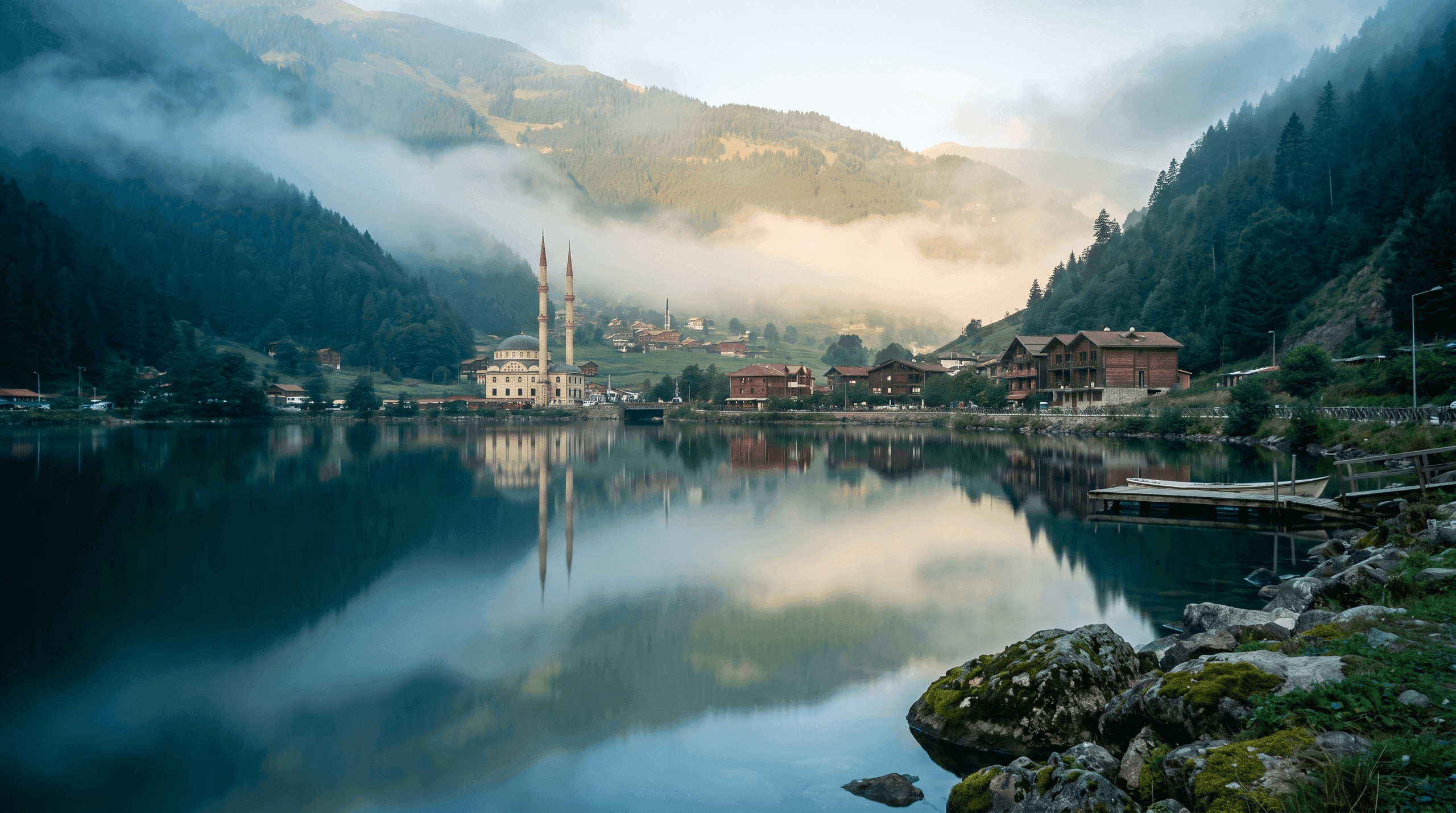
Uzungöl – spending the last night at the lake, rather than driving back, is the single best upgrade to this itinerary. Lakeside wooden hotels and pensions typically charge around 2,500–5,000 TL (AED 200–400) in summer; book ahead, because July weekends sell out. You get the lake at dawn, when the mist lifts and the mosque is reflected in still water, with almost nobody else awake.
Day 1: Old Trabzon, from the Meydan to Boztepe at sunset
Start at Atatürk Alanı around 9am with tea in one of the gardens under the plane trees – a glass typically costs around 20–30 TL. Walk west along Uzun Sokak, then drop into Kunduracılar Caddesi and the covered Bedesten for the city's signature purchase: Trabzon hasırı, finely woven gold bracelets that Gulf buyers already know well. Prices follow the daily gold rate, so compare two or three shops.
Continue uphill into Ortahisar, the walled medieval core. The Fatih Mosque here was the Panagia Chrysokephalos church, the coronation church of the Trebizond emperors; the Ottoman minaret and Byzantine apse sit side by side. Lunch nearby on Trabzon pidesi, the long closed-top pide with butter poured inside, around 250–400 TL with ayran.
Take a dolmuş or taxi (about 10 minutes, around 150–200 TL) west to the Hagia Sophia of Trabzon, built 1238–1263 under Manuel I Komnenos. It operates as a mosque, so entry is free; visit between prayer times, dress modestly, and look up – many of the 13th-century frescoes in the narthex are still visible, and the stone frieze of Adam and Eve on the south porch is remarkable.
Mid-afternoon, head to the Atatürk Köşkü in Soğuksu, an 1890s white timber mansion built for a Greek banker and later gifted to Atatürk; entry is a small fee, typically under 100 TL, and the pine garden is a pleasant half hour.
Finish at Boztepe, the hill directly above the harbour. The tea gardens here fill with local families at sunset; order tea and kuymak and watch the ships. Dinner follows on Day 1's food note below.
Day 2: Sümela Monastery and the Altındere Valley
Leave by 7:30am. Sümela is 45 km south via the D885 and Maçka, about an hour by car; it typically opens around 8am and closes in the early evening in summer. Arriving before 9am means you climb the stairs with a handful of people instead of several coach loads.
From the lower car park inside Altındere Valley National Park, a shuttle minibus runs up to the upper car park (a few minutes, a small fee), followed by a steep 10–15 minute stepped path to the entrance. Fit walkers can skip the shuttle and take the forest trail from the valley floor – around 40 minutes uphill through beech and pine, with the monastery appearing and disappearing in cloud above you. Foreign visitors currently pay around €20 (roughly AED 80); bring a card, and check the official museum site before you go, because sections periodically close for rockfall stabilisation.
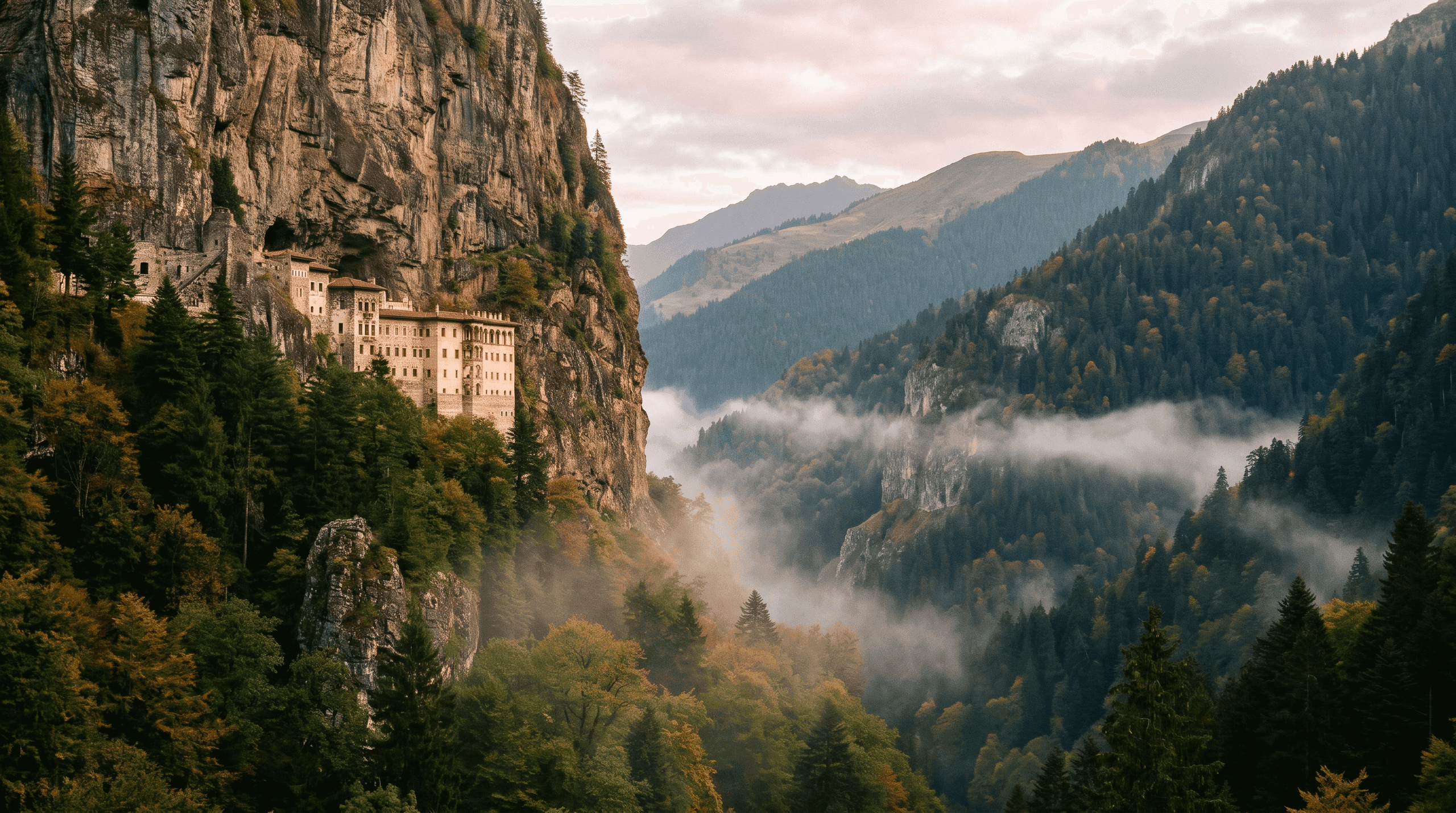
Tradition dates the founding to AD 386; what you see is mostly 13th to 18th century – the Rock Church with its layered frescoes, the aqueduct along the cliff, the monks' cells stacked on a ledge 300 metres above the river. Allow 90 minutes inside. Afterwards, picnic tables by the Altındere stream are a good place for a flask of tea.
Drive back to Maçka and continue 20 minutes up the D885 to Hamsiköy, the village that gives Turkey its most famous sütlaç – baked rice pudding with a dark caramelised top, served cold, around 100–150 TL a bowl. Have trout or kuymak for lunch at the same roadside restaurants.
If you have a car and energy, continue 25 minutes to the Zigana Pass for views over the ranges, then return to Trabzon by late afternoon – about 90 minutes.
Without a car: dolmuş minibuses leave from the Maçka stop near Değirmendere in Trabzon to Maçka town (around 60–80 TL), and from Maçka taxis and seasonal shuttles run to the monastery; agree the return price in advance, typically around 800–1,200 TL for a round trip with waiting.
Day 3: Uzungöl and the yaylas above it
Uzungöl sits at around 1,090 metres in the Çaykara district, 99 km east of the city. Drive the coast road to Of, then turn inland up the Solaklı river valley – allow around two hours, longer on Friday afternoons when Trabzon families head up for the weekend.
Arrive by 10am and walk the shoreline loop first. It is a flat 45–60 minute circuit of the lake, past the timber-style mosque, the trout farms where restaurants pull their fish, and the stream that feeds the lake. Do this before noon; from midday, the village centre becomes a slow procession of minibuses and quad bikes.
Lunch is non-negotiable: pan-fried alabalık (trout), kuymak, and black cabbage soup at one of the lakeside restaurants – around 400–650 TL per person (AED 30–50) with tea and bread.
The afternoon is the part most tours miss. Take the road climbing south-east behind the lake towards Demirkapı (Haldizen) Yaylası and Şekersu, around 40–50 minutes of switchbacks to summer pastures at 2,000 metres. The tarmac turns to graded gravel in places; a standard hire car copes in dry weather, but go slowly and turn back if cloud closes in completely, which it often does after 3pm. Shepherds' stone houses, cattle, wild rhododendron and total silence – this is the Black Sea highland at its best. Local jeep operators at the lake run the same trip for around 1,500–2,500 TL per vehicle.
If you are sleeping in Trabzon, leave Uzungöl by 5pm to be back for dinner. If you booked a lakeside hotel – the better choice – walk again at dusk when the valley cools and the mist drops.
Without a car: in summer, direct minibuses run from Trabzon's otogar to Uzungöl in the morning (around 200–300 TL), or take a Çaykara dolmuş and change. Organised day tours sold around the Meydan cost around 1,000–1,500 TL per person, but you lose control of the timings.
If you have a fourth day: Ayder, Sera Lake and the western yaylas
Ayder Plateau (Rize) is the trip everyone asks about. At 1,350 metres in the Çamlıhemşin valley, it has thermal baths, waterfalls and wooden hotels, but it is nearly three hours from Trabzon by road – about 150 km along the coast to Ardeşen, then inland along the Fırtına Valley. As a day trip from Trabzon it is exhausting; as an overnight it is superb. The drive itself is the point: the 14th-century Zilkale castle on a spur above the river and the humpbacked Ottoman stone bridge at Şenyuva are both worth stopping for. If you are already sleeping at Uzungöl, continuing to Ayder on Day 4 via Of and Rize cuts the journey to around two and a half hours.
Sera Gölü, 12 km west of the city near Akçaabat, is the opposite scale: a narrow green lake formed by a landslide in 1950, with a two-kilometre lakeside path and tea gardens. Combine it with lunch in Akçaabat and a late afternoon on Hıdırnebi Yaylası, a pasture at 1,450 metres about 35 km from Trabzon with wide views when the cloud allows.
Çal Mağarası, near Düzköy about 47 km south-west, is a cave with around a kilometre of lit walkway over an underground stream – cool, slightly eerie, and a sensible wet-weather option. Entry is typically under 150 TL.
For families who want gentler days, Forum Trabzon mall sits on the eastern coast road for rainy afternoons, and Trabzonspor's claret-and-blue stadium near the airport hosts Süper Lig matches from August; locals are proud of the club in a way worth experiencing if a fixture lines up.
What to eat: the Black Sea table, dish by dish
Trabzon's food is built on corn, butter, cheese, cabbage and fish, and it is heavier than Istanbul's – plan long lunches and lighter evenings.
Akçaabat köfte – grilled beef patties from the town of Akçaabat, 13 km west, served with grilled green peppers, onions and piyaz. The famous houses – Nihat Usta and Cemil Usta both have branches on the coast road – charge around 350–500 TL per portion (AED 28–40). Make this your Day 1 dinner.
Kuymak (mıhlama) – cornmeal cooked in butter with stringy local cheese until it pulls like fondue. Eaten with bread, as breakfast or a side; around 200–300 TL.
Trabzon pidesi – the long closed pide; order kıymalı (minced meat) or kaşarlı, split open and buttered at the table.
Alabalık – farmed mountain trout, pan-fried in butter at Uzungöl and Hamsiköy.
Karalahana çorbası – black cabbage soup with beans and corn, the dish locals credit for their longevity.
Hamsi – anchovies, the regional obsession, but a winter fish; in summer you will mostly see hamsili pilav on menus rather than fresh fried hamsi.
Vakfıkebir ekmeği – giant round sourdough loaves, up to several kilos, sold whole or by the slice.
Desserts – Hamsiköy sütlaç and Laz böreği, layers of thin pastry with custard and syrup. Buy hazelnuts and Rize çayı loose from bazaar stalls rather than airport boxes; a kilo of good roasted hazelnuts typically costs around 400–600 TL.
Alcohol is served in a few hotels and fish restaurants but is not part of the local dining scene; nearly everything is halal by default, which is part of the appeal for Gulf families.
Costs, weather and insider tips
A realistic daily budget for two people sharing, excluding flights: around 2,500–4,000 TL (AED 200–320) per day on a mid-range basis – hotel, two meals out, dolmuş and one taxi – rising to 6,000–9,000 TL (AED 480–720) with a four-star hotel and a hire car. The lira is volatile, so recheck the AED rate the week you travel; prices here are a guide, not a quote.
Weather – summer highs of 24–28°C, humidity high, and rain possible any day, usually a short afternoon burst. Pack a light waterproof and a fleece for the yaylas, where it can be 12°C in July. Cloud typically builds from noon; schedule mountain viewpoints for the morning.
Hire a car for Days 2 and 3 – it transforms the trip. Rates from the airport desks are typically around AED 150–250 per day for a compact automatic in summer; book in advance, as automatics run out. Roads are good tarmac to Sümela and Uzungöl; above the lake they are gravel.
Fridays – mosques fill for midday prayers, including the Hagia Sophia; visit it before 11am or after 2pm.
Dolmuş etiquette – pay the driver as you board or pass money forward; say "inecek var" to stop. Fares in the city are typically around 25–35 TL.
Gold – Kunduracılar jewellers quote per gram plus workmanship; bracelets of hasır weave are the Trabzon speciality, and the price should sit close to the day's gold rate.
Crowds – Uzungöl and Sümela peak between 11am and 3pm and on weekends. Both are a different experience at 8am.
Tea – you will be offered it everywhere, and accepting is the fastest route to good directions and better prices.
Practical: getting there via TZX, getting around, money and safety
Getting there – Trabzon Airport (TZX) sits on the coast just 6 km east of the Meydan. Seasonal direct flights typically operate from late May to September from Dubai, Sharjah, Doha, Kuwait and Jeddah with carriers such as flydubai, Air Arabia, Qatar Airways and Jazeera; schedules change year to year, so confirm before booking. Outside summer, connect via Istanbul (IST or SAW), where Turkish Airlines, Pegasus and AJet fly to Trabzon in around 1h50, often for the equivalent of AED 150–350 one way.
Airport to city – taxis take about 15 minutes to the Meydan and typically cost around 350–500 TL (AED 28–40); use the official rank and ask for the meter. Dolmuş minibuses pass on the main coast road outside the terminal for a fraction of the price. Hire-car desks are in the arrivals hall.
Getting around – the city is compact; the Meydan, Uzun Sokak, Ortahisar and the bazaar are walkable. Dolmuş minibuses radiate from the square and from stops along Yavuz Selim Bulvarı; the intercity otogar is east of the centre near Değirmendere. Ride-hailing apps are limited here, so taxis are hailed on the street or called by hotels. For Sümela and Uzungöl, a hire car or a negotiated taxi is far more efficient than public transport.
Money – Turkish lira only; cards are accepted almost everywhere in the city but carry cash for dolmuş, village restaurants and yayla jeeps. ATMs cluster around the Meydan. Exchange offices on Uzun Sokak change dirhams and riyals at fair rates; avoid changing at the airport.
Safety – Trabzon is a safe, conservative city with low street crime. The real risks are the coastal highway, where drivers overtake aggressively, and sudden mountain fog. Respect mosque dress codes, keep valuables out of sight at Uzungöl's crowded centre, and check the Sümela museum site for closures before driving out.
Read more: Trabzon
Can I see Sümela and Uzungöl in one day from Trabzon?
Yes, and combined tours sell exactly that for around 1,000–1,500 TL per person, but you spend about six hours driving and reach both sites at their busiest. With three days, giving each its own morning is far better. If you only have one day, choose Sümela – it is closer and more unusual.
Is Trabzon suitable for families from the Gulf in summer?
Very. Temperatures sit around 25°C, food is halal by default, the atmosphere is conservative and family-oriented, and Uzungöl and the yaylas are easy with children. Pack rain jackets and fleeces for the highlands, and book lakeside hotels well ahead for July and August weekends.
Do I need a car in Trabzon?
Not for the city itself, which is walkable with cheap dolmuş minibuses. For Days 2 and 3 a hire car (around AED 150–250 per day) saves hours and lets you reach the yaylas above Uzungöl and Hamsiköy's rice pudding stops. Without one, use dolmuş plus negotiated taxis or a day tour.
How much does Sümela Monastery cost and is it open?
Foreign visitors currently pay around €20 (roughly AED 80), plus a small shuttle fee from the lower car park. The monastery reopened after years of rockfall stabilisation, but sections occasionally close again, so check the official Turkish museums website a few days before you go.
What is the best month for a Trabzon itinerary?
June and September offer the best balance: warm days, open yayla roads and fewer crowds than July and August. May is green and quiet but wetter, with some high pastures still closed. Expect rain showers in any month and plan mountain viewpoints for the morning before cloud builds.