When to Visit Baku: A Month-by-Month Guide to Wind, Weather, Prices and Festivals
Baku changes sharply by season, from Novruz bonfires and Caspian beach days to F1 price spikes and quiet snowy evenings. Here is how to pick your month.
10 min read
Why Timing Matters More in Baku Than You Think
Baku is one of the easiest short-haul trips from the Gulf. Flights take around 3 hours from Dubai, Abu Dhabi, Doha or Riyadh, and there is no long-haul jet lag. Many visitors assume the weather is roughly the same all year. It is not, and the month you choose shapes the whole trip.
Three things vary sharply through the year:
- The wind. Azerbaijanis call Baku the city of winds. The northerly Khazri can make a 14°C April afternoon on the Boulevard feel like 8°C. The warmer southern Gilavar is far gentler.
- Gulf demand. From June to August, and around both Eids, Baku fills with visitors from the UAE, Saudi Arabia and Kuwait escaping 45°C heat. Hotels on Neftchilar Avenue price accordingly.
- Events. The Azerbaijan Grand Prix has been held in September in recent seasons, and Novruz in March takes over the city. Both change prices and atmosphere.
The sweet spots are April to early June and September to October. In those months you can walk Icherisheher (the walled Old City), the seafront and Fountain Square without heat stress. Day trips to Gobustan, the mud volcanoes or the Absheron fire sites are comfortable, and hotels usually cost less than in peak summer. Winter is cheap and atmospheric if you dress for it. Mid-summer suits Caspian beach days but is less pleasant for long sightseeing walks.
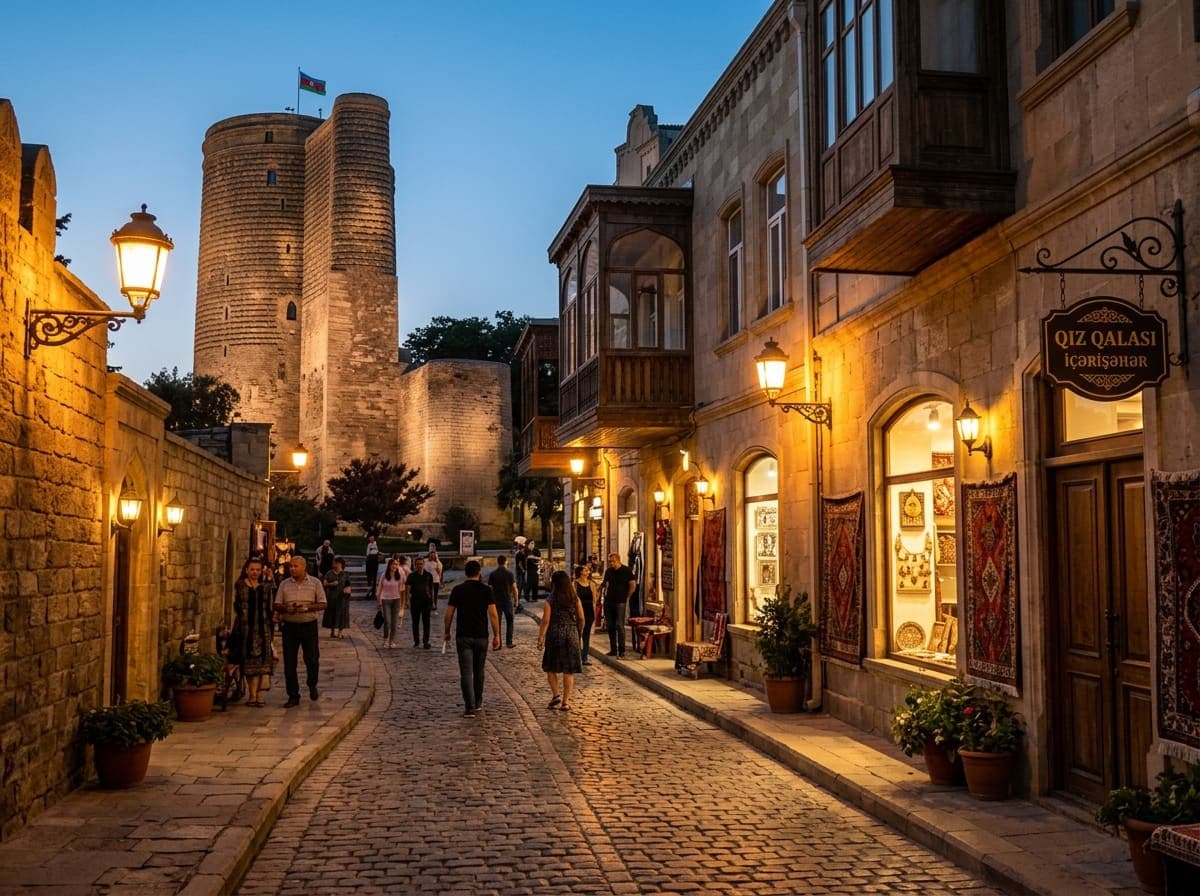
Spring (March to May): Novruz Fires and the Best Walking Weather
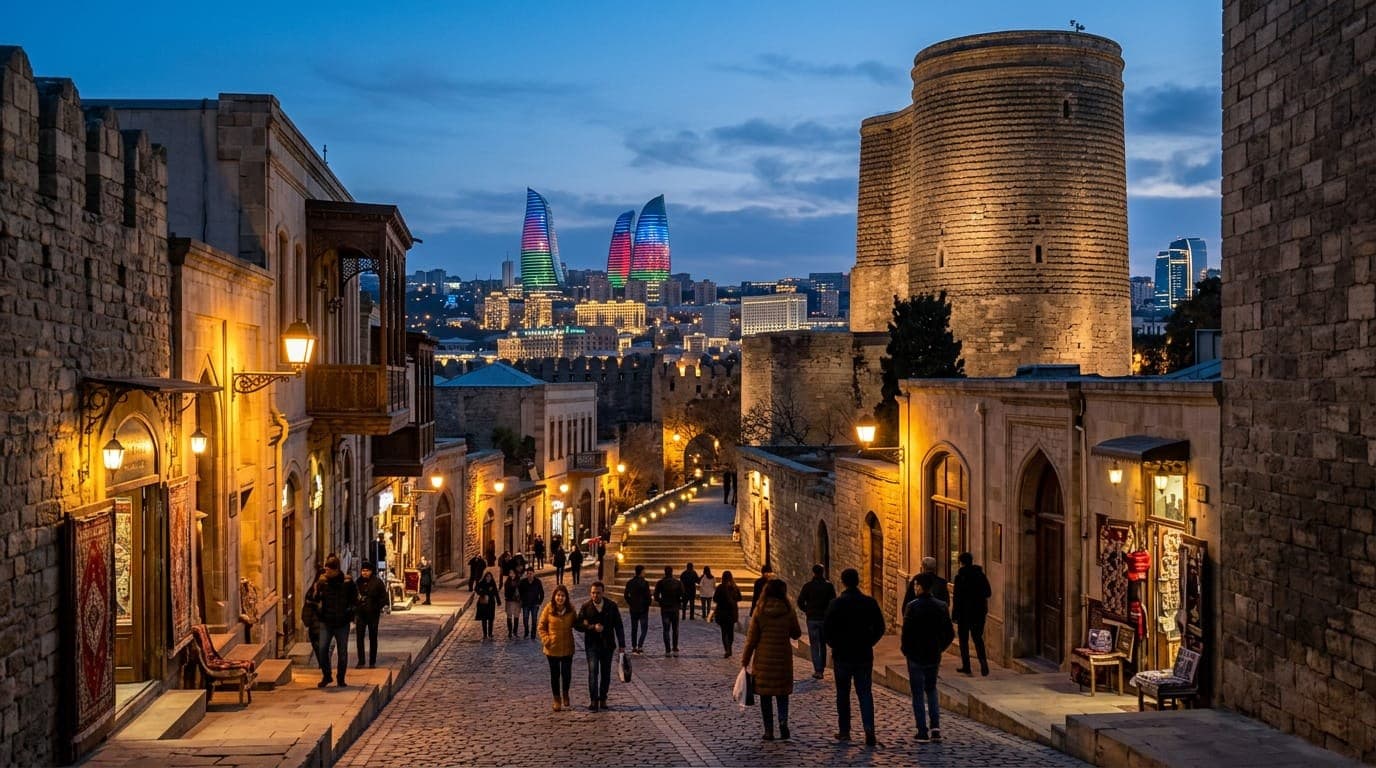
March is still cool. Highs are typically around 9–11°C and the wind can be harsh, but the Novruz holiday around 20–21 March makes it worthwhile. Families jump over small bonfires. Plates of green semeni (sprouted wheat) sit in shop windows. Bakeries sell trays of shakarbura, pakhlava and gogal. Public celebrations fill Icherisheher and Seaside Boulevard. Expect several days of public holidays, so some offices close and domestic travel gets busy.
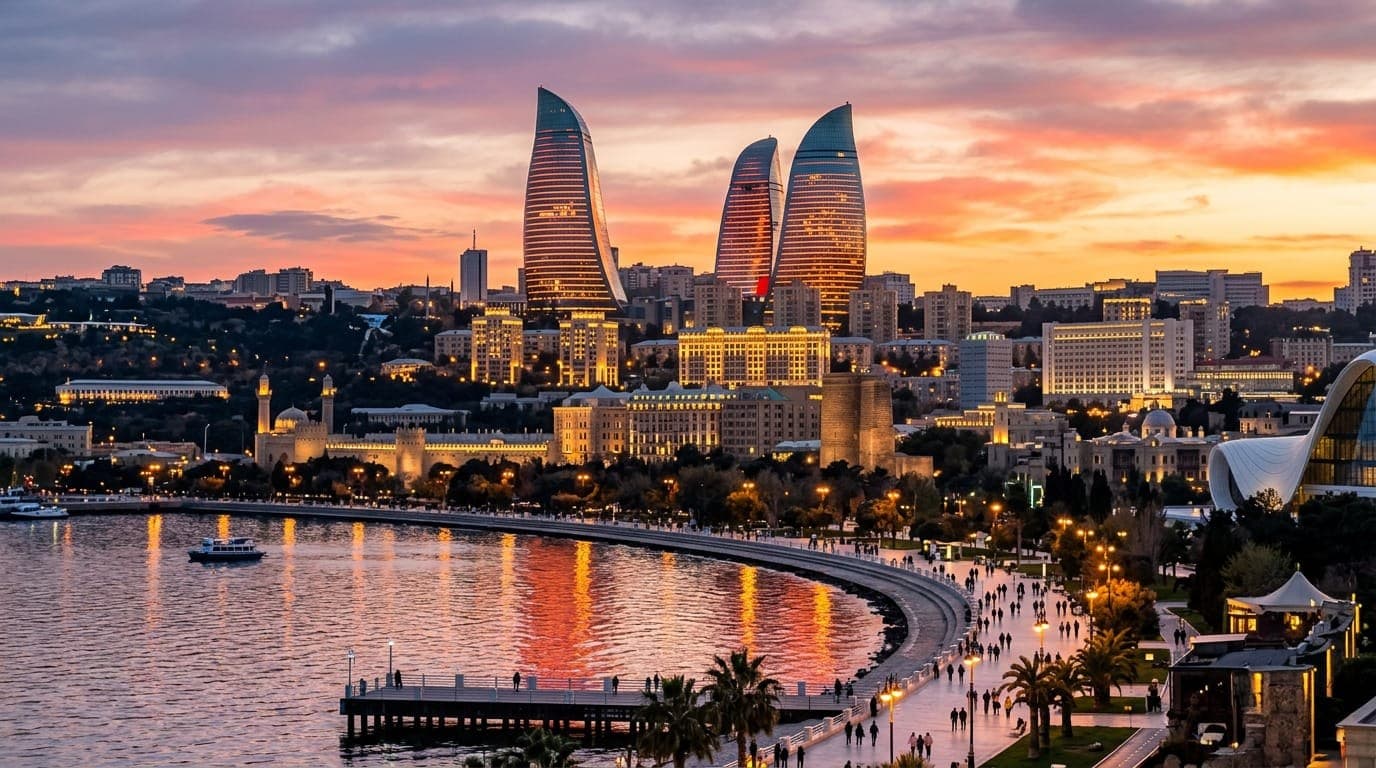
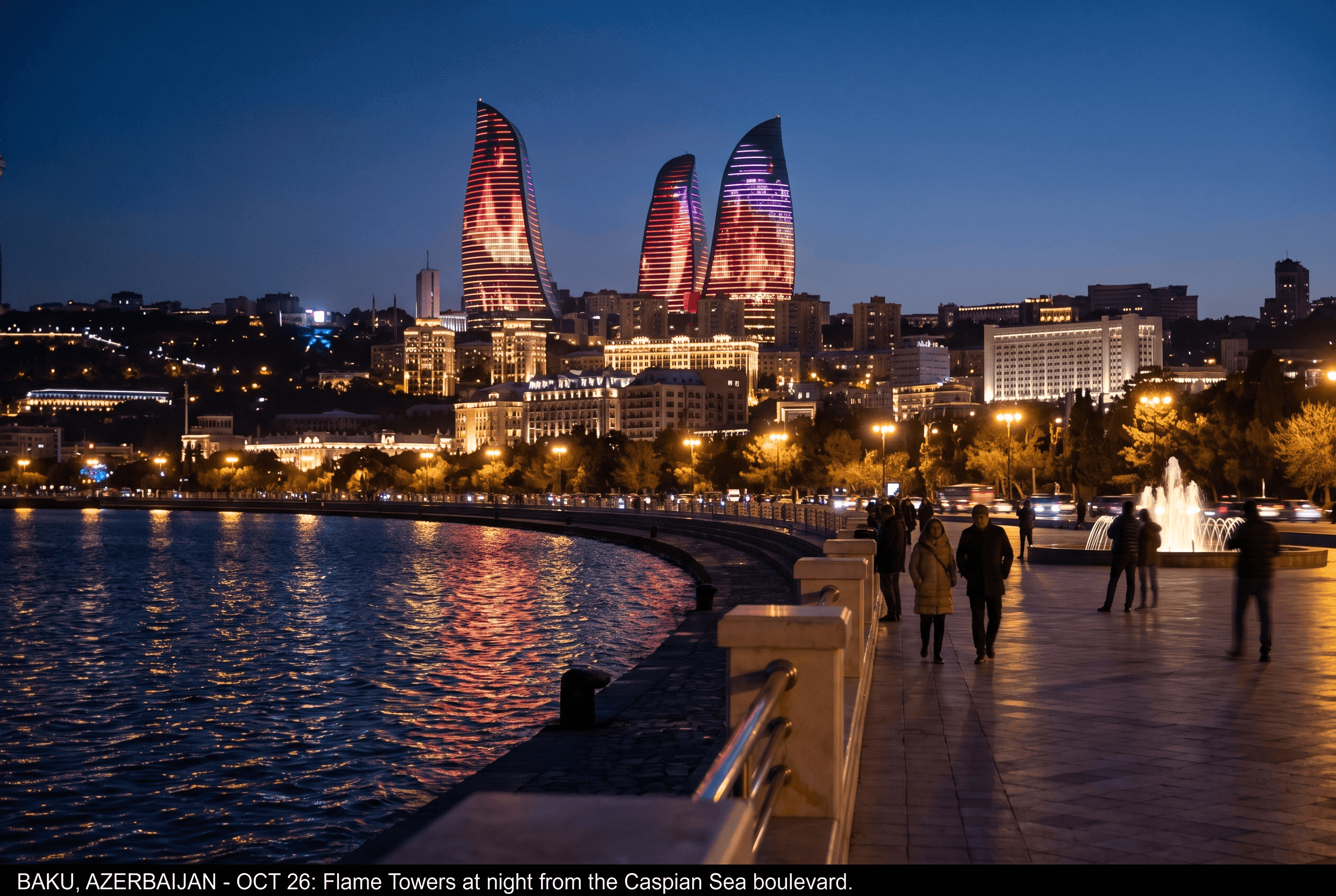
April is when Baku opens up. Highs are typically around 15–18°C, the Boulevard trees turn green, and terraces on Nizami Street reopen. Expect a few Khazri days, so pack a windproof layer. This is ideal for the uphill walk to Highland Park and the Flame Towers viewpoint at sunset.
May may be the best single month. Highs sit around 21–24°C, rain is rare and evenings are mild enough for dinner outdoors at the Old City caravanserais. It is also good for trips further afield: Shamakhi's vineyards and the Diri Baba mausoleum, or the green forests around Gabala, around 3.5 hours away.
Prices: mid-range hotels typically run around 110–180 AZN (about 240–390 AED) per night in April and May. Watch for spikes around the May public holidays and if Eid falls in spring.
Summer (June to August): Caspian Beaches and Gulf High Season
June is a strong month. Highs are typically around 26–28°C, days are long and the heat is still bearable for afternoon sightseeing. The Caspian starts warming up for swimming towards the end of the month.
July and August are hot, with highs typically around 30–34°C and occasional days near 38°C. That will feel mild to Gulf travellers, which is exactly why this is the busiest period for visitors from the region. Expect:
- Hotel rates typically 30–60% higher than in spring. Central four-star rooms often cost around 200–320 AZN (about 430–690 AED).
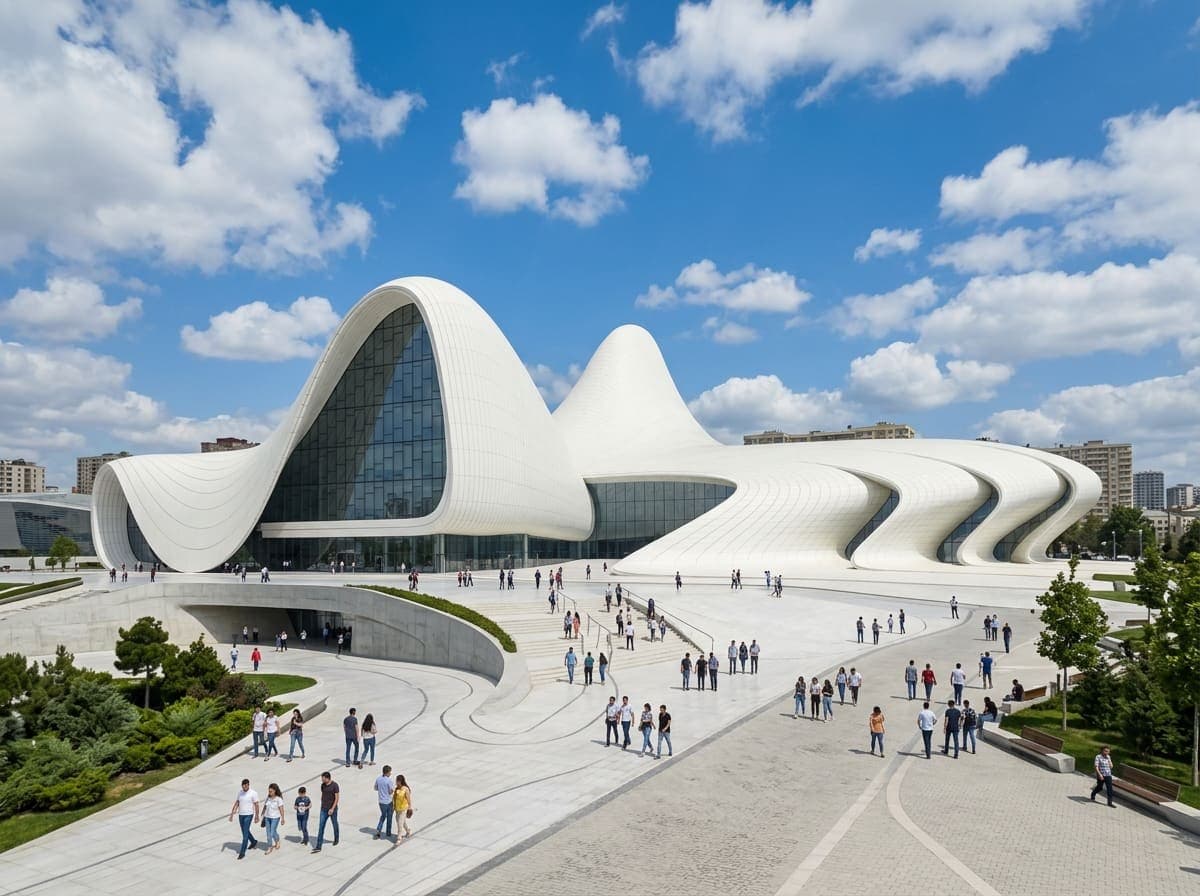
- Busy restaurants on Fountain Square and long queues at the Flame Towers and Heydar Aliyev Center photo spots.
- Heavy demand for Shahdag and Gabala resorts, where mountain air is around 10°C cooler.
Summer is the time for the Caspian. Locals head to Shikhov, Novkhani, Nardaran and the Absheron north coast beaches. Beach clubs typically charge around 20–50 AZN for a sunbed, and quieter public stretches are free. Water quality near the city varies, so the northern Absheron beaches are usually cleaner.
Eat seasonally. Try cold dovgha (yogurt and herb soup), fresh tomatoes and cucumbers from the Taza Bazaar, and lavangi (stuffed fish or chicken). Do your outdoor sightseeing before 11:00 and after 17:00.
Autumn (September to November): Golden Light, F1 and Pomegranates
September brings warm days, typically around 24–26°C, warm sea water for beach days early in the month, and soft evening light on the Old City walls. The catch is the Azerbaijan Grand Prix. It has run on the Baku City Circuit around the Old City and the Boulevard in September in recent seasons. During race week:
- Central hotel prices can double or triple. Some properties sell out months ahead.
- Road closures around Neftchilar Avenue and Azadliq Square make taxis slow, so the metro becomes essential.
- Parts of the Boulevard and the Old City perimeter are fenced off.
If you are not coming for the race, check the F1 calendar and book a different week.
October is arguably the best all-round month. Highs are around 18–20°C, crowds thin out and hotel rates fall back to spring levels. Cultural programming picks up, and the Baku Jazz Festival has typically been held in autumn. In late October and November, the Goychay Pomegranate Festival (around 3.5–4 hours away) is a good reason to see rural Azerbaijan. Bazaars fill with pomegranates, quince and persimmons.
November turns grey and windy, with highs around 12–14°C and the year's wettest spell. It is cheap and quiet, and good for museums like the Carpet Museum and the National Art Museum.
Winter (December to February): Cheap, Moody and Snow an Hour Away
Winter in Baku is not severe, but it is raw. Daytime highs are typically around 5–8°C. Wind chill makes it feel colder, and the city sees a few snowy days most winters, usually short-lived. Some days are dazzlingly clear, and the Flame Towers' LED display looks sharper against a cold night sky.
Why go:
- Prices. Mid-range hotels often fall to around 80–130 AZN (about 170–280 AED), and good four-star deals appear outside the New Year period.
- Skiing. Shahdag Mountain Resort near Qusar is around 3–3.5 hours by road and usually operates from December to March. Tufandag in Gabala offers gentler slopes and a scenic cable car. Day ski passes typically cost around 50–80 AZN.
- Comfort food. Winter is the season for dushbara (tiny dumplings in broth), piti (lamb and chickpea stew), khash, and long tea sessions with jam in Old City chaykhanas.
New Year (31 December to early January) is the main winter spike. The Boulevard and Fountain Square get large light installations, and hotel rates jump for that week. 20 January is a day of national mourning, so expect a sombre atmosphere and some closures.
Pack a proper windproof coat, a hat and gloves. The Boulevard in a January Khazri is no place for a light jacket.
Month-by-Month Cheat Sheet: Weather, Crowds and Price Level
Approximate daytime highs and a quick verdict for each month:
- January (around 6–7°C): cold and windy. Lowest prices except New Year week. Skiing in the mountains.
- February (around 6–7°C): similar. Quiet museums and good hotel deals.
- March (around 10°C): Novruz celebrations. Changeable weather and holiday crowds around 20–21 March.
- April (around 16–17°C): recommended. Fresh, green and moderate prices. Pack for wind.
- May (around 22°C): top pick. Ideal walking weather and long evenings.
- June (around 27°C): very good. Long days, the sea starts warming and prices start rising.
- July (around 31°C): Gulf high season. Hot, busy and expensive. Best for beaches.
- August (around 31°C): as July. Beach clubs at their busiest.
- September (around 25°C): excellent, except F1 week, when prices soar.
- October (around 19°C): top pick. Fewer crowds, autumn produce and cultural events.
- November (around 13°C): grey and wet. Low prices and the pomegranate harvest.
- December (around 9°C): festive lights, low prices until Christmas, then a New Year spike.
Gulf-specific tip: check where Eid al-Fitr and Eid al-Adha fall in your travel year. Direct flights from Dubai, Abu Dhabi, Doha and Riyadh sell out, and return fares can easily double. Shifting your trip by even 4–5 days often saves around 500–1,000 AED per person.
A 3-Day Shoulder-Season Plan (April–May or September–October)
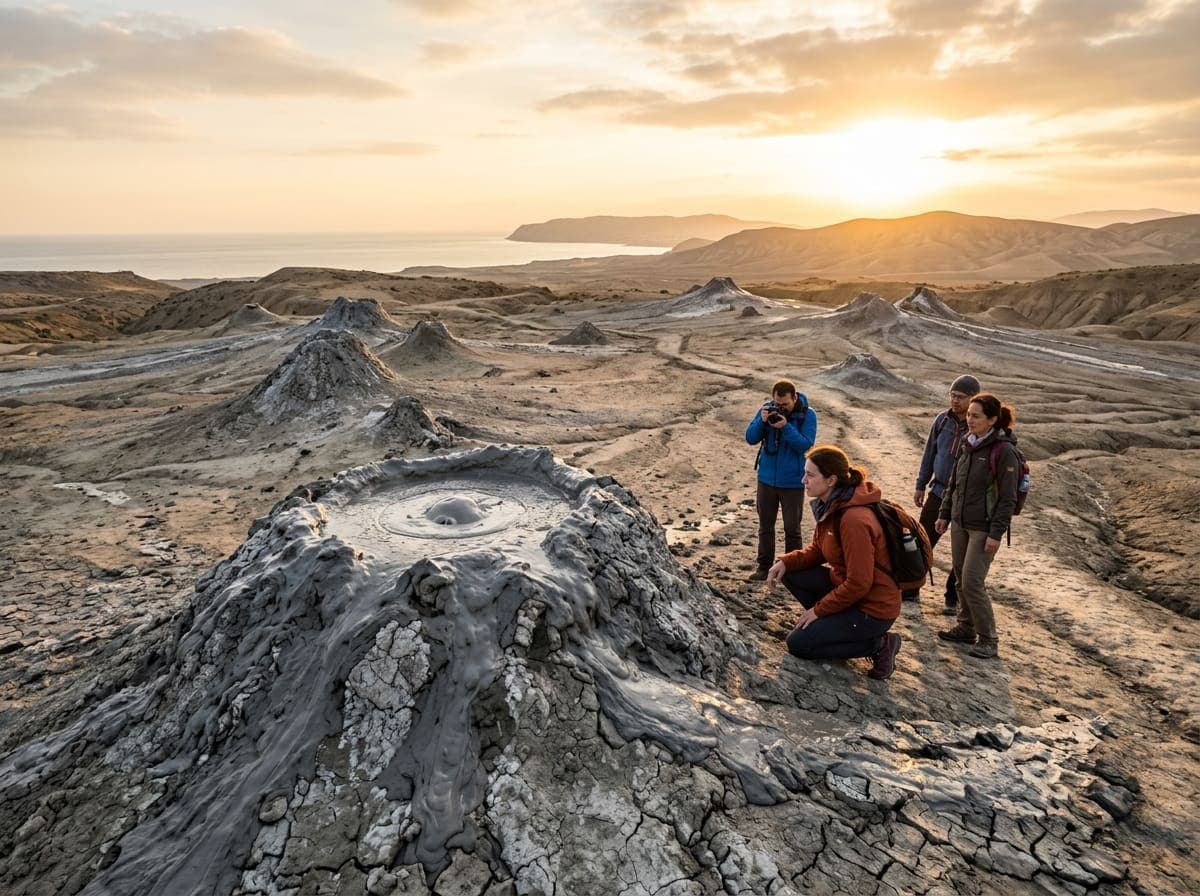
This plan suits the best months and avoids the Gobustan-and-mud-volcanoes day covered in our 2-day guide. Use the extra time for different sides of the city.
Day 1: Old City and the seafront
- Morning: enter Icherisheher through the Double Gates. Climb the Maiden Tower (entry typically around 15 AZN) and visit the Palace of the Shirvanshahs.
- Lunch: qutab with herbs or pumpkin, and dolma, at a caravanserai courtyard.
- Afternoon: walk the Seaside Boulevard to the Carpet Museum, housed in a building shaped like a rolled carpet.
- Evening: take the funicular up to Highland Park for sunset over the bay as the Flame Towers light up.
Day 2: Modern Baku and the bazaar
- Morning: the Heydar Aliyev Center. Go early for photos without crowds.
- Midday: Taza Bazaar for dried fruit, saffron, honey and tea glasses.
- Afternoon: Nizami Street, then the Baku Book Center or the Museum of Miniature Books.
- Dinner: shah plov baked in lavash, with lamb kebab.
Day 3: Absheron fire and stone
- Morning: Ateshgah Fire Temple in Surakhani, then Yanar Dag, the burning hillside. A Bolt taxi loop typically costs around 40–60 AZN.
- Afternoon: the 14th-century Mardakan castles, or a seafood lunch on the north coast.
- Evening: Fountain Square and a late tea at a chaykhana.
Practical: Getting There, Getting Around, Money and Safety
Getting there: Heydar Aliyev International Airport (GYD) has direct flights from the Gulf on Azerbaijan Airlines (AZAL), flydubai, Air Arabia, Qatar Airways and others. Flights take around 2.5–3.5 hours. Return fares from the UAE typically range from around 900 to 2,200 AED, depending on season and Eid timing.
Visas: GCC nationals usually benefit from visa-free entry or visa on arrival. Most other nationalities apply online through the official ASAN Visa portal. Check current rules before you book.
Airport to city: the Aeroexpress H1 bus runs to 28 May station roughly every 30 minutes and costs around 2 AZN. You pay with a BakuCard, a transport card available at the airport. A Bolt taxi to the centre typically costs around 15–25 AZN and takes 25–40 minutes. Avoid unmetered airport touts.
Getting around: the metro (red and green lines) is cheap, typically under 1 AZN per ride, and also uses the BakuCard. Bolt and Uber are inexpensive for most city trips.
Money: the Azerbaijani manat is pegged to the US dollar. 1 AZN is roughly 2.15 AED. Cards are widely accepted in the centre, but carry cash for bazaars and rural trips. Tipping around 10% in restaurants is normal if service isn't included.
Safety: Baku is generally very safe, including at night in central areas. The main hazards are wind, slippery marble pavements in rain, and fast traffic. Use underpasses to cross the major avenues.
What is the single best month to visit Baku?
May and October are the strongest all-round choices. Expect highs around 19–22°C, low rainfall, manageable crowds and mid-range hotel prices typically around 110–180 AZN per night. Avoid Grand Prix week in September unless you are going for the race.
Is Baku too hot in summer for Gulf travellers?
No. July and August highs are usually around 30–34°C, which many Gulf visitors find pleasant. The trade-off is that it is peak season for regional travel, so hotels and flights cost more. Book early and plan sightseeing for mornings and evenings.
How windy is Baku really?
Very windy at times, especially from autumn to spring when the northerly Khazri blows. It can make temperatures feel 5–8°C colder. Pack a windproof jacket for any month outside summer.
Can you ski near Baku in winter?
Yes. Shahdag Mountain Resort near Qusar is around 3–3.5 hours by road, and Tufandag in Gabala is a similar distance. Both usually operate from December to March, with day passes typically around 50–80 AZN.
When can you swim in the Caspian Sea at Baku?
The comfortable swimming season runs from late June to early September. The cleaner beaches are on the northern Absheron coast, around Nardaran and Novkhani, rather than right in the city.