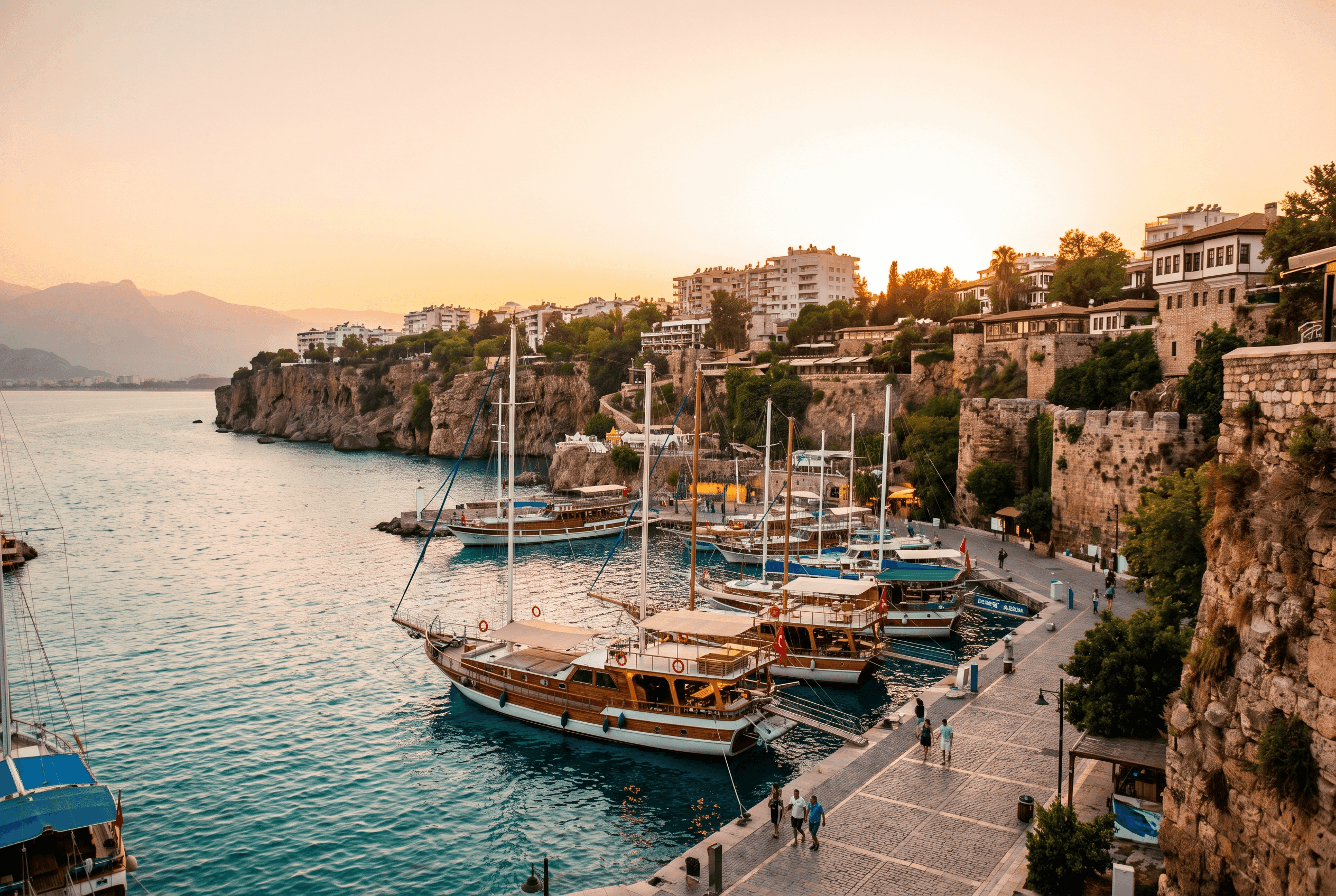
Antalya
Ottoman lanes, cliff-top sunsets, turquoise beaches and Roman theatres, all framed by the Taurus Mountains on Turkey's sunny Mediterranean coast.
- Country
- Türkiye
- Main airport
- AYT
- Best time to visit
- Apr · May · Jun · Sep · Oct
Ottoman lanes, cliff-top sunsets, turquoise beaches and Roman theatres, all framed by the Taurus Mountains on Turkey's sunny Mediterranean coast.
Antalya Airport (AYT) lies about 13 km east of the old town, a 20–30 minute taxi ride, and the AntRay tram, city buses and metered taxis cover the rest of the city.
Why go
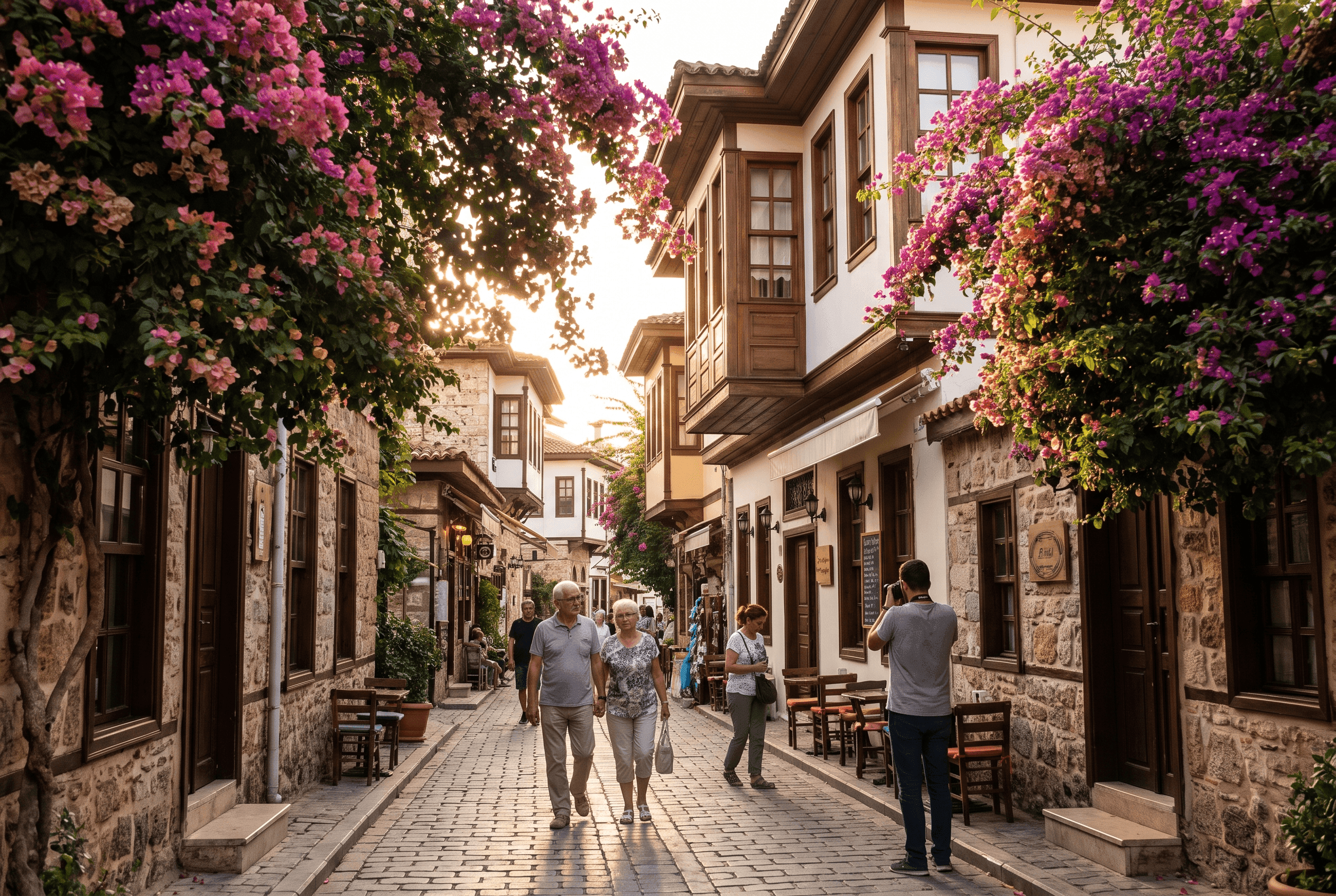
Antalya is where Turkey's turquoise coast meets serious history. The city wraps around a cliff-lined bay with the Taurus Mountains rising behind it, so beach days, Roman ruins and mountain air are all within an hour of each other. Its old quarter, Kaleiçi, is a maze of Ottoman-era houses, boutique guesthouses and bougainvillea-draped lanes that tumble down to an ancient walled harbour.
Highlights
- Kaleiçi and Hadrian's Gate – the triple-arched marble gate built for Emperor Hadrian's visit in 130 AD is still the classic way into the old town.
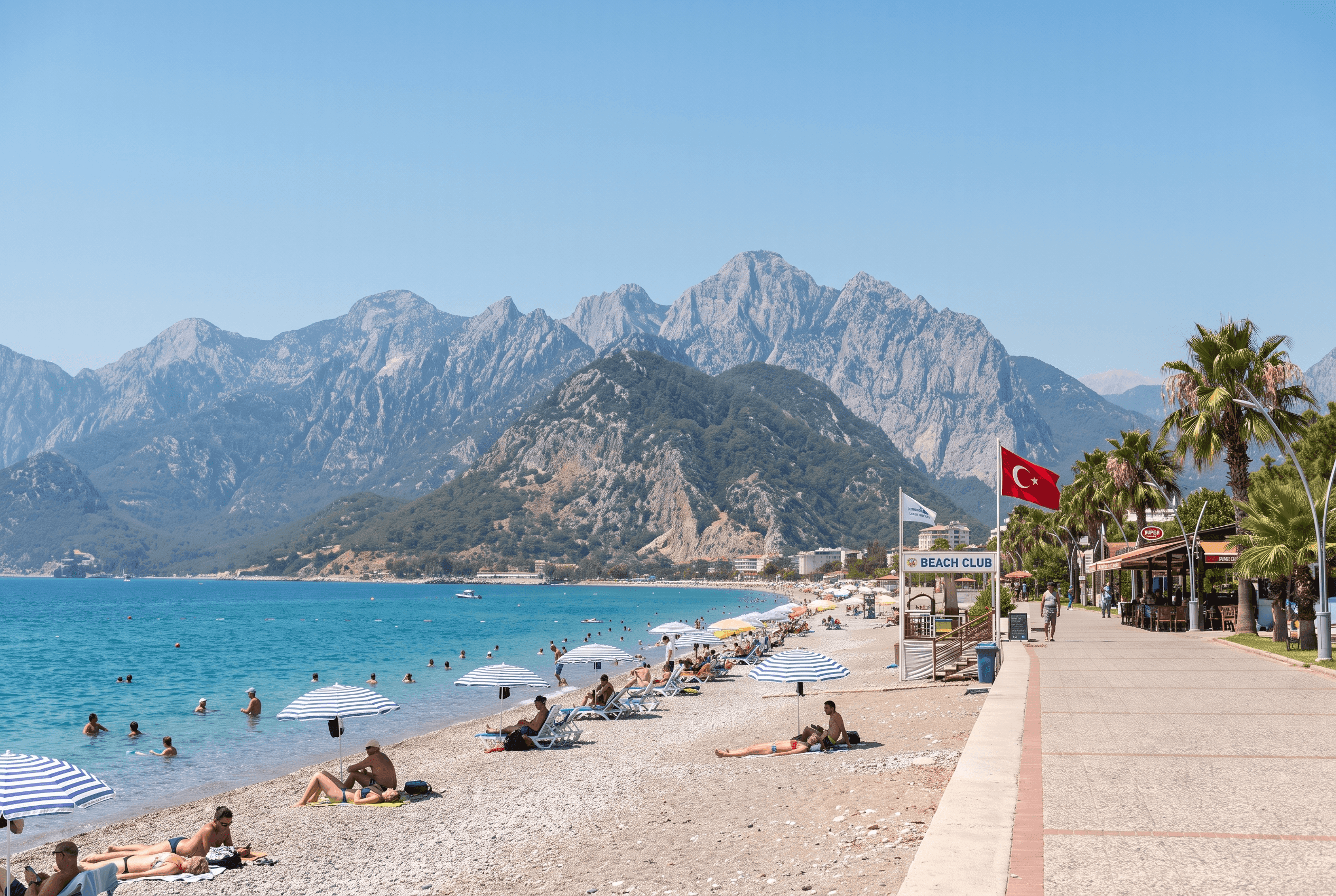
- Beaches – pebbly Konyaaltı to the west and sandy Lara to the east, both backed by long promenades for walking and cycling.
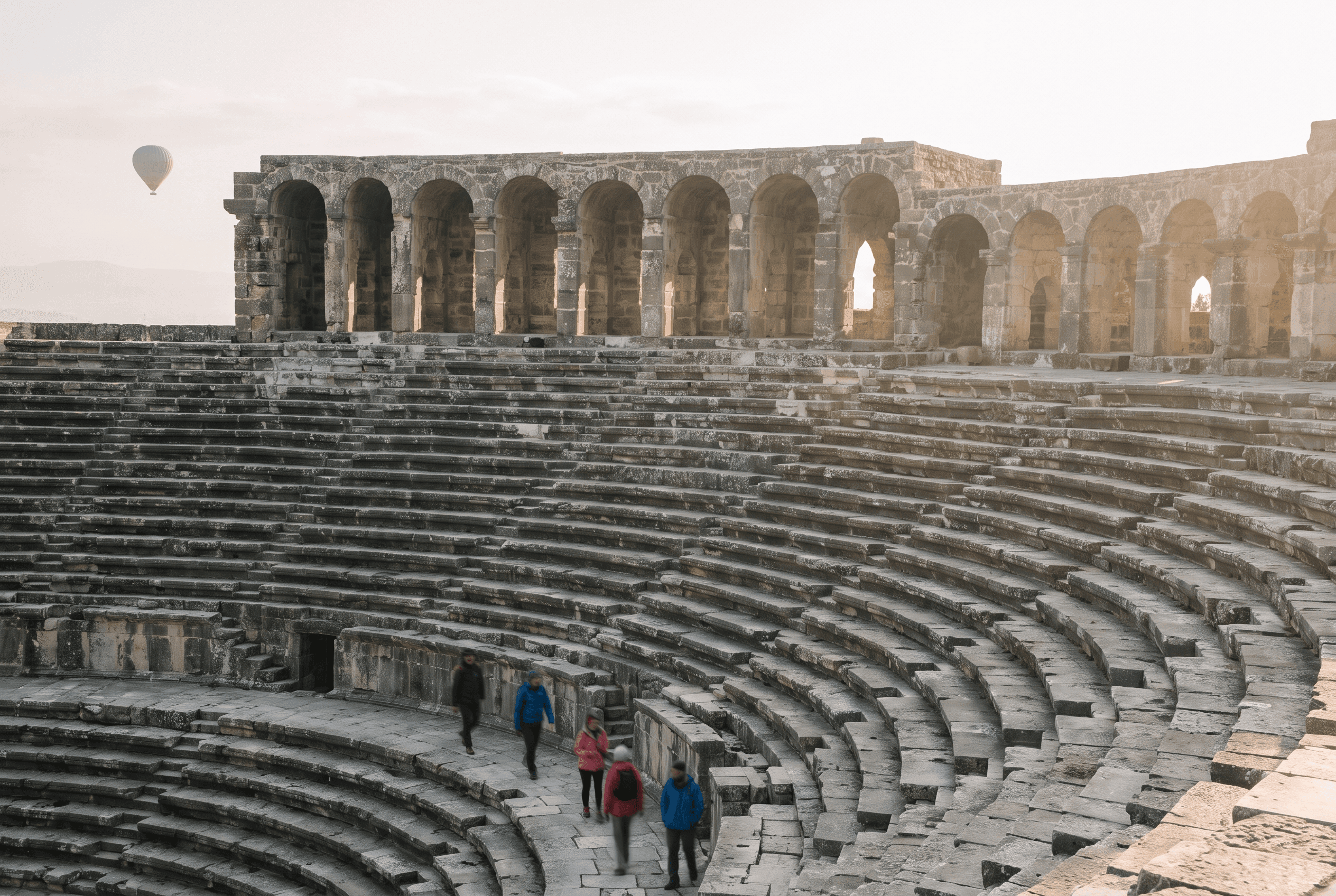
- Ancient sites – Perge, Aspendos (home to one of the best-preserved Roman theatres anywhere) and mountain-top Termessos are all easy day trips.
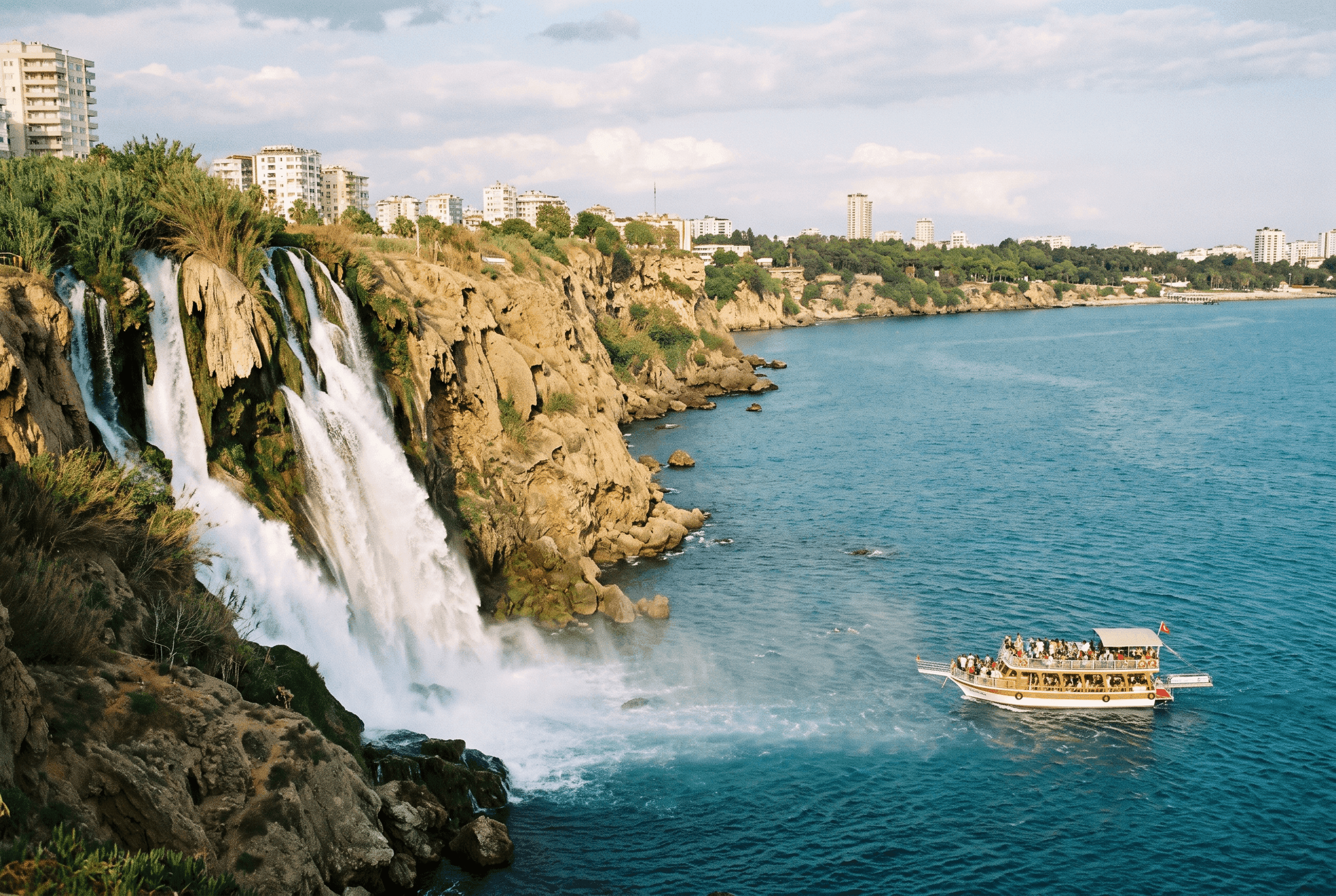
- Waterfalls – the Lower Düden falls plunge straight off the cliffs into the sea.
- Resorts – Belek, Lara, Kemer and Side offer some of the Mediterranean's best-value all-inclusive stays.
The climate is a major draw: roughly 300 sunny days a year, sea temperatures above 20°C from June to early November, and mild winters. July and August are hot, often above 35°C, and crowded, so spring and autumn are the sweet spot. Antalya is also very family-friendly, with water parks, gentle beaches and a relaxed pace, and halal food is the norm, which has made it a long-time favourite with visitors from the Gulf.
Where to stay
Antalya stretches along roughly 40 km of coast, so where you sleep shapes your trip. Choose by what matters most: atmosphere, beach or all-inclusive ease.
- Kaleiçi (old town) – restored Ottoman mansions turned boutique hotels and pensions, steps from the harbour, cafés and nightlife. Ideal for couples and first-timers. Lanes are narrow and cobbled, so expect a short walk with luggage.
- Konyaaltı – modern hotels and serviced apartments facing a long pebble beach and a landscaped promenade with mountain views. Great for families and longer stays; the centre is 15–20 minutes away.
- Lara – east of the city near the airport, lined with large all-inclusive resorts on a fine sandy beach. Some themed resorts are attractions in themselves.
- Belek – about 35 km east; championship golf courses and upscale resorts with kids' clubs and private-pool villas.
- Kemer and Side – separate resort towns roughly 45 and 75 km away, better for a quiet beach week than for city sightseeing.
Typical nightly rates for a double room (2026)
- Budget pensions and guesthouses: $40–80
- Mid-range boutique or city hotels: $90–180
- Upscale city hotels: $180–300
- All-inclusive resorts in Lara or Belek: $200–500+ in July–August, often 30–50% cheaper in April–May and late October.
Gulf families often prefer villa-style resorts with private pools, and several properties in the region market halal-friendly concepts with alcohol-free areas and separate pools for women. Book early for school holidays and Eid, when rates jump sharply.
A realistic 3-day plan
Three days is enough to see the city, a couple of ancient sites and a beach without rushing. In summer, start early and save the midday heat for the sea or a long lunch.
Day 1 – Old town and harbour
- Enter Kaleiçi through Hadrian's Gate, then wander to the Yivli Minaret, the Kesik Minaret and Hıdırlık Tower.
- Walk down to the old harbour and take a 1–2 hour boat trip to see the Lower Düden Waterfall pouring into the sea.
- Watch sunset from Karaalioğlu Park, then dine in a courtyard restaurant in Kaleiçi.
Day 2 – Roman Pamphylia
- Drive or join a tour to Perge (about 20 km) to walk its colonnaded street and stadium.
- Continue to Aspendos (about 45 km) for its remarkably complete Roman theatre and the nearby aqueduct; in late summer the theatre hosts an opera and ballet festival.
- On the way back, cool off at the Kurşunlu or Upper Düden waterfalls in their shaded parks.
Day 3 – Beach and mountains
- Spend the morning on Konyaaltı Beach or at a beach club.
- In the afternoon, choose between the Tünektepe cable car for panoramic city views, or a longer trip to the Olympos Teleferik near Kemer, which climbs to 2,365 m on Tahtalı Mountain.
- Finish with fresh fish near the harbour or on the Konyaaltı promenade.
With an extra day, add mountain-top Termessos, the beaches of Olympos and Çıralı, or a long day trip to the harbour town of Kaş.
What to eat
Antalya's food is Mediterranean Turkish: olive oil, citrus, grilled meat and fish, and generous breakfasts. Meat served in restaurants is halal as standard in Turkey, although alcohol is widely sold.
Dishes to try
- Piyaz with şiş köfte – the local signature: white beans dressed with tahini, lemon and vinegar, served alongside grilled meatballs.
- Hibeş – a spicy spread of tahini, cumin and garlic that you'll rarely find outside Antalya.
- Tandır – slow-cooked lamb or goat, falling off the bone.
- Gözleme – thin flatbread filled with cheese, spinach or potato, cooked on a griddle.
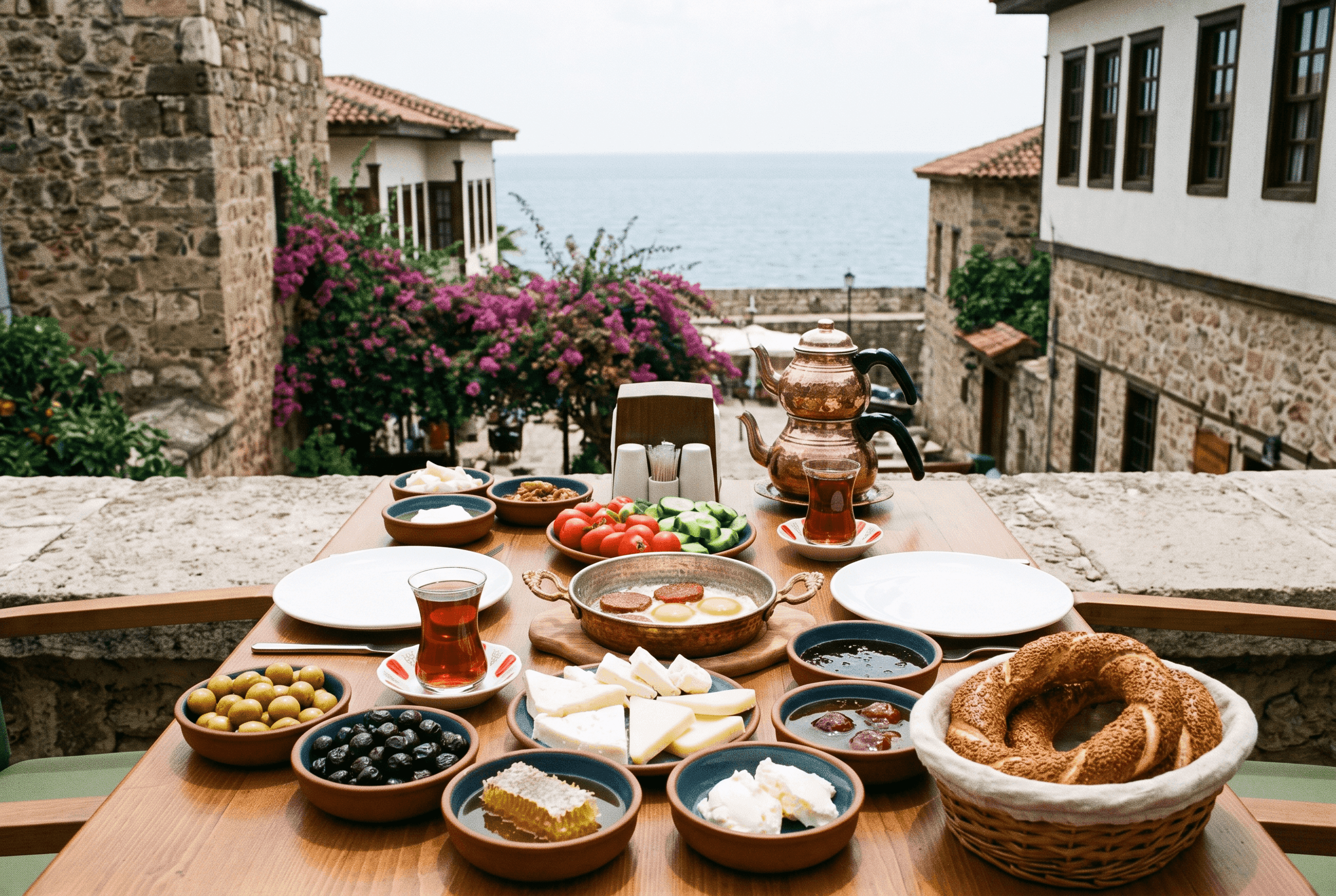
- Serpme kahvaltı – a spread breakfast of cheeses, olives, eggs, honey, clotted cream (kaymak) and jams, including local bitter orange and bergamot.
- Grilled fish – sea bass and sea bream, best near the harbour or in Konyaaltı.
- Sweets – künefe, baklava and stretchy Turkish ice cream, with fresh-squeezed orange or pomegranate juice.
Where to eat
- Köfteci and piyazcı – simple grill houses specialising in köfte and piyaz; cheap, fast and very local.
- Esnaf lokantası – canteen-style places with trays of stews and vegetables; just point and choose.
- Kaleiçi courtyard restaurants – atmospheric but pricier; check menu prices before sitting down.
- Meyhane and fish restaurants – shared mezes and grilled fish for long evenings.
- Weekly street markets (pazar) – fruit, olives, cheese and gözleme made on the spot.
Expect $8–15 for a lokanta meal, $25–45 per person at a mid-range restaurant and $3–6 for tea with a pastry.
Getting there and around
Getting there Antalya Airport (AYT) is Turkey's main resort gateway, about 13 km east of Kaleiçi, with two international terminals and a separate domestic terminal. Direct flights arrive from across Europe, Russia and Central Asia, plus seasonal direct services from several Gulf cities. Year-round, Turkish Airlines, AJet and Pegasus connect via Istanbul in about 1 hour 15 minutes. Flying time from Dubai is roughly 4–4.5 hours.
From the airport
- Taxi – 20–30 minutes to Kaleiçi, typically $18–30; insist on the meter.
- AntRay tram – links the airport area with the city centre; very cheap but slow with luggage.
- City buses – several lines serve the city and the main bus station (otogar).
- Pre-booked transfers – the easiest option for Lara and Belek ($30–50) or Kemer and Side ($45–80).
Getting around
- Tram and buses – pay with a rechargeable Antalyakart, sold at kiosks and machines; rides cost under $1.
- Nostalgic tram – a single-carriage line runs along the coastal avenue between the Antalya Museum area and Zerdalilik, handy for Kaleiçi.
- Taxis – plentiful and metered; the BiTaksi app helps avoid haggling.
- Car hire – from about $30–60 a day and the best way to reach Termessos, Aspendos and the coast; driving is on the right and roads are generally good.
- Intercity buses and dolmuş minibuses – leave from the otogar for Kemer, Side, Olympos and Kaş.
Traffic on the coastal D400 highway gets heavy on summer weekends, so allow extra time for airport runs.
Costs and practical tips
Visas
- Many GCC passport holders can enter Turkey visa-free for short tourist stays; others apply online for an e-Visa via the official site, evisa.gov.tr. Rules change, so check before booking.
- Nationals of some Arab countries, such as Egypt, may qualify for a conditional e-Visa if they hold a valid Schengen, US, UK or Irish visa or residence permit; otherwise apply at a Turkish consulate.
- Carry a passport valid for at least six months.
Money
- The currency is the Turkish lira (TRY). Cards are accepted almost everywhere; keep some cash for markets, dolmuş and tips.
- Use bank ATMs and always choose to be charged in lira rather than your home currency.
- Exchange offices (döviz) in town give better rates than the airport.
SIM and internet
- Turkcell, Vodafone and Türk Telekom sell tourist packages with your passport, typically $20–45 for a month of data; an eSIM is an easy alternative.
Daily budget per person (excluding flights)
- Budget: $60–100 · Mid-range: $150–250 · Luxury: $400+
Safety and etiquette
- Antalya is generally safe; the main risks are sunstroke, fierce summer heat and occasional overcharging by taxis or restaurants. Emergency number: 112.
- Beachwear is normal at beaches and resorts; in mosques cover shoulders and knees, and women should cover their hair. Burkinis are common on public beaches, but check hotel pool rules.
- Drink bottled water, tip 5–10% in restaurants, and pack a European two-pin adapter (230 V).
When is the best time to visit Antalya?
May, June, September and October bring a warm sea, sunny skies and fewer crowds, with daytime highs of about 25–32°C. July and August are very hot, often above 35°C, and are peak season for families. Winter is mild and quiet, ideal for sightseeing and hiking, though the sea is cool and some resorts close between November and March.
How do I get from Antalya Airport to the old town?
The airport is about 13 km east of Kaleiçi. A metered taxi takes 20–30 minutes and typically costs $18–30. The AntRay tram and city buses are far cheaper but slower, especially with luggage. If you are staying in Lara, Belek or Kemer, a pre-booked transfer is usually the simplest option.
Is Antalya suitable for Muslim and Gulf families?
Yes. Meat is halal as standard, mosques are easy to find, and Arabic signage and Arabic-speaking staff are increasingly common in resort areas. Alcohol is widely available, so families who prefer alcohol-free settings can choose halal-friendly resorts or villas with private pools. Modest swimwear is accepted on public beaches; check individual hotel rules for pools.
Do I need a car in Antalya?
Not for the city itself: trams, buses and taxis cover Kaleiçi, Konyaaltı and Lara. A car becomes useful for day trips to Termessos, Aspendos, the waterfalls and the coast toward Kemer and Olympos. Organised tours are a good alternative if you prefer not to drive; rental typically starts around $30–60 a day.