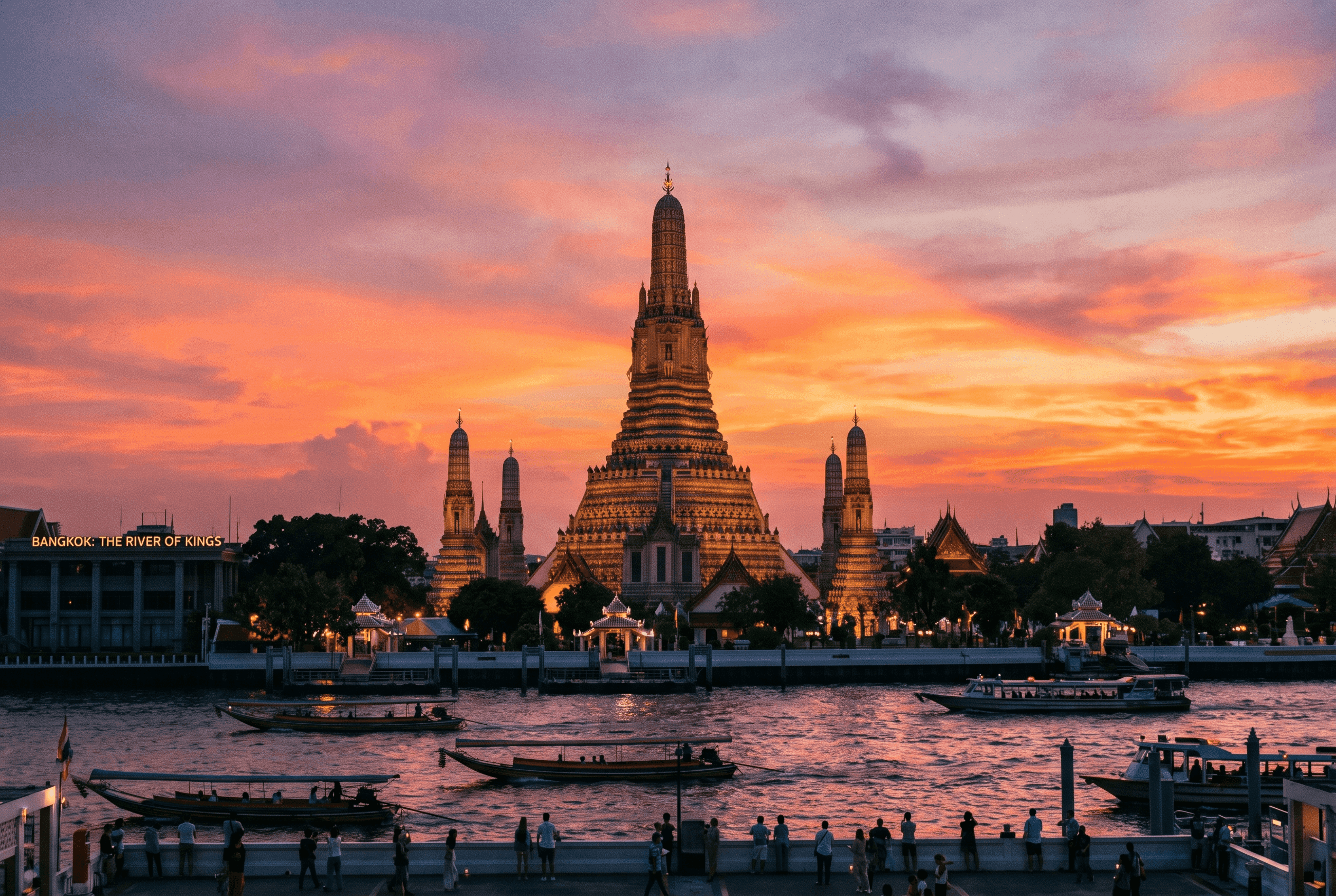
Bangkok
Golden temples, a restless river and legendary street food collide in Bangkok, Asia's most intoxicating city of spice and sparkle.
- Country
- Thailand
- Main airport
- BKK
- Best time to visit
- Nov · Dec · Jan · Feb
Golden temples, a restless river and legendary street food collide in Bangkok, Asia's most intoxicating city of spice and sparkle.
Suvarnabhumi Airport (BKK) lies about 30 km east of the centre and links to the BTS Skytrain in roughly 26 minutes via the Airport Rail Link, while the BTS, MRT, river boats and Grab cover the rest of the city.
Why go
Bangkok is Southeast Asia's great sensory city: gilded temples beside glass towers, a working river lined with palaces, and street food good enough to earn Michelin recognition. It rewards first-timers with easy logistics and repeat visitors with endless neighbourhoods to explore. From the Gulf it is a direct flight of roughly six to seven hours, with warm hospitality, strong value for money and a well-established halal food scene.
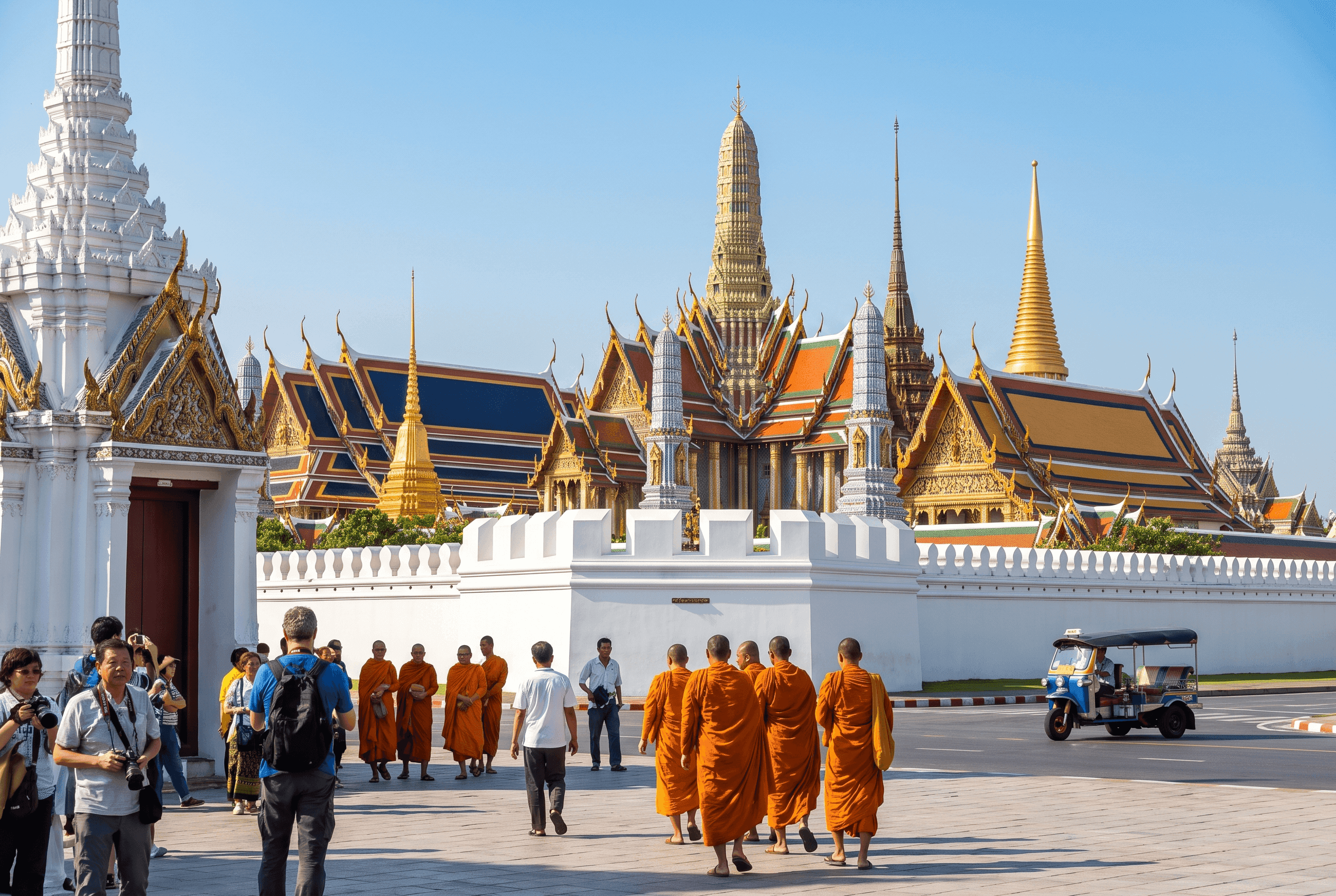
- Temples and royal heritage: the Grand Palace and Wat Phra Kaew (Temple of the Emerald Buddha), Wat Pho's 46-metre Reclining Buddha, and Wat Arun rising from the west bank.
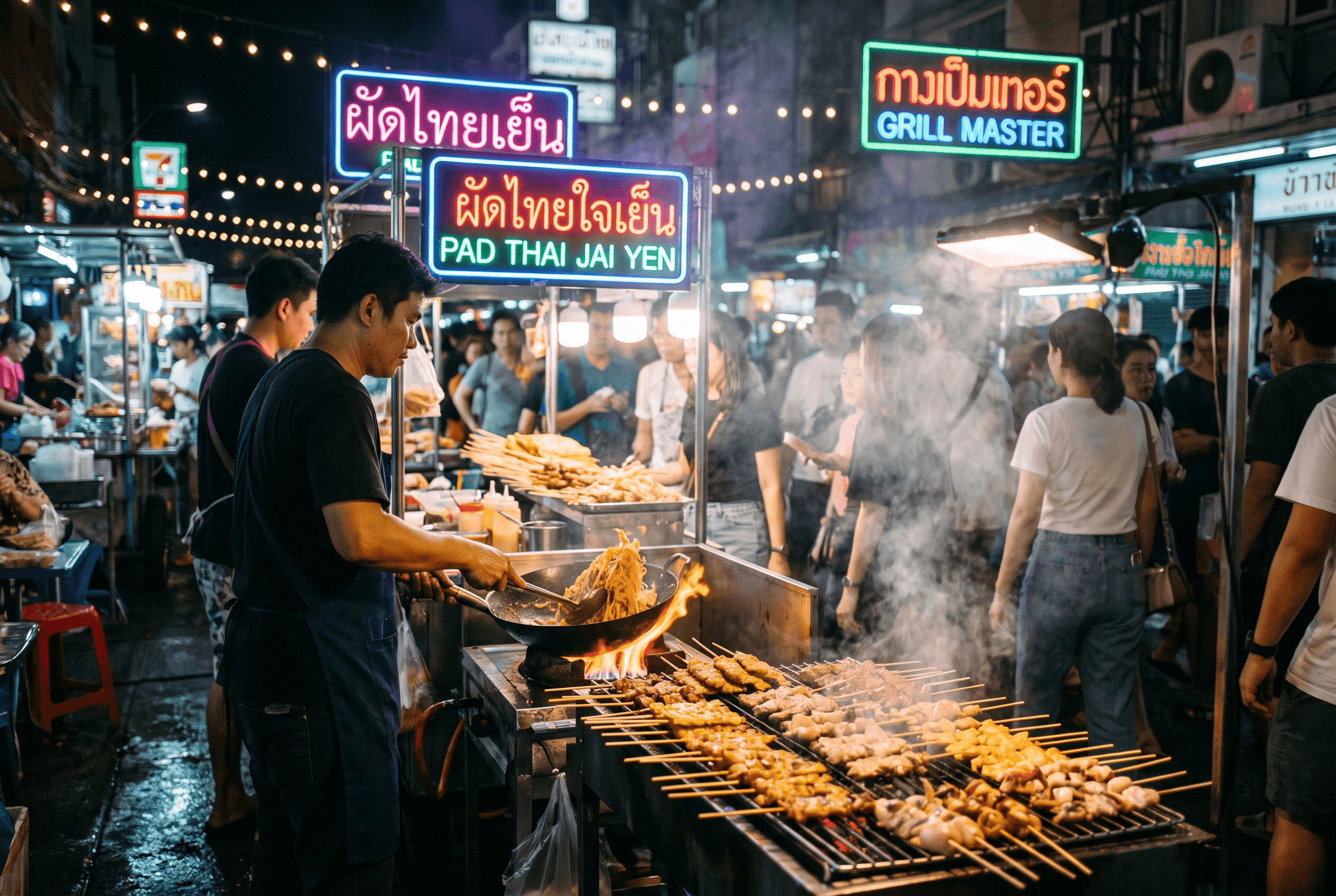
- Food at every price: from 60-baht noodle bowls on the pavement to tasting menus ranked among Asia's best.
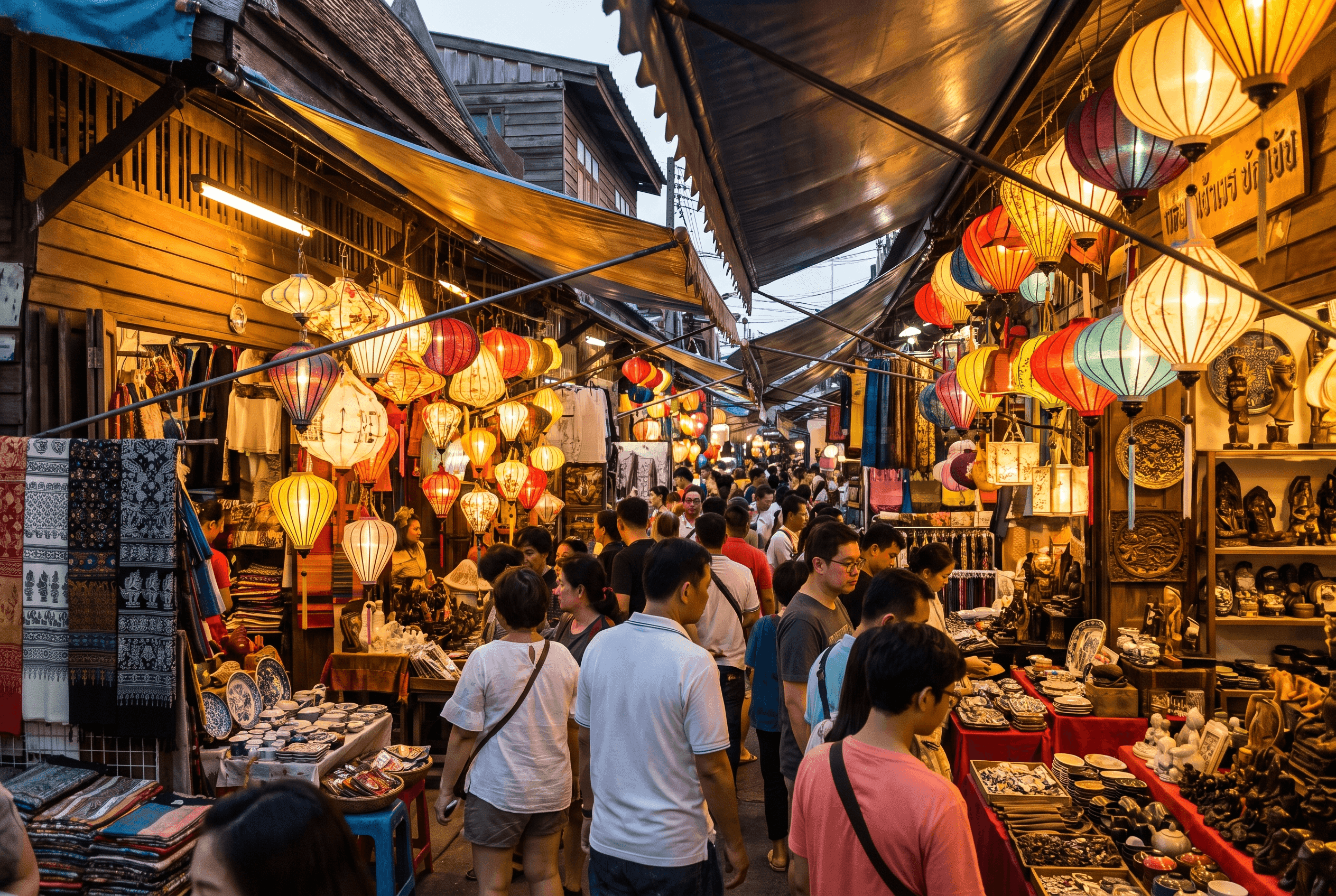
- Shopping: Chatuchak Weekend Market with its thousands of stalls, plus giant malls such as Siam Paragon and ICONSIAM.
- Wellness: traditional Thai massage, for which Wat Pho is the historic teaching centre, and spas at every budget.
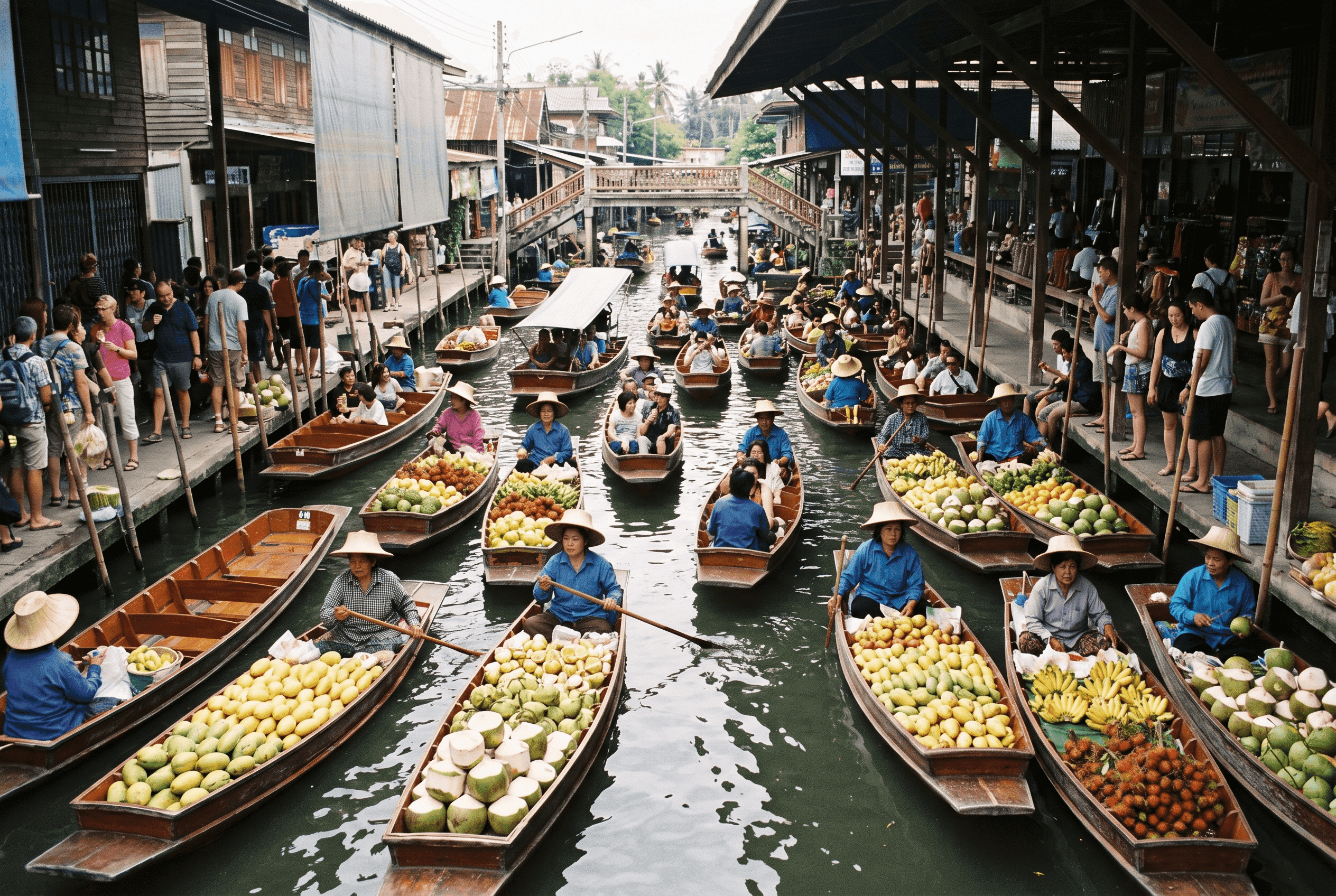
- Easy side trips: the ruins of Ayutthaya, floating markets and the beaches of Hua Hin or Pattaya are all within a few hours.
The city is huge, hot and sometimes chaotic, yet it runs on a modern rail network, ride-hailing apps and a culture that prizes calm courtesy. Spend three days here and you will leave with a list of reasons to return — most of them edible.
Where to stay
The right base saves hours in traffic. Choose somewhere within a short walk of a BTS or MRT station or a river pier.
- Sukhumvit (Nana, Asok, Phrom Phong, Thong Lo): the most popular base, with direct Skytrain access, malls, nightlife and a cluster of Arab and Middle Eastern restaurants around Soi 3/1, often called Soi Arab. Good for first-timers and families.
- Siam / Pathum Wan: the shopping heart and the hub of the rail network; ideal for short stays.
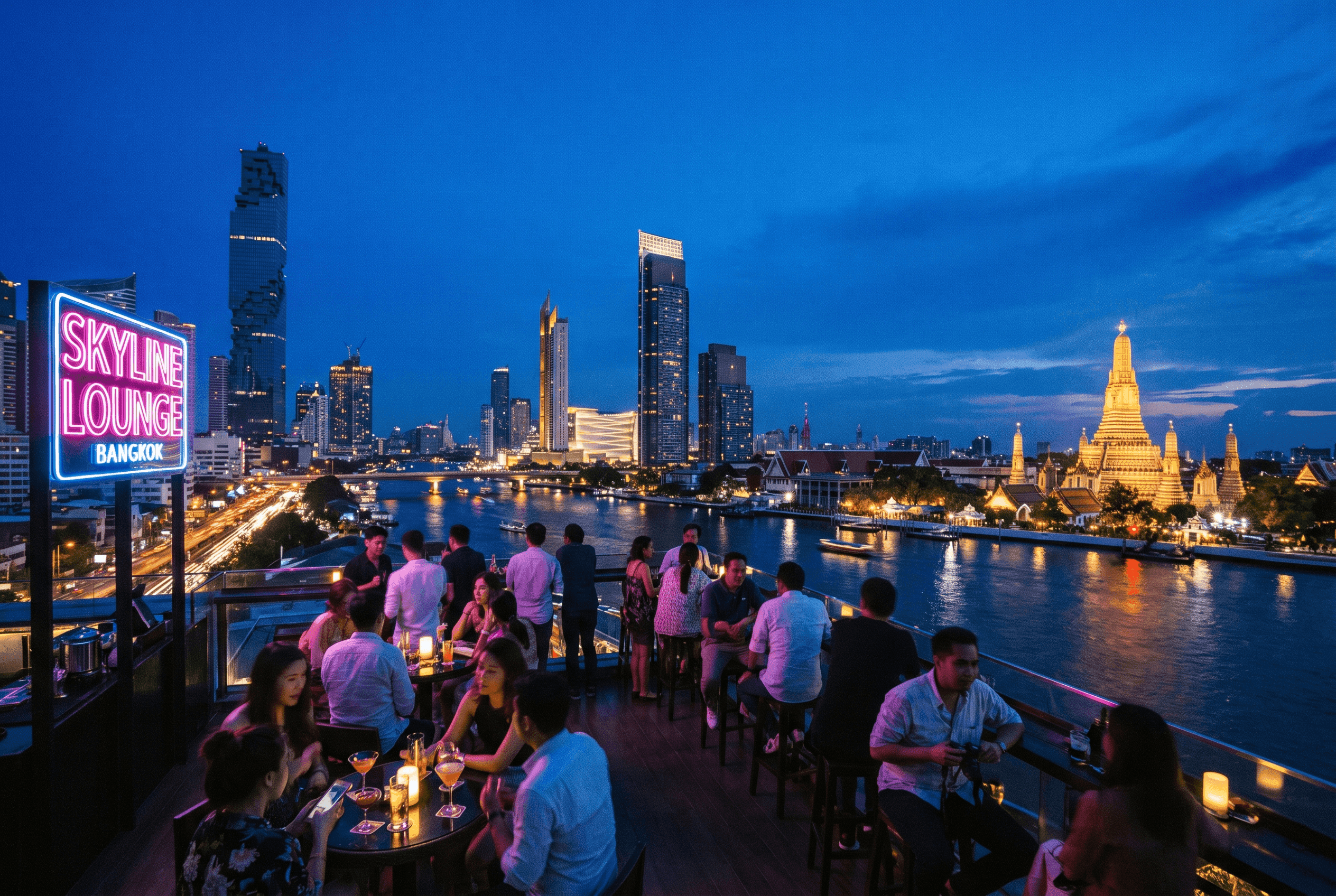
- Riverside (Charoen Krung, Khlong San): home to landmark hotels such as the historic Mandarin Oriental and The Peninsula, with sunset views and boats to the Old Town.
- Silom / Sathorn: the business district, close to Lumphini Park, rooftop bars and good rail links.
- Rattanakosin / Banglamphu (incl. Khao San Road): walk to the Grand Palace and Wat Pho; boutique guesthouses and backpacker stays, but rail access is limited to MRT Sanam Chai.
Typical nightly prices in 2026:
- Hostel dorm bed: 350–700 THB
- Budget hotel: 900–1,800 THB
- Mid-range, 4-star: 2,000–4,500 THB
- Upscale: 5,000–10,000 THB
- Luxury riverside: from 12,000 THB
Rates are often quoted as ++, meaning 10% service charge and 7% VAT are added at checkout. Book early for December to February and for Songkran, the Thai New Year water festival on 13–15 April. Families should ask for connecting rooms, which many mid-range and upscale hotels offer.
A realistic 3-day plan
Bangkok punishes over-ambitious itineraries. Start early, retreat indoors between about 13:00 and 16:00, and head out again when it cools.
Day 1 – Old Town and the river
- 08:30 Grand Palace and Wat Phra Kaew as the gates open (entry about 500 THB; strict dress code).
- 11:00 Wat Pho and the Reclining Buddha; book a massage at the temple's school.
- 13:00 Lunch near Tha Tien pier, then a quick cross-river ferry to Wat Arun and climb its central prang.
- Evening: ride the Chao Phraya Express Boat downstream, then dinner in Chinatown on Yaowarat Road, liveliest after 18:00.
Day 2 – Markets and modern Bangkok
- Morning: Chatuchak Weekend Market (Saturday and Sunday; BTS Mo Chit or MRT Chatuchak Park). On weekdays, swap in Jim Thompson House and a longtail canal ride through Thonburi.
- Afternoon: shelter in the Siam malls — Siam Paragon, Siam Center and MBK.
- Sunset: a rooftop in Silom or Sathorn, or a river dinner cruise.
- Night: a night market such as Jodd Fairs for grilled snacks and souvenirs.
Day 3 – Day trip or local life
- Option A: Ayutthaya, the UNESCO-listed former capital, about 1.5 hours by road; hire a driver or join a tour.
- Option B: Maeklong Railway Market, where stalls fold back for passing trains, then Amphawa Floating Market (Friday to Sunday, afternoon into evening).
- Back in town: ICONSIAM's riverside food hall or a stroll in Lumphini Park.
What to eat
Eating is the main event in Bangkok, and some of the best meals cost under 100 THB.
Dishes to seek out
- Pad thai: stir-fried rice noodles with tamarind, peanuts and prawns; Thipsamai near the Old Town is the famous address.
- Tom yum goong: hot-and-sour prawn soup fragrant with lemongrass and lime leaf.
- Som tam: pounded green papaya salad; ask for mild (mai phet) if you are spice-shy.
- Khao man gai: poached chicken on rice cooked in chicken stock, with ginger-soy sauce.
- Massaman curry: a rich, gently spiced curry shaped by Persian and Thai-Muslim cooks.
- Khao mok gai: Thai-Muslim chicken biryani, often served with a sweet-sour green sauce.
- Mango sticky rice: the essential dessert, best in the March to May mango season.
- Crab omelette: made famous by Jay Fai, the Michelin-starred street cook — expect long queues.
Where to eat
- Street stalls and markets: Yaowarat in Chinatown and neighbourhood sois; 50–120 THB a dish.
- Mall food courts: clean, air-conditioned and cheap, such as Pier 21 in Terminal 21.
- Shophouse restaurants and Bib Gourmand spots: 150–400 THB per person.
- Fine dining: tasting menus from about 3,000 THB upwards.
Halal tips: look for the green halal logo of the Central Islamic Council of Thailand. Soi Arab (Sukhumvit Soi 3/1) and the Bang Rak area around Haroon Mosque are reliable hubs. Many ordinary stalls use pork or lard, so ask before ordering.
Getting there and around
Arriving Most long-haul flights use Suvarnabhumi (BKK), about 30 km east of the centre. Low-cost carriers such as Thai AirAsia and Nok Air mainly use Don Mueang (DMK) in the north. There are direct flights from major Gulf hubs including Dubai, Abu Dhabi, Doha and Riyadh, taking about six to seven hours.
From Suvarnabhumi to the city
- Airport Rail Link: about 26 minutes to Phaya Thai (BTS interchange), with a stop at Makkasan for the MRT; fares roughly 15–45 THB, running about 06:00–midnight.
- Public taxi: join the official queue on Level 1. Pay the meter plus a 50 THB airport surcharge and expressway tolls; expect 300–500 THB in total to Sukhumvit or Silom, and 45–90 minutes in traffic.
- Grab or Bolt: fixed fares shown upfront, usually similar to or slightly above a metered taxi.
From Don Mueang: the SRT Red Line runs to Krung Thep Aphiwat Central Terminal, connecting to the MRT; taxis and Grab also serve the terminal.
Around town
- BTS Skytrain and MRT: fast and air-conditioned, about 17–65 THB per ride. Buy a Rabbit card for the BTS; the MRT also accepts contactless bank cards.
- River boats: the orange-flag Chao Phraya Express Boat is a cheap flat fare of around 16 THB; the blue-flag tourist boat sells day passes.
- Canal boats on Khlong Saen Saep beat rush-hour traffic between the Old Town and Pratunam.
- Tuk-tuks: fun for short hops; agree the price first (typically 100–250 THB) and refuse any shopping stops.
- Motorbike taxis: riders in orange vests; quick but only with a helmet.
Costs and practical tips
Daily budget per person (excluding flights)
- Budget: 1,200–2,000 THB
- Mid-range: 3,500–7,000 THB
- Luxury: 12,000 THB and up
Visa and entry: citizens of all GCC states (UAE, Saudi Arabia, Qatar, Kuwait, Bahrain and Oman) can currently enter visa-free for tourism, for up to 60 days under the scheme in force since 2024; the government has reviewed this length, so confirm with the Thai embassy before flying. Many other Arab nationalities need an e-Visa, applied for online at thaievisa.go.th. Every visitor must complete the free Thailand Digital Arrival Card (TDAC) online within three days before arrival. Passports need at least six months' validity.
Money: the currency is the Thai baht; 1 USD is typically about 32–36 THB. Foreign cards pay roughly 220–250 THB per ATM withdrawal, so take out larger sums. Exchange booths such as SuperRich often beat banks. Cards work in malls and hotels; carry cash for street food, markets and tuk-tuks.
SIM and data: AIS and True sell tourist SIMs and eSIMs at the airport, typically 299–799 THB for 8–15 days of data; bring your passport.
Safety and law: Bangkok is generally safe, but watch for the classic scam of a stranger claiming the Grand Palace is closed. Speak respectfully about the monarchy. E-cigarettes and vapes are illegal and fined heavily. Tourist Police: 1155.
Dress: cover shoulders and knees at temples and remove shoes indoors. Modest dress and the hijab are common and welcome.
Do GCC citizens need a visa for Bangkok?
No visa is needed for tourism: citizens of all six GCC states currently receive visa-free entry, for up to 60 days under the scheme in force since 2024. Because the permitted stay has been under government review, check the Thai embassy website before travel. You must also complete the free online Thailand Digital Arrival Card within three days before landing.
Is halal food easy to find in Bangkok?
Yes. Thailand has a sizeable Muslim community and a national halal certification body. Soi Arab (Sukhumvit Soi 3/1) is packed with Gulf, Levantine and Egyptian restaurants, while Bang Rak and Ramkhamhaeng offer Thai-Muslim dishes such as khao mok gai. Major malls have certified outlets and prayer rooms. Look for the green halal logo and ask at ordinary stalls.
When is the best time to visit Bangkok?
November to February is the most comfortable period, with drier air and daytime highs around 30–32°C. March to May is the hot season, often reaching 35–38°C. The rainy season runs roughly from June to October, bringing short, heavy afternoon downpours, fewer crowds and lower hotel rates. Songkran in mid-April is festive but very busy.
What is the fastest way from the airport to the city?
From Suvarnabhumi, the Airport Rail Link is fastest and cheapest: about 26 minutes to Phaya Thai for up to 45 THB, avoiding traffic entirely. Change to the BTS or MRT to reach your hotel. With heavy luggage or a family, an official metered taxi or Grab costs around 300–500 THB but can take over an hour at rush hour.