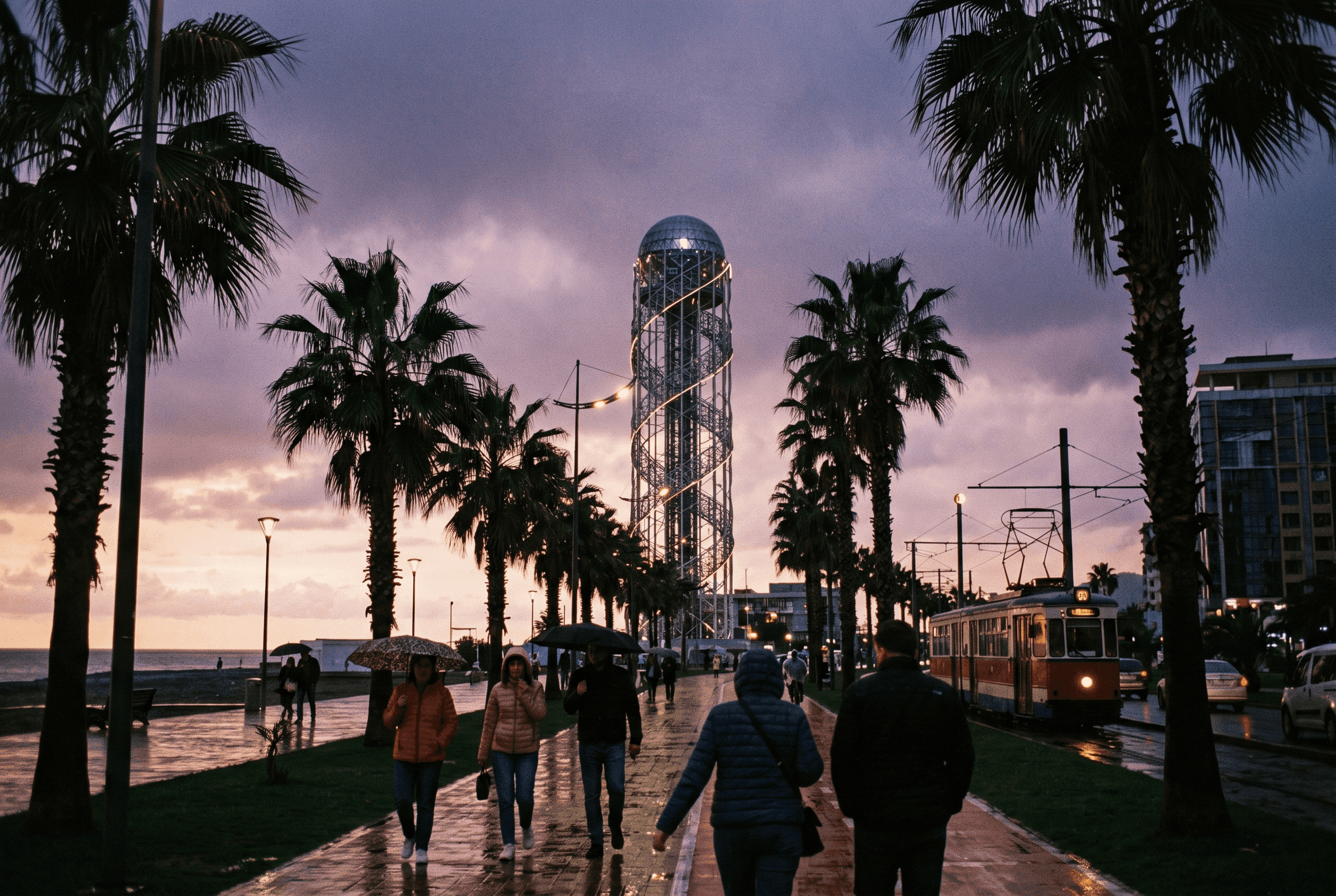
Batumi
A subtropical Black Sea port where palm-lined promenades, futuristic towers and misty green mountains meet over bubbling Adjarian khachapuri.
- Country
- Georgia
- Main airport
- BUS
- Best time to visit
- May · Jun · Jul · Aug · Sep
A subtropical Black Sea port where palm-lined promenades, futuristic towers and misty green mountains meet over bubbling Adjarian khachapuri.
Batumi International Airport (BUS) lies about 5 km south of the centre, a 15-minute app-taxi or city-bus ride away, and the compact city is easy to explore on foot, by Bolt or on cheap municipal buses.
Why go
Batumi is Georgia's Black Sea playground: a subtropical port where 19th-century mansions, Soviet blocks and glass towers line a boulevard of roughly seven kilometres, framed by the green foothills of Adjara. It is compact, walkable and noticeably cheaper than Mediterranean resorts, which makes it popular with families from the Gulf, Turkey, Israel and the former Soviet Union.
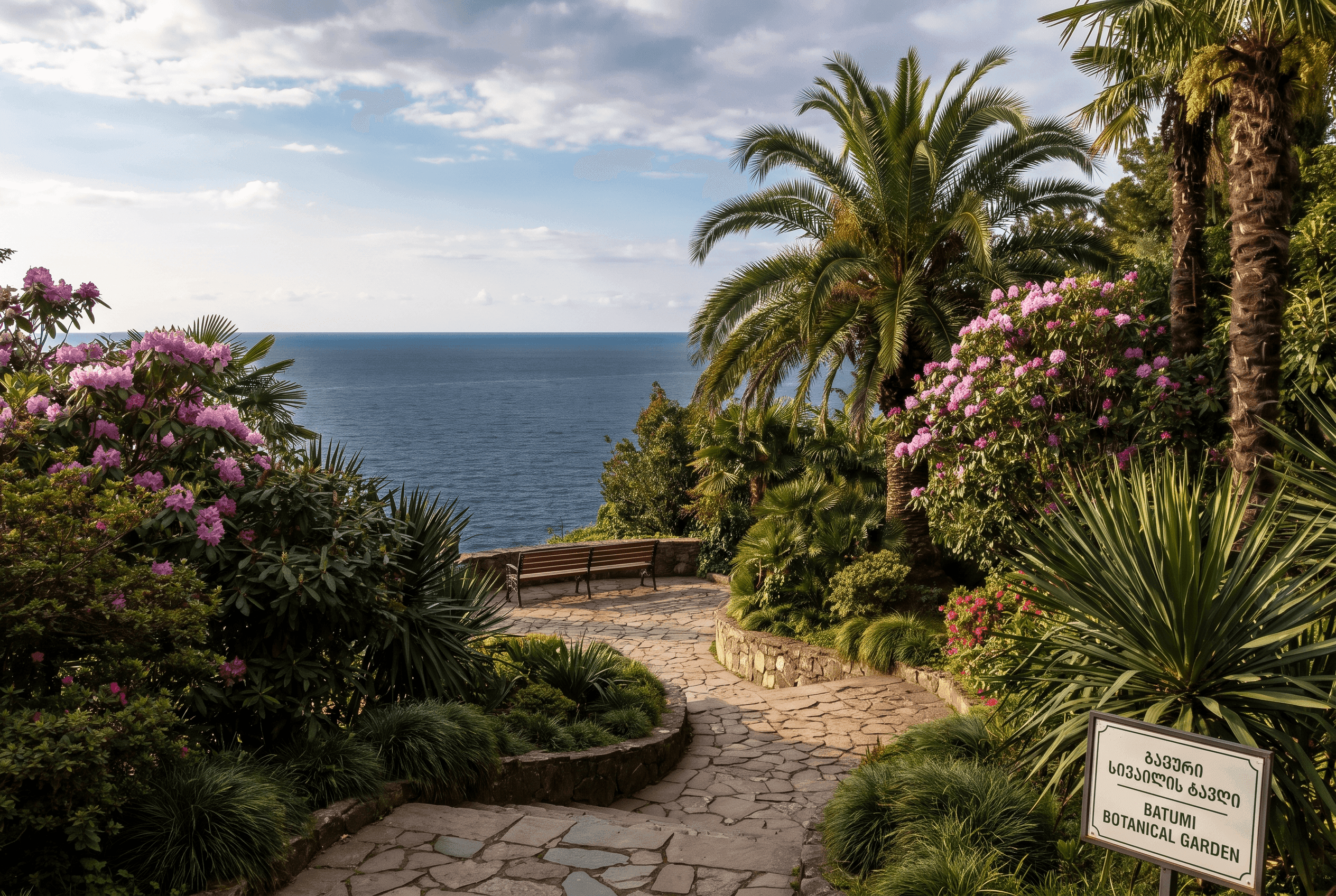
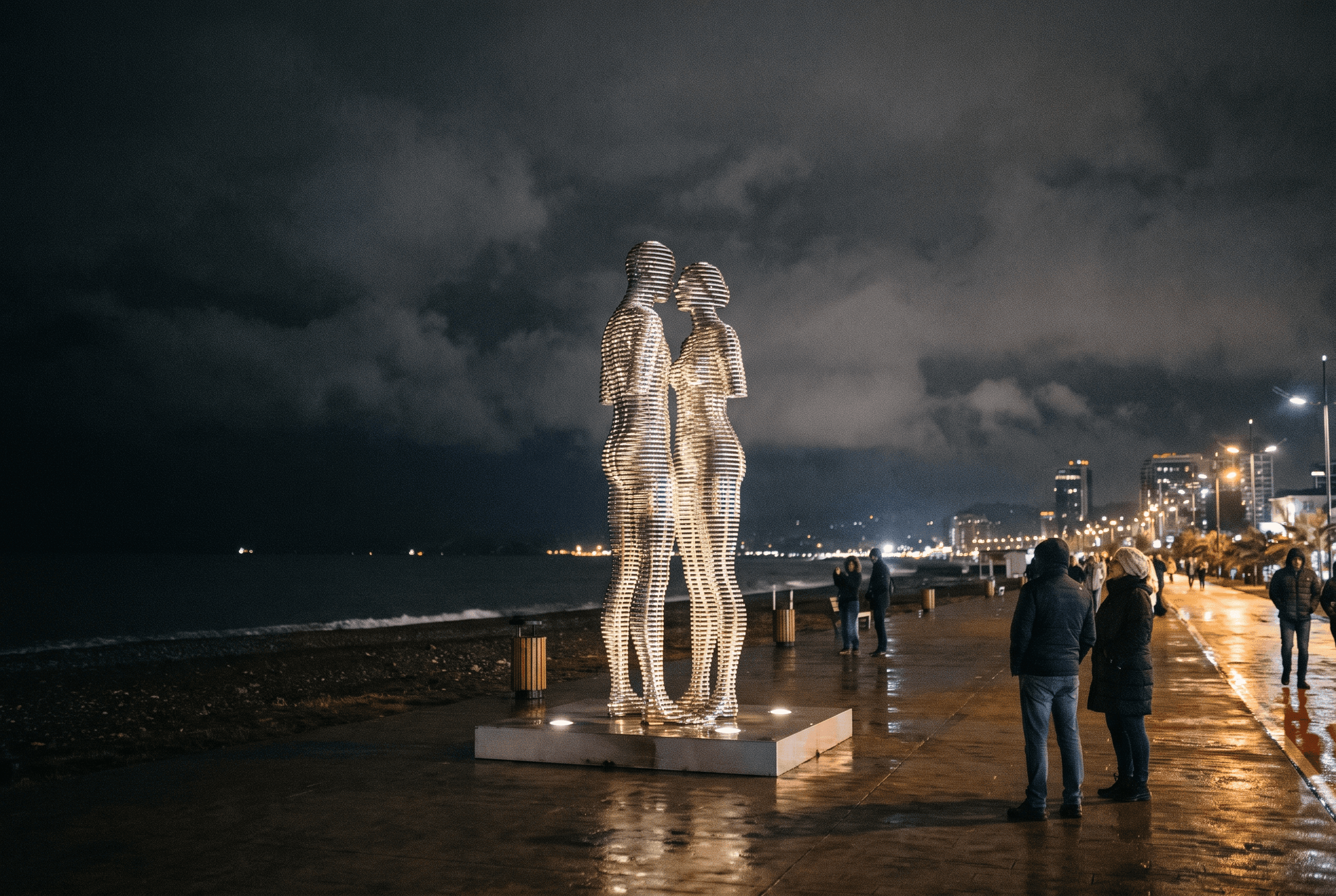
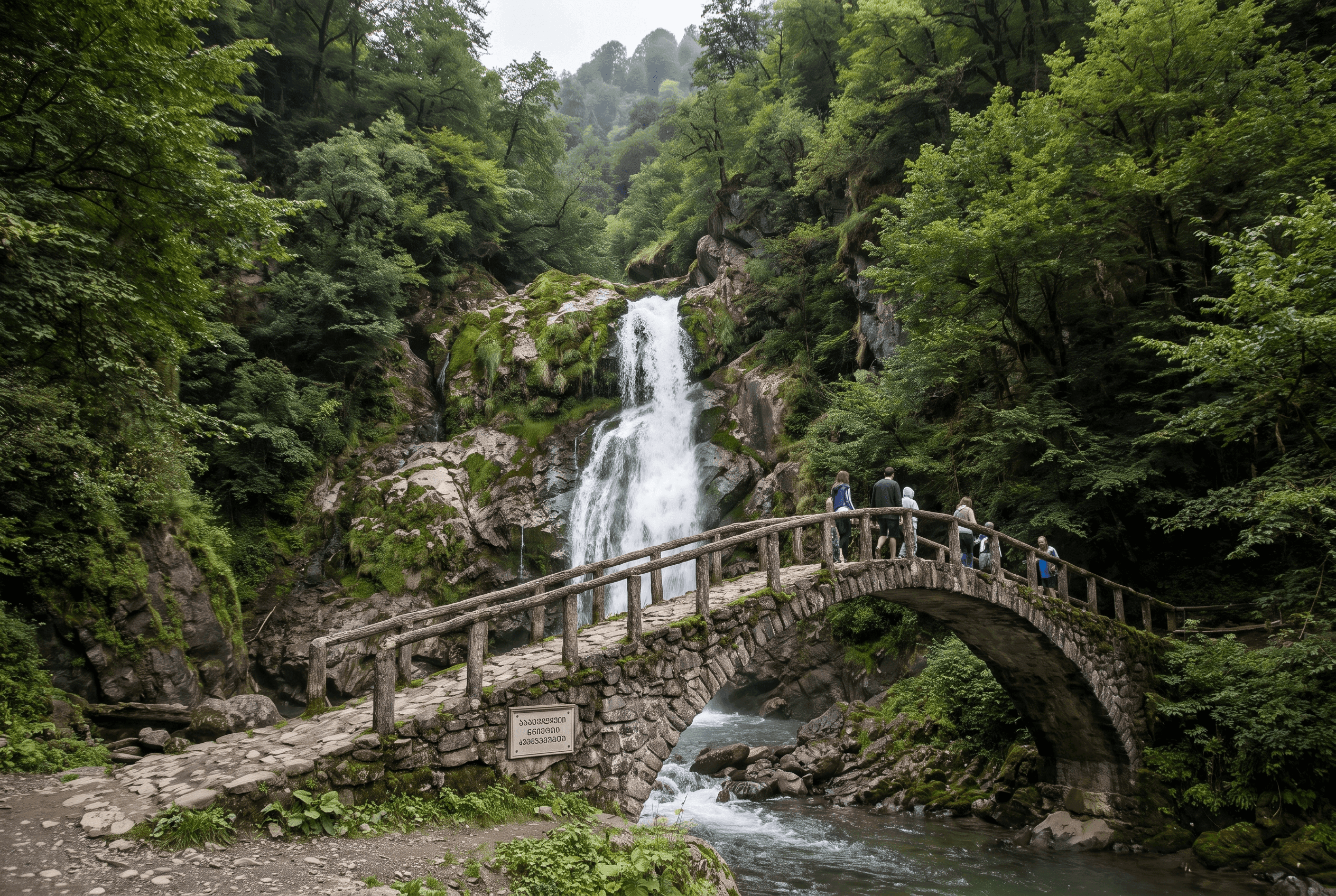
The appeal is the mix. Mornings can be spent on a pebble beach or among bamboo and eucalyptus in the Botanical Garden, afternoons in mountain villages with waterfalls and stone bridges, and evenings on the promenade watching the moving Ali and Nino statue and the Alphabetic Tower light up.
- Sea and summer: the swimming season runs roughly from June to September, with water around 24–27°C in August.
- Green escapes: Mtirala National Park and the Machakhela valley are under an hour away.
- History: Gonio Fortress, just south of the city, is one of the oldest Roman fortifications in the region.
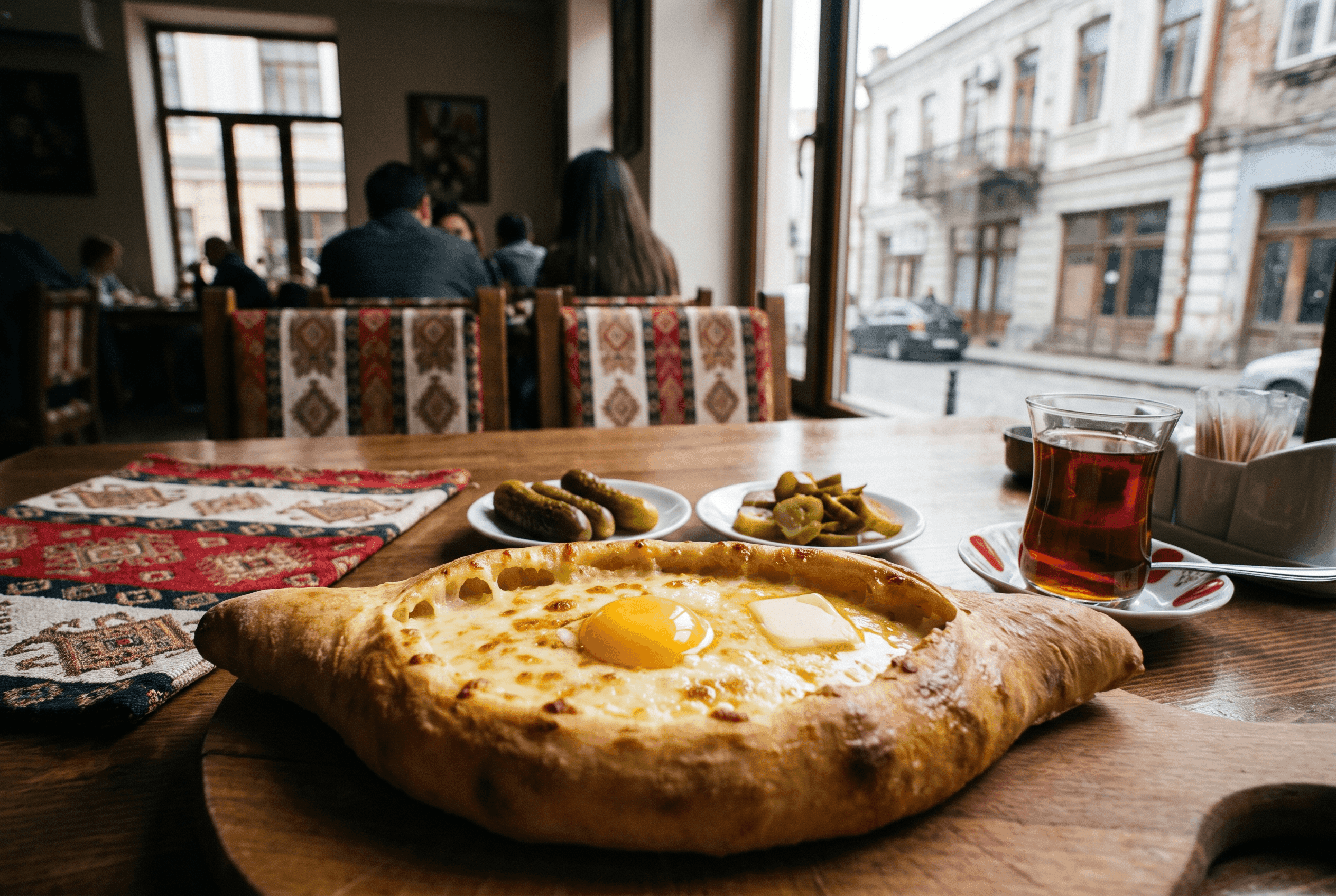
- Food: Adjarian khachapuri was born here, and fresh produce and Georgian wine are inexpensive.
- Easy entry: many nationalities, including all GCC citizens, enter visa-free.
Be realistic about the weather: Batumi is the wettest city in Georgia, and autumn and winter bring heavy, frequent rain. Beaches are pebbly rather than sandy, and a long building boom means some stretches feel more construction site than resort. Choose your base carefully and it rarely spoils the trip.
Where to stay
Batumi stretches along the coast for about 15 km, so where you sleep shapes your trip. Most visitors stay within walking distance of the boulevard.
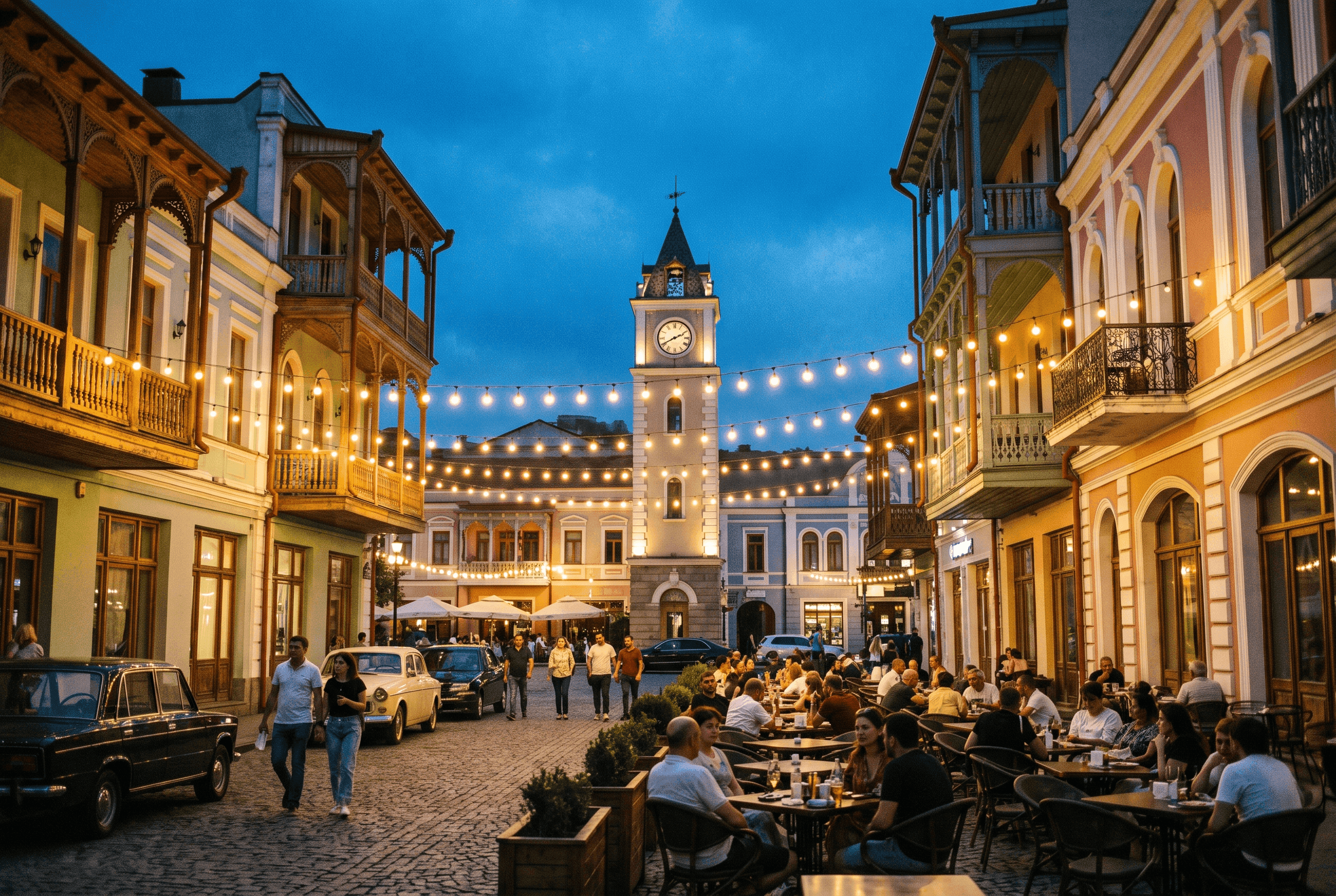
- Old Batumi: the historic grid around Piazza, Europe Square and Kutaisi Street. Restored 19th-century buildings, cafés, the Orta Jame mosque and the cathedral, all a few minutes from the beach. Best for first-timers and couples; bar streets can be loud on summer nights.
- New Boulevard and the tower district: the high-rise strip running south-west towards the airport, including large complexes such as Orbi City. Mostly serviced apartments with sea views, pools and kitchens, plus several international chain hotels. Good for families and longer stays; you will use taxis to reach the old centre.
- Makhinjauri and Green Cape: 7–10 km north, next to the Botanical Garden. Greener and quieter, with steeper pebble beaches.
- Gonio and Kvariati: 12–15 km south near the Turkish border. Clearer water and a slower village pace, but you need a car, taxi or bus for the city.
Typical prices for a double room per night in July–August:
- Budget guesthouses and hostels: 60–130 GEL (about US$22–48)
- Mid-range apartments and 3–4 star hotels: 150–350 GEL (US$55–130)
- Upscale, including chains such as Hilton, Sheraton and Radisson Blu: 400–900+ GEL (US$150–330+)
Expect 30–50% lower rates outside summer. Many tower apartments are let by individual owners, so check recent reviews for hot water, lift reliability, air conditioning and nearby construction noise. August sells out early; book at least a month ahead.
A realistic 3-day plan
Three days is enough for the city, the Botanical Garden and a taste of the mountains. Distances are short, so you can swap days if rain rolls in.
Day 1 – Old Town and the boulevard
- Morning: coffee on Piazza, then walk to Europe Square and the Medea statue, the 19th-century Orta Jame mosque and the Cathedral of the Mother of God.
- Lunch: the fish market near the port. Pick your fish downstairs and have it fried or grilled in the kitchens upstairs for a small fee.
- Afternoon: ride the Argo cable car up Anuria hill for views over the port, the towers and the coast.
- Evening: stroll the boulevard to the Ali and Nino statue and the Alphabetic Tower, then watch the Dancing Fountains show on summer evenings.
Day 2 – Garden and beach
- Morning: the Batumi Botanical Garden at Green Cape, about 9 km north. Allow three to four hours; paths are steep, so wear good shoes and arrive early to beat the heat.
- Afternoon: swim at Makhinjauri or return to a city beach.
- Evening: an Adjarian khachapuri dinner in the Old Town.
Day 3 – Mountains and Gonio
- Morning: drive about 30 km inland to the Makhuntseti waterfall and the medieval Queen Tamar arched bridge; add a short walk in Mtirala National Park if time allows.
- Afternoon: explore Gonio Fortress, then swim at Gonio or Kvariati, where the water is often clearer.
- Evening: sunset back on the boulevard.
A private driver for day 3 typically costs 150–250 GEL; shared group tours run about 50–90 GEL per person.
What to eat
Adjarian cooking is richer and more buttery than elsewhere in Georgia, shaped by the sea, the mountains and centuries of Ottoman influence.
Dishes to try
- Adjaruli khachapuri: the famous boat-shaped bread filled with molten cheese, an egg yolk and a knob of butter. Stir it together and tear off the crust to dip.
- Borano: local cheese melted in butter, eaten with cornbread.
- Sinori: thin baked rolls of dough layered with nadughi, a soft curd cheese, and butter.
- Black Sea fish: red mullet, horse mackerel and sea bass, simply fried or grilled.
- Khinkali and mtsvadi: dumplings and grilled meat skewers; both often contain pork, so ask for beef, lamb or chicken.
- Pkhali and badrijani: vegetable pâtés and aubergine rolls with walnut paste, excellent for vegetarians.
- Pakhlava and churchkhela: Adjarian walnut-and-honey pastry and the grape-must strings of nuts sold on every corner.
Where to eat Old Town side streets hide family-run Adjarian restaurants where a filling meal costs about 30–50 GEL per person. Boulevard and beachfront cafés charge more for the view. The fish market is the best-value seafood lunch, and bakeries sell khachapuri and pastries for a few lari, ideal for breakfast on the go. Turkish and Arab-run restaurants, many clearly marked halal, cluster in the centre, while supermarkets such as Carrefour and Spar are handy for self-catering apartments.
To drink, try local Adjarian tea, Borjomi or Nabeghlavi mineral water, Georgian wine or chacha, the potent grape spirit. Check whether a 10–18% service charge is already on your bill before tipping.
Getting there and around
By air Batumi International Airport (BUS) sits about 5 km south of the centre, close to the Turkish border. Year-round links run mainly via Istanbul with Turkish Airlines, Pegasus and AJet, and summer adds seasonal routes from the Gulf, Europe, Israel and Central Asia; these change every year, so check current schedules. Kutaisi (KUT), a budget-airline hub, is about 2–2.5 hours away by road, and Tbilisi (TBS) about 5–6 hours.
Airport to city
- Bolt or other app taxis: 15–20 minutes, typically 15–30 GEL.
- City bus route 10: slow but very cheap, around 1 GEL.
- Avoid unmetered taxi touts, or agree the fare before getting in.
By train, road or border
- Stadler double-deck trains link Tbilisi and Batumi in about 5–5.5 hours, roughly 35–90 GEL depending on class. Book on the Georgian Railway website, especially in summer.
- Marshrutkas (minibuses) run from Tbilisi and Kutaisi; cheap but cramped.
- The Sarpi land border with Turkey, about 15 km south, is open 24 hours.
Getting around
- The centre and boulevard are flat and walkable, and the seafront has a long cycle path.
- App taxis are the easiest option: most trips across town cost 5–12 GEL.
- Municipal buses cost about 1 GEL; pay with a contactless bank card or a Batumi transport card. Minibuses serve Gonio, Sarpi and Makhinjauri.
- Car hire costs about 80–200 GEL per day. It is useful for the mountains, but local driving is assertive and summer parking in the centre is tight.
Costs and practical tips
Visas and entry
- Citizens of all GCC states (Saudi Arabia, UAE, Qatar, Kuwait, Bahrain, Oman) enter Georgia visa-free for up to one year.
- Many other Arab nationals need an e-visa via the official portal, evisa.gov.ge. Holders of a valid visa or residence permit from the EU/Schengen area, US, UK or GCC states can often enter visa-free for 90 days in any 180; confirm your case before booking.
- Since 1 January 2026 foreign visitors must hold travel health insurance covering their stay. Carry proof.
Money
- The currency is the Georgian lari (GEL), roughly 2.6–2.8 to the US dollar. Cards are widely accepted and ATMs are everywhere; city exchange offices beat airport rates.
- Daily budget per person: about 150–250 GEL for budget travel, 300–500 GEL mid-range, excluding flights.
- Typical prices: khachapuri 15–30 GEL, Argo cable car roughly 25–35 GEL return, Botanical Garden roughly 15–25 GEL.
SIM and connectivity Magti, Silknet and Cellfie sell tourist packs with generous data for about 15–40 GEL; bring your passport. eSIMs work well. Plugs are Type C/F, 220V.
Safety Batumi is generally safe, including at night. Watch for overpriced bills in some bars and clubs, especially after invitations from strangers, and keep an eye on casino spending. Use app taxis. At sea, swim at lifeguarded beaches, respect flag warnings and wear water shoes on the pebbles.
Dress and etiquette Dress is relaxed; keep swimwear for the beach. In Orthodox churches cover shoulders and knees, and women usually cover their hair. Modest swimwear and headscarves are common and unremarkable in Adjara, which has a large Muslim community.
When is the best time to visit Batumi?
For beach holidays, late June to mid-September offers warm sea water and the liveliest atmosphere, though July and August are busy and more expensive. May and September are the sweet spot: pleasant temperatures, fewer crowds and lower prices. October to March is often very rainy, but good for quiet sightseeing, mountain drives and bargain hotel rates.
Is Batumi good for Muslim and Arab families?
Yes. Adjara has a long-established Muslim community, and the historic Orta Jame mosque stands in the Old Town. Halal restaurants, many Turkish or Arab-run, are easy to find in the centre, and modest dress draws no attention. Pork and alcohol are common in Georgian cuisine, so ask before ordering. Apartments with kitchens and sea views suit larger families well.
Do I need to rent a car in Batumi?
Not for the city itself. The centre is walkable, and app taxis are cheap, usually 5–12 GEL per ride, while buses cost about 1 GEL. A car or private driver becomes useful for day trips to Makhuntseti, Mtirala National Park or the mountain villages of upper Adjara. Hiring a driver for a day often costs little more than a rental car.
Are Batumi's beaches good for swimming?
The sea is warm and pleasant from June to September, but beaches are pebbly and shelve quickly, so water shoes help and small children need close supervision. City beaches are free, with paid sunbeds. For clearer water and fewer people, head south to Gonio, Kvariati or Sarpi. Swim only where lifeguards are present, especially after storms.